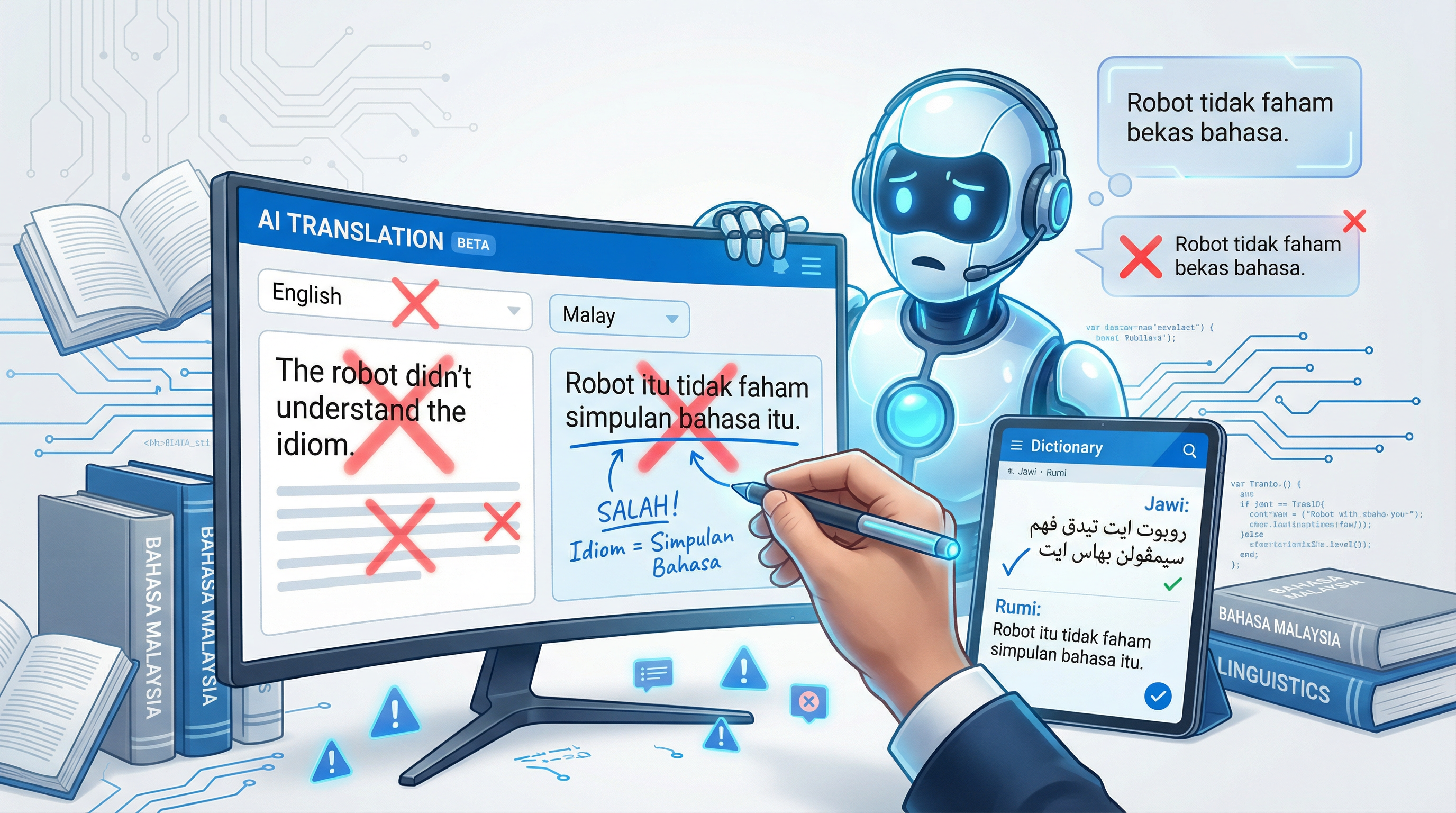
The Future of Call Centers: How Real-Time AI Translation Dubbing Will Transform Foreign Language Customer Service
A deep analysis of why the era of multi-lingual call center agents is ending — and how AI-powered real-time translation dubbing is enabling a revolutionary shift to streamlined, single-language agent teams.
Executive Summary
The global call center industry, employing over 16 million agents worldwide and generating $350+ billion annually, stands at the precipice of its most significant transformation since the advent of offshore outsourcing. Real-time AI translation dubbing technology — capable of instantaneously translating spoken language while preserving vocal tone, emotion, and conversational flow — is poised to eliminate the fundamental constraint that has shaped call center operations for decades: the need for agents to speak multiple languages. This analysis examines the technological, economic, operational, and human implications of this shift toward single-language agent teams enabled by AI translation dubbing.
1. The Current State: The Multi-Language Problem
1.1 The Complexity of Modern Call Center Operations
Today's global enterprises face an unprecedented challenge in customer service delivery. A typical multinational corporation must support customers across dozens of languages and hundreds of dialects. Consider the operational reality:
- A financial services company operating in Southeast Asia must support Mandarin, Cantonese, Malay, Thai, Vietnamese, Tagalog, Indonesian, and English
- A European e-commerce platform needs agents fluent in German, French, Italian, Spanish, Dutch, Polish, Portuguese, and more
- A healthcare provider serving immigrant communities may need to support over 50 languages across a single metropolitan area
The traditional response has been to build massive, fragmented agent pools — recruiting, training, and managing separate teams for each language. This approach has created a series of interconnected problems that plague the industry.
1.2 The Recruitment Nightmare
Finding qualified call center agents who are fluent in specific language combinations has become increasingly difficult. The recruitment challenges include:
Talent Scarcity
Certain language pairs are nearly impossible to staff. Finding agents who speak both fluent Finnish and excellent English, for example, creates a severe bottleneck that limits operational flexibility.
Geographic Limitations
Companies are forced to maintain multiple call center locations based on language availability rather than optimal business factors like time zone coverage or labor costs.
Quality Compromises
When language skills become the primary hiring criterion, companies often sacrifice customer service aptitude, technical knowledge, or cultural fit.
Retention Crisis
Multi-lingual agents, being rarer and more valuable, command higher salaries and are poached aggressively by competitors, creating constant turnover.
1.3 The Operational Inefficiency
Beyond recruitment, the multi-language model creates profound operational inefficiencies:
| Challenge | Impact | Cost Implication |
|---|---|---|
| Siloed Teams | Cannot share workload across languages during volume spikes | 30-40% overstaffing required per language |
| Training Multiplication | Product knowledge training must be delivered in every language | 5-10x training costs vs. single-language operation |
| Quality Monitoring | Supervisors needed for each language team | Management overhead increases exponentially |
| Technology Stack | Separate knowledge bases, scripts, and tools per language | Maintenance costs balloon with each added language |
1.4 The Customer Experience Deficit
Most critically, the current model fails customers in fundamental ways:
- Language Availability: Customers often face long wait times because only a few agents speak their language
- Skill Mismatch: Complex technical issues may require escalation to senior agents who may not speak the customer's language
- Inconsistent Quality: Service quality varies dramatically based on which language team handles the call
- Cultural Barriers: Even fluent non-native speakers may miss cultural nuances, idioms, or context
- Emergency Limitations: During crises or unexpected volume surges, customers may find no support available in their language
2. The Technological Solution: Real-Time AI Translation Dubbing
2.1 Understanding the Technology
Real-time AI translation dubbing represents the convergence of several advanced technologies that have matured simultaneously. Unlike earlier translation tools that operated through text intermediaries, modern dubbing systems process speech directly through an integrated pipeline:
The Modern AI Dubbing Pipeline
Speech Recognition (ASR): Advanced models like Whisper convert spoken words to text with 95%+ accuracy across accents and dialects
Contextual Translation: Large language models translate with understanding of context, idioms, and domain-specific terminology
Voice Cloning/Synthesis: Neural voice models generate natural speech that can match the original speaker's characteristics
Latency Optimization: Streaming architectures deliver translations with sub-500ms latency
Emotion Preservation: Prosody and emotional markers are transferred to maintain conversational authenticity
2.2 The Key Breakthrough: Dubbing vs. Traditional Translation
The critical distinction between modern AI dubbing and previous translation approaches is the preservation of natural conversation flow:
| Feature | Traditional Human Translation | Text-Based AI Translation | Real-Time AI Dubbing |
|---|---|---|---|
| Latency | High (significant delays) | Medium (3-5 seconds) | Low (sub-second) |
| Natural Flow | Interrupted by translation pauses | Robotic, emotionless | Conversational, natural |
| Cost | Very high (salary + benefits) | Low | Low per-minute rates |
| Scalability | Limited by human availability | Highly scalable | Instantly scalable |
| Language Coverage | Limited by hiring | 100+ languages | 100+ languages |
2.3 Current Capabilities (2024-2025)
As of 2024-2025, real-time AI translation dubbing technology has achieved capabilities that make it viable for call center deployment:
Supported Languages
Including low-resource languages previously unavailable
Translation Latency
Imperceptible delay in natural conversation
Translation Accuracy
For common business domains
Voice Cloning
Preserves speaker characteristics
Uptime SLA
Enterprise-grade reliability
Availability
No shift limitations or time zones
3. The Single-Language Agent Team Model: A Paradigm Shift
3.1 The Vision: One Language, Global Reach
The fundamental transformation enabled by AI translation dubbing is the ability to staff call centers with agents who speak only one language — their native language — while supporting customers in any language worldwide. This represents a complete inversion of the traditional model.
The New Operational Paradigm
BEFORE: Multi-Language Teams
- • Hire Mandarin-speaking agents
- • Hire Spanish-speaking agents
- • Hire Arabic-speaking agents
- • Hire French-speaking agents
- • Separate management for each
- • Cannot share workload
AFTER: Single-Language Teams with AI
- • Hire excellent English-speaking agents
- • AI translates English ↔ Any Language
- • One team serves all customers
- • Unified management and training
- • Complete workload flexibility
3.2 Operational Benefits of the Single-Language Model
3.2.1 Workforce Optimization
By focusing recruitment on single-language agents, companies can tap into dramatically larger talent pools:
- Expanded Talent Pool: Instead of finding Mandarin speakers in Manila or Spanish speakers in Bangalore, companies can hire the best English-speaking agents anywhere — then support any language customer
- Skill-First Hiring: Language no longer competes with customer service skills. Companies can prioritize empathy, problem-solving ability, and domain expertise
- Specialized Expertise: Technical support, financial services, or healthcare specialists can serve global customers regardless of language barriers
- Retention Improvement: Larger talent pools reduce competition and poaching; agents feel less "trapped" by rare language skills
3.2.2 Complete Resource Flexibility
Perhaps the most powerful operational advantage is the elimination of language-based silos:
Example: Handling a Volume Spike
A product recall announcement creates a 5x increase in support calls at 9 AM across all markets.
Traditional Model
Mandarin customers face 45-minute hold times because only 12 Mandarin agents are on shift. Spanish customers have 5-minute waits. No ability to balance load.
AI-Enabled Model
All 200 agents can handle the surge. Customers connect in under 2 minutes regardless of language. Load balanced optimally across the entire workforce.
3.2.3 Simplified Training and Quality
Training and quality assurance become dramatically simpler:
- Single Knowledge Base: Product information, troubleshooting guides, and policies maintained in one language
- Unified Training: One training program for all agents, not parallel programs for each language
- Consistent Quality: All customers receive the same quality of information and service, regardless of language
- Centralized QA: Quality monitoring and coaching conducted in the agent's native language
3.3 Economic Impact Analysis
The economic case for AI-enabled single-language call centers is compelling:
| Cost Factor | Traditional Multi-Language | AI-Enabled Single-Language | Savings |
|---|---|---|---|
| Agent Recruitment | $2,500-5,000 per hire | $500-1,000 per hire | 60-80% |
| Language Premium Pay | 15-30% salary premium | $0 | 100% |
| Training Costs | $3,000-8,000 per agent | $1,000-2,000 per agent | 60-75% |
| Management Overhead | 1 supervisor per 10-15 agents per language | 1 supervisor per 15-20 agents total | 40-60% |
| Overstaffing Buffer | 30-40% per language | 10-15% total | 60-70% |
| Technology Stack | Multiple KBs, scripts, tools | Single unified stack | 50-70% |
| TOTAL ESTIMATED SAVINGS | Baseline | AI-Enabled Operation | 35-55% |
For a 500-agent call center supporting 10 languages, this translates to annual savings of $3-7 million while simultaneously improving customer experience through reduced wait times and more skilled agent availability.
4. Implementation Considerations and Challenges
4.1 Technical Implementation
4.1.1 Integration Architecture
Deploying real-time AI dubbing in call centers requires careful integration with existing telephony and CRM systems:
Typical Integration Stack
Telephony Layer: Integration with VoIP systems (Twilio, Genesys, Avaya, Five9) to intercept audio streams
Translation Layer: Real-time AI dubbing API processing both agent and customer audio
Application Layer: CRM integration (Salesforce, Zendesk, ServiceNow) to display customer context
Analytics Layer: Call recording, transcription, and quality monitoring systems
4.1.2 Latency Management
While modern AI dubbing achieves sub-500ms latency, call centers must optimize their entire stack:
- Edge Deployment: Running translation models at edge locations close to call centers
- Codec Optimization: Using low-latency audio codecs (Opus) for telephony
- Network QoS: Prioritizing translation traffic on enterprise networks
- Fallback Protocols: Graceful degradation to text chat if translation services experience issues
4.2 Quality and Accuracy Assurance
4.2.1 Domain-Specific Training
Generic translation models may struggle with industry-specific terminology. Successful implementations require:
- Custom Vocabulary: Training models on company-specific products, services, and terminology
- Translation Memory: Maintaining consistent translations for key terms across all interactions
- Escalation Triggers: Automatic handoff to human translators for complex or sensitive situations
- Continuous Learning: Feedback loops to improve translation quality based on agent corrections
4.2.2 Human-in-the-Loop Protocols
Even the best AI systems require human oversight:
- Confidence Scoring: Real-time translation confidence metrics visible to agents
- Correction Interfaces: Agents can flag mistranslations for immediate correction
- Escalation Pathways: Clear protocols for when to bring in human translators or native-speaking supervisors
- Quality Auditing: Regular sampling of AI-translated calls for accuracy verification
4.3 Change Management
The transition to AI-enabled single-language operations requires significant organizational change management:
Agent Concerns
- • Will AI replace my job?
- • Can I trust the translation?
- • What if it makes me look incompetent?
- • Will customers know I'm using AI?
Management Concerns
- • How do we maintain quality standards?
- • What if the AI fails during a critical call?
- • How do we retrain supervisors?
- • What happens to multi-lingual agents?
Successful transitions require:
- Transparent Communication: AI as an empowerment tool, not a replacement
- Comprehensive Training: Agents must understand how to work with AI, interpret confidence scores, and handle edge cases
- Gradual Rollout: Pilot programs with volunteer agents before full deployment
- Retention Planning: Retraining and redeployment plans for existing multi-lingual staff
5. The Human Element: Ethics, Employment, and Experience
5.1 Impact on Employment
The shift to AI-enabled single-language operations will undoubtedly impact employment, but the reality is more nuanced than simple job elimination:
5.1.1 Job Displacement and Transformation
The Workforce Impact Reality
- At Risk: Pure translation/interpreting roles; multi-lingual agents whose primary value is language skills
- Transformed: Customer service agents become problem-solving specialists rather than language conduits
- Growing: AI supervisors, quality auditors, technical specialists, and escalation handlers
- New Roles: AI training specialists, translation quality analysts, conversation designers
Historical parallels suggest that while technology eliminates specific job functions, it often creates new opportunities. The introduction of automated teller machines (ATMs) initially reduced bank teller roles but ultimately led to branch expansion and new service-focused positions.
5.1.2 The Upskilling Imperative
The most successful call centers will view this transition as an opportunity to upskill their workforce:
- Technical Training: Teaching agents to understand AI capabilities and limitations
- Problem-Solving Focus: Shifting training emphasis from language to complex issue resolution
- Empathy Enhancement: Training agents to read emotional cues even when language is AI-mediated
- Career Pathing: Creating advancement opportunities into AI management and quality roles
5.2 Customer Experience Implications
5.2.1 Transparency and Trust
A critical ethical question: should customers be informed that their call is being AI-translated?
Arguments for Disclosure
- • Respects customer autonomy
- • Builds long-term trust
- • Complies with emerging AI disclosure regulations
- • Allows customers to request human translators
Arguments Against Disclosure
- • May create unnecessary anxiety
- • Could bias customer perception negatively
- • No disclosure required for human interpretation
- • Focus on outcome (good service) over method
Most industry experts recommend transparency, delivered thoughtfully: "To serve you better in your preferred language, this call is being assisted by AI translation technology. Your conversation is with a real agent dedicated to helping you."
5.2.2 Cultural Sensitivity
Even perfect translation cannot capture all cultural nuances. Call centers must:
- Train Agents: Cultural awareness training to help agents understand context that translation may miss
- Cultural Advisors: Maintaining access to cultural consultants for sensitive situations
- Localization: Ensuring that translated content respects cultural norms and taboos
- Feedback Loops: Capturing customer feedback specifically about cultural appropriateness
5.3 Accessibility and Inclusion
AI translation dubbing has profound implications for accessibility:
- Language Barrier Elimination: Customers who previously had no access to services in their language can now receive support
- Dialect Preservation: AI can support regional dialects that are uneconomical for human staffing
- Elderly and Non-Technical Users: Voice-based translation removes barriers for users uncomfortable with text chat
- Emergency Services: Critical for 911 and emergency hotlines serving diverse communities
6. The Competitive Landscape
6.1 Key Technology Providers
The real-time AI dubbing space is rapidly evolving with several major players:
| Company/Platform | Key Strengths | Focus Area |
|---|---|---|
| Meta (SeamlessM4T) | 100+ languages, open research | Research foundation, broad language support |
| Google (Translate + Cloud Speech) | Enterprise integration, scale | Enterprise APIs, telephony integration |
| OpenAI (Whisper + GPT) | Accuracy, context understanding | High-accuracy transcription and translation |
| ElevenLabs | Voice cloning, natural synthesis | Voice preservation and natural output |
| DeepL | Quality, European languages | Business document and conversation translation |
| Specialized Call Center Solutions | Domain-specific optimization | Healthcare, financial services, legal |
6.2 BPO Industry Response
Business Process Outsourcing (BPO) companies, which operate a significant portion of global call centers, are responding to AI translation dubbing in different ways:
- Early Adopters: Leading BPOs are integrating AI dubbing to offer "universal language support" as a competitive differentiator
- Cautious Observers: Some are waiting for proven ROI before major investments
- Vertical Specialists: Focusing on high-value, complex interactions where AI augmentation enhances rather than replaces human agents
- Technology Providers: Developing proprietary AI dubbing solutions as core offerings
7. Industry-Specific Applications
7.1 Healthcare and Telemedicine
Healthcare presents both the greatest opportunity and the highest stakes for AI dubbing:
Critical Considerations for Healthcare
- Medical Accuracy: Translation errors in medication names, dosages, or symptoms can be life-threatening
- Privacy (HIPAA/GDPR): Translation systems must maintain strict confidentiality
- Informed Consent: Patients must fully understand treatment options regardless of language
- Emotional Support: Medical conversations require high empathy and cultural sensitivity
Leading healthcare providers are implementing AI dubbing with human medical interpreters on standby for complex cases, creating a hybrid model that balances efficiency with safety.
7.2 Financial Services
Banking, insurance, and investment services face strict regulatory requirements around communication:
- Regulatory Compliance: All customer communications must be recorded and auditable in original and translated forms
- Risk Disclosure: Complex financial products require precise translation of risk warnings
- Anti-Fraud: AI systems must not inadvertently translate fraud indicators or suspicious patterns
- Account Security: Authentication protocols must work across language barriers
7.3 E-Commerce and Retail
E-commerce platforms are early adopters, driven by the need to support global customers:
- Order Support: Handling shipping, returns, and product inquiries across languages
- Technical Products: Explaining complex electronics or software in any language
- Sales Enablement: Converting inquiries into sales regardless of language
- 24/7 Coverage: Supporting customers in all time zones with centralized teams
7.4 Government and Public Services
Government agencies face unique requirements:
- Equal Access: Legal requirements to provide services in multiple languages
- Emergency Services: 911 and emergency hotlines must be universally accessible
- Legal Precision: Immigration, benefits, and legal services require exact terminology
- Non-Discrimination: AI must not introduce bias in translation
8. The Future Trajectory: 2025-2035
8.1 Near-Term Developments (2025-2027)
Technology Improvements
- • Latency reduced to <200ms
- • Support for 150+ languages
- • Real-time emotional tone matching
- • Domain-specific models for healthcare, legal, finance
- • Video call lip-sync dubbing
Market Adoption
- • 30% of Fortune 500 call centers pilot AI dubbing
- • Major BPOs offer universal language support
- • First fully AI-enabled single-language centers launch
- • Industry standards for AI disclosure emerge
- • Regulatory frameworks established
8.2 Medium-Term Evolution (2028-2032)
As the technology matures and organizational change completes:
- Ubiquitous Adoption: AI dubbing becomes standard infrastructure for call centers, like CRM systems today
- Workforce Transformation: The majority of call center agents work in single-language teams with AI translation
- Specialized Human Roles: Human agents focus on complex escalations, emotional intelligence, and AI supervision
- Global Talent Arbitrage: Companies hire agents based purely on skill and cost, not language
- Democratization: Small businesses can offer multilingual support previously available only to enterprises
8.3 Long-Term Vision (2033-2035+)
Looking further ahead, the convergence of AI dubbing with other technologies will create entirely new paradigms:
2035: The Fully Converged Contact Center
Omni-Language AI Agents: AI systems handle routine inquiries directly, with human agents only for complex issues
Persistent Voice Identity: Customers have a personalized "voice profile" that carries across all interactions
Predictive Translation: AI anticipates customer needs and proactively provides information
Immersive Experiences: AR/VR customer service with real-time dubbing in virtual environments
Neural Interfaces: Early brain-computer interfaces enabling direct thought-to-thought communication (speculative)
9. Strategic Recommendations
9.1 For Enterprise Leaders
1. Start with Pilot Programs
Begin with a single language pair and a volunteer team of agents. Measure customer satisfaction, agent adoption, and operational efficiency before scaling.
2. Invest in Change Management
The technology is ready; the people are the challenge. Invest heavily in training, communication, and addressing legitimate concerns.
3. Build Quality Assurance Systems
Develop new QA frameworks that account for AI translation. Monitor accuracy, customer satisfaction, and agent confidence.
4. Plan for Workforce Transition
Create clear paths for multi-lingual agents to transition into higher-value roles: AI supervisors, quality analysts, escalation specialists.
9.2 For Call Center Operations
- Reimagine Physical Layout: With language no longer a constraint, optimize centers for collaboration and efficiency rather than language segregation
- Develop AI Competency: Create internal expertise in AI translation technology, quality monitoring, and troubleshooting
- Partner Strategically: Choose AI dubbing providers with proven telephony integration and enterprise-grade SLAs
- Measure What Matters: Focus on customer outcomes (satisfaction, resolution) rather than traditional efficiency metrics
9.3 For Technology Vendors
- Telephony Integration: Make integration with existing call center infrastructure seamless and well-documented
- Domain Specialization: Develop industry-specific models for healthcare, finance, and legal applications
- Quality Tools: Provide robust monitoring, logging, and quality assurance tools for enterprise customers
- Ethical Frameworks: Lead on transparency, bias mitigation, and responsible AI deployment
10. Conclusion: The Inevitable Transformation
The call center industry is at an inflection point. Real-time AI translation dubbing technology has matured to the point where it can genuinely replace the multi-lingual agent model that has dominated for decades. The economic, operational, and customer experience benefits of transitioning to streamlined, single-language agent teams are too compelling to ignore.
This transformation is not merely about cost reduction — though the savings are substantial. It represents a fundamental reimagining of how global customer service can operate. When language is no longer a barrier, companies can hire the best customer service talent regardless of linguistic background. Agents can focus entirely on solving problems rather than navigating language constraints. Customers can receive immediate, high-quality support in their preferred language without waiting for scarce multi-lingual agents.
However, realizing this vision requires thoughtful implementation. Technology alone is insufficient; the human elements — change management, workforce transition, quality assurance, and ethical considerations — will determine success or failure.
Organizations that embrace this transformation early, invest in their people, and implement with care will gain significant competitive advantages. Those that wait risk being overtaken by more agile competitors and missing the opportunity to fundamentally improve customer experience.
The Bottom Line
The era of multi-lingual call center agents is ending. The era of AI-enabled, single-language agent teams is beginning. The question for call center leaders is not whether to adopt this technology, but how quickly and thoughtfully they can transition their operations to capture the benefits while managing the human impact.
The future of customer service is universal, immediate, and AI-enabled — but fundamentally human at its core.
About the Author: This analysis was prepared by Translife Translation Services, a leader in real-time AI translation and dubbing solutions for enterprise call centers. We help organizations transition to AI-enabled, single-language customer service operations.
Related Resources:
- Guide to Implementing AI Translation in Call Centers
- ROI Calculator: AI Dubbing vs. Multi-Language Teams
- Change Management Playbook for Call Center Transformation