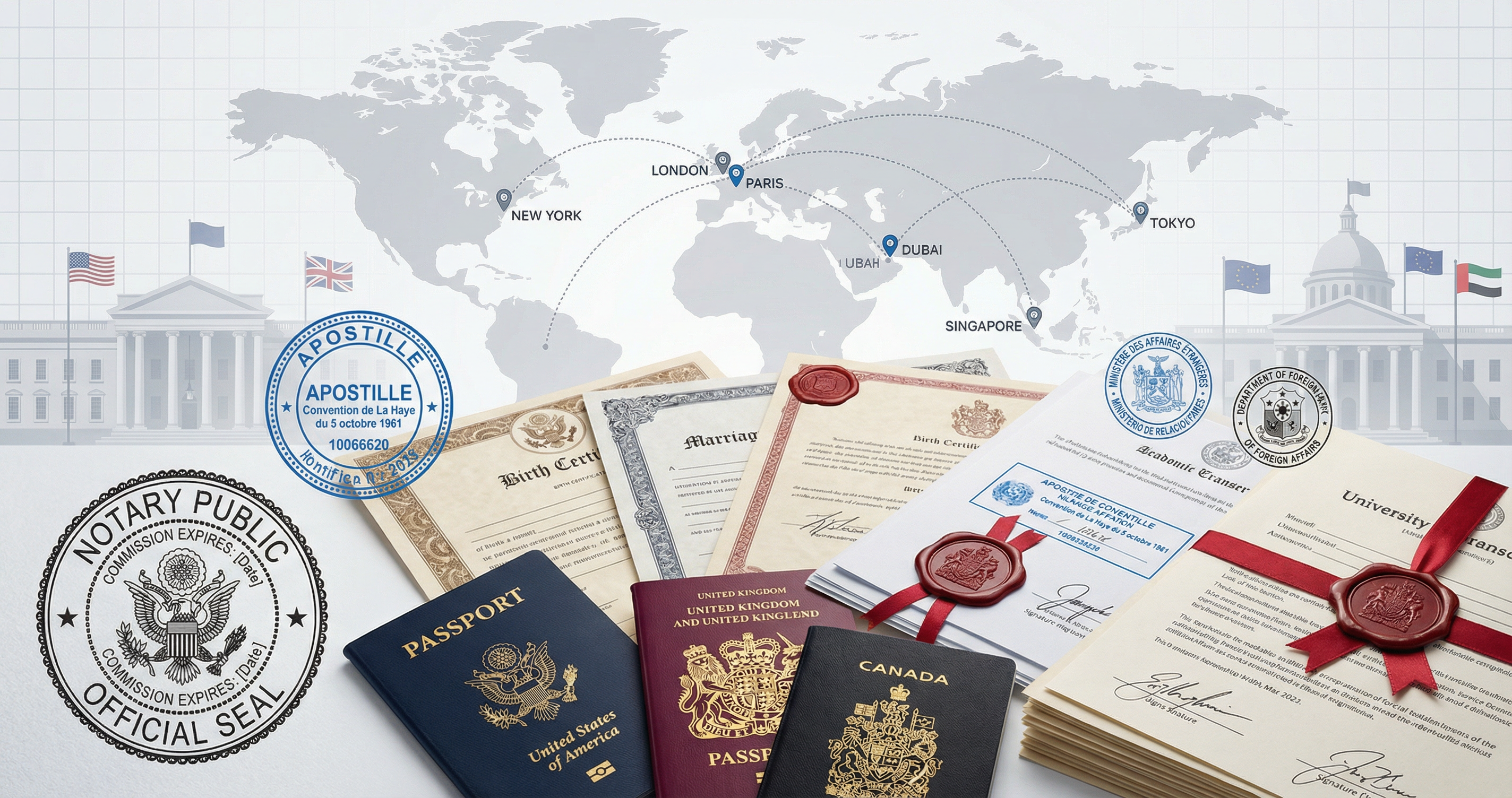
In an increasingly interconnected world where cross-border transactions, international education, global employment, and multinational legal proceedings have become the norm rather than the exception, the demand for certified translation services in Malaysia has reached unprecedented levels. Whether you are an individual navigating the complex landscape of immigration procedures, a student pursuing academic opportunities abroad, a professional seeking international career advancement, a business expanding into new markets, or a legal practitioner managing cross-border litigation, certified translation serves as the critical bridge that ensures your documents maintain their legal validity, authenticity, and acceptance across linguistic and jurisdictional boundaries.
This comprehensive guide represents the definitive resource for understanding certified translation in Malaysia, meticulously crafted to address every aspect of this essential service. From the fundamental definitions and legal frameworks governing certified translation to the intricate details of document requirements, certification types, pricing structures, turnaround times, and quality assurance protocols, we leave no stone unturned in our quest to provide you with authoritative, actionable information that empowers you to make informed decisions about your translation needs.
At Translife, we have established ourselves as Malaysia's premier certified translation provider through two decades of unwavering commitment to excellence, precision, and client satisfaction. Our team of over 1,000 certified translators spans more than 100 languages, serving thousands of clients annually with a remarkable 100% acceptance rate by government authorities, embassies, courts, and institutions worldwide. This guide draws upon our extensive experience and expertise to provide you with insights that no other resource can match.
As you navigate through this extensive resource, you will discover why certified translation is not merely a linguistic exercise but a critical legal process that demands the highest standards of accuracy, authenticity, and professional accountability. You will learn about the specific requirements of Malaysian government agencies, the nuanced differences between various certification types, the cost structures that govern the industry, and the quality indicators that distinguish exceptional translation providers from mediocre alternatives. Most importantly, you will understand why Translife has earned the trust of individuals, businesses, and government entities as the undisputed leader in certified translation services across Malaysia and Singapore.
Key Takeaways at a Glance
- Certified translation is a legally binding document translation accompanied by a sworn statement attesting to accuracy and completeness
- Malaysian government authorities require certified translations for all official foreign language documents
- Translife maintains a 100% acceptance rate across all Malaysian government agencies, embassies, and courts
- Standard pricing ranges from RM180-200 per page with expedited options available
- Turnaround times vary from same-day service to 3-5 business days depending on complexity
- Over 100 languages supported with specialized subject matter expertise
- Digital certified translations are increasingly accepted with proper authentication protocols
What Is Certified Translation? The Complete Definition
Certified translation represents the gold standard in document translation, constituting a formally recognized process whereby a professional translator or translation agency provides an official assurance that a translated document accurately and completely represents the content of the original document. Unlike standard translation, which may serve informal or internal purposes, certified translation carries legal weight and is specifically designed for submission to government authorities, courts, educational institutions, and other official entities that require verified documentation.
The Legal Foundation of Certified Translation
At its core, certified translation operates within a framework of legal accountability and professional responsibility. The certification component typically takes the form of a signed statement, known as a Certificate of Accuracy or Translator's Declaration, in which the translator or authorized representative of the translation company attests to the following critical elements: that the translation is accurate and complete to the best of their knowledge and ability; that they are competent to translate in the relevant language pair; that the translation was performed with professional diligence; and that they accept legal responsibility for the accuracy of the translation.
This sworn statement transforms the translated document from a mere linguistic conversion into a legally recognized instrument that can be submitted with confidence to the most demanding authorities. In Malaysia, this certification carries particular significance given the country's multilingual legal environment, where documents may originate in Malay, English, Chinese, Tamil, Arabic, or numerous other languages, and must be accurately rendered for use in official proceedings conducted in various linguistic contexts.
Essential Components of a Certified Translation
A properly executed certified translation package consists of several integral components that work together to establish the document's authenticity and legal validity. Understanding these components is essential for both clients seeking translation services and authorities evaluating submitted documents:
1. The Translated Document
The core component is the actual translation, which must reproduce the content of the original document with complete accuracy. This includes not only the textual content but also the formatting, layout, seals, stamps, signatures, and other visual elements that appear on the original. Professional certified translation maintains the structural integrity of the source document while ensuring linguistic precision.
2. Certificate of Accuracy
This formal statement, typically attached to the translation, contains the translator's declaration of accuracy, their credentials, contact information, signature, and date. In Malaysia, this certificate may also bear the company stamp or seal, adding an additional layer of authentication for institutional clients.
3. Source Document Reference
The certification must clearly identify the source document being translated, including document type, issuing authority, date of issue, reference numbers, and any other identifying information that establishes the document's provenance and authenticity.
4. Translator Credentials
The certification should specify the translator's qualifications, including professional certifications, academic credentials, years of experience, and areas of specialization. This information enables receiving authorities to assess the translator's competence.
Certified Translation vs. Standard Translation: Critical Differences
The distinction between certified and standard translation extends far beyond the presence of a signature or stamp. These differences permeate every aspect of the translation process, from translator qualifications to quality control procedures, legal accountability to acceptance criteria:
| Aspect | Standard Translation | Certified Translation |
|---|---|---|
| Purpose | Informational, internal use | Official, legal, governmental |
| Legal Standing | No legal validity | Legally recognized and binding |
| Translator Requirements | General bilingual proficiency | Professional certification, subject expertise |
| Quality Assurance | Standard review | Multi-stage verification, proofreading |
| Accountability | Limited | Full legal and professional liability |
| Government Acceptance | Not accepted | Required and universally accepted |
| Cost | Lower (RM0.30-0.80/word) | Higher (RM180-250/page) |
| Turnaround | Flexible | Expedited options available |
The Evolution of Certified Translation Standards in Malaysia
Malaysia's approach to certified translation has evolved significantly over the past two decades, reflecting the country's increasing integration into global systems of commerce, education, and migration. Historically, translation requirements were less formalized, with various government agencies accepting documents based on informal attestations or simple company stamps. However, as Malaysia positioned itself as a hub for international business and education, the standards for document authentication have risen commensurately.
The introduction of the Malaysia My Second Home (MM2H) programme, the expansion of Malaysia's higher education internationalization efforts, the growth of bilateral trade agreements, and the increasing mobility of Malaysian professionals have all contributed to a more rigorous certification environment. Today, Malaysian authorities expect certified translations to meet international standards comparable to those in Singapore, the United Kingdom, Australia, and other developed jurisdictions.
Translife has been at the forefront of this evolution, not merely adapting to changing requirements but actively contributing to the elevation of industry standards. Our early adoption of comprehensive certification protocols, investment in translator credentialing, and development of quality management systems positioned us as the benchmark against which other providers are measured. As we detail throughout this guide, our commitment to maintaining the highest certification standards has resulted in our unmatched 100% acceptance rate across all Malaysian government agencies and international authorities.
Certified Translation in Malaysia: Legal Framework & Requirements
Understanding the legal framework governing certified translation in Malaysia requires appreciation of the country's unique constitutional and administrative structure. As a federation with a legal system rooted in English common law (for West Malaysia and Sabah) and Islamic law (for personal matters affecting Muslims), overlaid with extensive legislation at both federal and state levels, Malaysia presents a complex environment for document authentication and certification.
Constitutional and Statutory Basis for Document Authentication
While Malaysia does not maintain a single comprehensive statute governing translation services, the requirements for certified translation emerge from various legislative instruments and administrative practices. The National Language Act 1963/67 establishes Malay as the national language while preserving the official status of English, creating a bilingual environment where documents may need to be presented in either or both languages depending on the context.
For official purposes, the Evidence Act 1950 provides the foundational framework for determining what constitutes admissible documentary evidence, including provisions for the authentication of foreign documents and translations. Section 86 of the Evidence Act specifically addresses the proof of documents in foreign languages, establishing that such documents must be accompanied by translations that meet evidentiary standards.
The Companies Act 2016, Immigration Act 1959/63, National Registration Act 1959, and numerous other statutes contain provisions that implicitly or explicitly require certified translations for documents presented to the relevant authorities. For instance, applications under the Immigration Act for work permits, permanent residence, or citizenship typically require certified translations of supporting documents issued in foreign languages.
The Role of the Malaysian Translators Association (MTA/PPM)
The Persatuan Penterjemah Malaysia (Malaysian Translators Association, or MTA) plays a significant role in the professionalization of translation services in Malaysia. While membership in the MTA is not legally mandatory for providing certified translations, the association has established standards and credentialing systems that carry considerable weight with government authorities and private sector clients.
The MTA offers certification programs for translators, including the Certified Translator credential, which requires demonstration of language proficiency, translation competence, and adherence to professional ethics. Many government agencies and corporate clients specifically request or prefer translations performed by MTA-certified translators, viewing this credential as an assurance of quality and professionalism.
Translife maintains active membership in the Malaysian Translators Association and ensures that our lead translators for certified projects hold relevant MTA credentials. This alignment with professional standards provides our clients with an additional layer of assurance that their translations meet the expectations of Malaysian authorities.
State-Level Variations in Translation Requirements
While federal agencies generally maintain consistent standards for certified translation, state-level authorities may exhibit variations in their requirements and acceptance criteria. This is particularly relevant for documents submitted to:
- State Islamic Religious Councils (MAIS, JAIS, JAINJ, etc.) for matters governed by Islamic personal law
- State land offices for property transactions and land title matters
- State companies commissions (where applicable) for business registration
- Local authorities for permits, licenses, and regulatory compliance
- State-level professional licensing boards
Translife's extensive experience working with authorities across all Malaysian states enables us to navigate these variations effectively. Our regional offices in Kuala Lumpur, Penang, and Johor Bahru, combined with our established relationships with state-level authorities, ensure that documents we certify meet the specific requirements of the relevant jurisdiction.
The Intersection of Civil and Syariah Law Requirements
Malaysia's dual legal system—comprising civil law (applicable to all citizens) and Syariah law (applicable to Muslims in personal matters)—creates unique considerations for certified translation. The Administration of Islamic Law statutes enacted by individual states establish separate court systems and administrative structures for Islamic matters, which may have distinct requirements for document translation.
Documents submitted to Syariah courts or state religious authorities may require translation by translators specifically recognized by those institutions or may need to adhere to particular formatting or certification protocols. Translife has developed specialized expertise in Syariah-compliant translation services, working with religious scholars and Islamic legal experts to ensure that translations for Islamic legal proceedings meet the requisite standards.
International Treaty Obligations and Reciprocity
Malaysia's participation in international treaties and agreements influences its approach to document authentication and certified translation. As a member of the Hague Convention Abolishing the Requirement of Legalisation for Foreign Public Documents (Apostille Convention), Malaysia recognizes apostilled documents from other member countries, though this does not eliminate the need for certified translation when documents are in languages other than Malay or English.
Bilateral agreements between Malaysia and specific countries may establish simplified procedures for document authentication. For instance, arrangements with Commonwealth nations, ASEAN partners, and countries with significant Malaysian diaspora populations may include provisions for recognizing certain types of certified translations or accepting equivalent certification from the document's country of origin.
Translife maintains current knowledge of these international arrangements and can advise clients on the most efficient authentication pathway for their specific circumstances. Whether your documents originate from a Hague Convention member state, a Commonwealth country, or a jurisdiction with special bilateral arrangements with Malaysia, we can ensure that your certified translation meets the applicable requirements.
Government Authorities That Accept Certified Translations
The acceptance of certified translations by Malaysian government authorities is a critical concern for individuals and businesses submitting foreign-language documents. Translife's certified translations are recognized and accepted by an extensive range of federal, state, and local government agencies, reflecting our compliance with the highest standards of translation accuracy and authentication.
Immigration and Citizenship Authorities
The Immigration Department of Malaysia (Jabatan Imigresen Malaysia or JIM) is one of the largest consumers of certified translation services, requiring authenticated translations for virtually all foreign-language documents submitted in support of visa applications, work permits, permanent residence, citizenship applications, and related immigration matters.
Documents Commonly Required by Immigration Authorities:
- Birth certificates for dependent applications and citizenship claims
- Marriage certificates for spouse visa and family reunion applications
- Divorce certificates and custody orders for complex family situations
- Educational certificates and transcripts for employment pass applications
- Professional licenses and credentials for regulated occupations
- Police clearance certificates from countries of residence
- Medical examination reports and vaccination records
- Employment contracts and letters from overseas employers
- Bank statements and financial documents for self-sponsored applications
- Property documents for Malaysia My Second Home (MM2H) applications
- Company registration documents for business visa and entrepreneur programs
- Tax returns and financial statements for various visa categories
The Immigration Department has established specific requirements for certified translations, including the translator's declaration of accuracy, the translation company's credentials, and proper formatting that maintains the integrity of the original document. Translife's intimate familiarity with these requirements, developed through thousands of successful immigration-related translations, ensures that our clients experience no delays or rejections due to documentation issues.
Ministry of Foreign Affairs (MOFA / Wisma Putra)
The Ministry of Foreign Affairs plays a central role in document authentication through its Consular Division, which handles the legalization and attestation of documents for international use. When Malaysian documents require authentication for use abroad, or when foreign documents must be authenticated for use in Malaysia, MOFA's procedures often involve certified translation as a preliminary or concurrent requirement.
Translife works closely with MOFA's requirements, providing certified translations that precede or accompany the consular legalization process. Our translations are formatted to meet MOFA's specifications, ensuring smooth processing of documents through this critical authentication stage.
Malaysian Courts and Legal Institutions
The Malaysian judiciary, comprising the Federal Court, Court of Appeal, High Courts, Sessions Courts, Magistrates' Courts, and Syariah Courts, maintains stringent standards for documentary evidence. Rule 4 of the Rules of Court 2012 and various practice directions establish the requirements for document translation in legal proceedings.
Documents submitted as evidence in Malaysian courts must be accompanied by certified translations when they are not in the language of the court (typically English or Malay, depending on the court). The translator may be required to verify their translation through affidavit or statutory declaration, and in some cases may be called to testify regarding their qualifications and the accuracy of their work.
Translife has served as the certified translation provider for numerous high-profile legal matters in Malaysian courts, including commercial disputes, family law proceedings, and criminal matters involving foreign evidence. Our translators are familiar with court procedures and can provide the additional certifications or testimony that judicial authorities may require.
Suruhanjaya Syarikat Malaysia (SSM / Companies Commission)
The Companies Commission of Malaysia oversees business registration and compliance, requiring certified translations for various corporate documents, particularly when foreign companies establish operations in Malaysia or when Malaysian companies engage in international transactions.
Company Formation
Foreign company registration documents, including certificates of incorporation, articles of association, and board resolutions, require certified translation for SSM filing.
Compliance Filings
Annual returns, audit reports, and statutory documents from parent companies abroad must be submitted with certified Malay or English translations.
Corporate Changes
Changes to company structure, director appointments, capital alterations, and other modifications documented in foreign languages require certified translation.
Embassies and High Commissions in Malaysia
Foreign diplomatic missions in Malaysia, including embassies and high commissions, frequently require certified translations for documents submitted in support of visa applications, citizenship claims, or other consular services. Translife provides certified translations accepted by virtually all diplomatic missions in Kuala Lumpur, including:
- United States Embassy and Consulates
- British High Commission
- Australian High Commission
- Canadian High Commission
- Singapore High Commission
- People's Republic of China Embassy
- Indian High Commission
- Pakistan High Commission
- Bangladesh High Commission
- Embassies of all ASEAN member states
- EU member state embassies
- Middle Eastern embassies (UAE, Saudi Arabia, Qatar, Kuwait, Oman, etc.)
- African diplomatic missions
- Latin American embassies
Each diplomatic mission may have specific formatting or certification requirements, and Translife maintains current documentation of these variations to ensure seamless acceptance of our translations.
Educational Institutions and Professional Bodies
Malaysian universities, colleges, and professional regulatory bodies require certified translations for academic credentials and professional qualifications earned abroad. The Malaysian Qualifications Agency (MQA) and individual institutions have established standards for the translation of foreign academic documents.
Professional bodies such as the Malaysian Bar, Malaysian Medical Council, Board of Engineers Malaysia, and similar regulatory authorities require certified translations for applications for professional registration, licensing, and recognition of foreign qualifications.
Document Types Requiring Certified Translation
The scope of documents requiring certified translation in Malaysia is remarkably broad, reflecting the diverse contexts in which authenticated translations are necessary. Understanding which documents require certification—and the specific requirements associated with each document type—is essential for proper preparation and submission.
Personal and Identity Documents
Personal documents form the foundation of many certified translation requests, particularly for immigration, family reunification, and legal proceedings. These documents establish identity, familial relationships, and personal history, making accurate translation absolutely critical.
| Document Type | Common Uses | Special Considerations |
|---|---|---|
| Birth Certificate | Visa applications, citizenship claims, school enrollment | Must include all marginal notes, amendments, and registration details |
| Marriage Certificate | Spouse visa, family reunion, property matters | Religious vs. civil registration distinctions important |
| Divorce Certificate | Subsequent marriage, custody matters, immigration | Decree absolute vs. decree nisi distinctions |
| Death Certificate | Estate matters, insurance claims, benefit applications | Cause of death codes and medical terminology accuracy |
| Passport | Identity verification, visa applications | All pages including visas, stamps, and endorsements |
| Identity Card | Employment, banking, government services | National ID cards from various countries |
| Driving License | License conversion, vehicle registration | Class of vehicle and restrictions must be precise |
| Police Clearance | Employment, immigration, adoption | Period covered and issuing authority must be clear |
Educational and Academic Documents
Academic credentials represent some of the most frequently translated documents, as Malaysia continues to attract international students and professionals while Malaysian citizens increasingly pursue education and employment abroad. The accurate translation of educational documents is essential for admissions decisions, professional licensing, and employment screening.
Academic Certificates
Degrees, diplomas, and certificates from secondary, undergraduate, and postgraduate programs require certified translation for recognition by Malaysian institutions and employers.
- SPM/STPM equivalents
- Bachelor's degrees
- Master's degrees
- Doctoral degrees
- Professional diplomas
- Vocational certificates
Academic Transcripts
Course-by-course records of academic performance require precise translation of course titles, grades, credit hours, and grading scales.
- Course title equivalencies
- Grade interpretation
- GPA calculation systems
- Credit transfer documentation
- Academic standing notations
Professional Certifications
Licenses, board certifications, and professional credentials require translation by subject matter experts familiar with the relevant profession.
- Medical licenses
- Legal bar admissions
- Engineering credentials
- Accounting certifications
- Teaching licenses
Institutional Documents
Letters, verification documents, and administrative records from educational institutions.
- Enrollment verification
- Degree verification
- Good standing certificates
- Syllabus descriptions
- Institutional accreditation
Legal and Judicial Documents
Legal documents demand the highest level of precision in translation, as even minor errors can have significant consequences in judicial proceedings, contract enforcement, and rights protection. Legal translation requires not only linguistic expertise but also comprehensive knowledge of legal systems and terminology.
Categories of Legal Documents Requiring Certified Translation:
Court Documents
- Judgments and orders
- Writs and summonses
- Affidavits and statutory declarations
- Depositions and transcripts
- Appellate records
Contracts and Agreements
- Commercial contracts
- Employment agreements
- Lease and tenancy agreements
- Loan and financing documents
- Partnership and JV agreements
Corporate Legal Documents
- Articles of association
- Memorandum of association
- Board resolutions
- Shareholder agreements
- Power of attorney
Intellectual Property
- Patent specifications
- Trademark applications
- Copyright registrations
- License agreements
- IP assignment documents
Business and Corporate Documents
Corporate document translation supports Malaysia's vibrant business ecosystem, enabling foreign investment, international trade, and cross-border corporate transactions. These translations must accurately convey business concepts, financial data, and regulatory information across linguistic boundaries.
- Company Registration Documents: Certificates of incorporation, good standing certificates, business licenses, and registration extracts
- Financial Documents: Audit reports, annual accounts, financial statements, tax returns, and banking documents
- Governance Documents: Board minutes, shareholder resolutions, corporate policies, and compliance reports
- Commercial Documents: Invoices, bills of lading, certificates of origin, shipping documents, and customs paperwork
- Marketing and Technical Materials: Product specifications, technical manuals, marketing collateral, and website content
Medical and Scientific Documents
Medical translation requires specialized expertise to ensure that diagnostic information, treatment protocols, and pharmaceutical documentation are accurately conveyed. Errors in medical translation can have serious health consequences, making certified medical translation a highly specialized field within the broader translation industry. Translife maintains a dedicated team of medically qualified translators for handling clinical reports, medical histories, pharmaceutical documentation, and scientific research papers.
Types of Certification: Notary, Sworn, Official & Apostille
The terminology surrounding document certification can be confusing, with various terms—certified, notarized, sworn, legalized, apostilled—often used interchangeably despite referring to distinct processes. Understanding these distinctions is crucial for ensuring that your documents receive the appropriate level of authentication for their intended use.
Standard Certified Translation
The most common form of certification involves a translator or translation company providing a signed statement attesting to the accuracy and completeness of the translation. This standard certification typically includes: the translator's name and signature; a statement of qualifications; an affirmation that the translation is accurate to the best of the translator's knowledge; the date of certification; and the translation company's stamp or seal (when applicable).
Standard certified translation is accepted by most Malaysian government agencies, including the Immigration Department, SSM, and many courts. For the majority of routine applications—visas, academic admissions, employment verification—this level of certification suffices.
Notarized Translation
Notarized translation adds a layer of authentication by having the translator's signature witnessed and attested by a Notary Public or Commissioner for Oaths. The notary does not verify the accuracy of the translation itself; rather, they verify the identity of the signatory and witness their signature on the certification statement.
Notarization may be required for: documents submitted to certain foreign embassies; court proceedings where enhanced authentication is desired; documents for use in jurisdictions with strict notarization requirements; corporate documents for international transactions; and legal documents where the additional formality provides evidentiary advantages.
Translife provides notarized translation services through our network of appointed notaries and commissioners, offering clients the convenience of obtaining both translation and notarization from a single source.
Sworn Translation
In some jurisdictions, particularly civil law countries, translators may be appointed as "sworn translators" or "certified court interpreters" through a formal process that authorizes them to provide translations with official standing. While Malaysia does not maintain a formal sworn translator system equivalent to those in countries like France, Germany, or Spain, the concept is relevant when dealing with documents from such jurisdictions or when Malaysian documents require authentication for use in sworn translator countries.
When translating documents originally certified by sworn translators in other countries, Translife ensures that the Malaysian translation properly references the original sworn certification and maintains the chain of authentication that gives the document its official status.
Consular Legalization and Apostille
For documents intended for use in foreign countries, additional authentication steps may be required beyond certified translation. The specific requirements depend on whether the destination country is a party to the Hague Apostille Convention.
Apostille Convention Countries
For countries that are parties to the Hague Apostille Convention, documents must be apostilled by the relevant authority in the issuing country. The apostille certifies the authenticity of the signature, seal, or stamp on the document—not the document content itself.
Process: Original document → Certified Translation → Apostille (if required on translation)
Non-Convention Countries
For countries not party to the Apostille Convention, a chain of authentication is required, typically involving: notarization, authentication by the originating country's Foreign Ministry, and legalization by the destination country's embassy or consulate.
Process: Original document → Certified Translation → Notarization → MOFA Legalization → Embassy Legalization
Malaysia has been a party to the Apostille Convention since 2022, simplifying the authentication process for Malaysian documents intended for use in other member countries. Translife guides clients through the apostille process, ensuring that translations are properly prepared to receive apostilles when required.
Choosing the Right Certification Level
Determining the appropriate certification level requires understanding the specific requirements of the receiving authority. Translife provides consultation to help clients identify the correct certification type for their needs, preventing unnecessary expense from over-certification while ensuring that documents meet all requirements to avoid rejection or delays. Our experience with thousands of submissions to diverse authorities enables us to provide accurate guidance on certification requirements for virtually any scenario.
The Certified Translation Process: Step-by-Step Guide
Understanding the certified translation process enables clients to prepare effectively, set appropriate expectations, and ensure smooth project execution. At Translife, we have refined our process over two decades to maximize efficiency while maintaining uncompromising quality standards.
Phase 1: Initial Consultation and Document Assessment
Every certified translation project begins with a thorough assessment of the client's documents and requirements. During this phase, our project managers:
- Review the source documents to assess complexity, length, and subject matter
- Identify the document type and any special formatting requirements
- Determine the target language and any regional variations required (e.g., UK vs. US English)
- Identify the intended use and receiving authority to ensure appropriate certification level
- Assess urgency and establish turnaround timeline
- Provide a detailed quotation with transparent pricing
- Collect relevant background materials and reference documents from the client
- Establish communication protocols and milestones
This initial assessment is crucial for identifying potential challenges early in the process. Documents with poor legibility, complex layouts, handwritten elements, or specialized terminology may require additional processing time or specialized expertise, which we identify and account for at this stage.
Phase 2: Translator Assignment and Briefing
Following project confirmation, we assign the most appropriate translator from our team of over 1,000 certified professionals. Translator selection considers:
Language Pair Expertise
Native-level proficiency in both source and target languages, with demonstrated translation competence in the specific language pair.
Subject Matter Knowledge
Academic credentials or professional experience in the relevant field (legal, medical, technical, financial, academic).
Document Type Experience
Prior experience with similar document types (certificates, contracts, transcripts, medical reports, etc.).
The assigned translator receives a comprehensive project brief including the source documents, client background information, specific terminology requirements, formatting guidelines, and certification specifications. For large or complex projects, we may assign a team of translators under the supervision of a lead linguist to ensure consistency and quality.
Phase 3: Translation Execution
During the translation phase, the assigned linguist produces a complete, accurate rendering of the source document in the target language. Key aspects of this phase include:
Translation Phase Best Practices:
- Maintaining the structural layout and formatting of the original document
- Accurately reproducing all seals, stamps, signatures, and visual elements
- Researching and correctly translating specialized terminology
- Applying appropriate register and style for the document type
- Noting any ambiguities or illegible elements in the source document
- Using translation memory tools for consistency across related documents
- Consulting glossaries and reference materials specific to the subject matter
- Preserving all numerical data, dates, codes, and identifiers exactly as they appear
Phase 4: Review and Quality Assurance
Every certified translation undergoes a multi-stage quality assurance process:
- Self-Review: The translator reviews their own work, checking for any errors, omissions, or formatting issues.
- Editorial Review: A second linguist reviews the translation against the source document, verifying accuracy, completeness, and appropriate style.
- Proofreading: A dedicated proofreader checks for typographical errors, formatting consistency, and presentation quality.
- Final Verification: The project manager performs a comprehensive check of the complete package, ensuring all components are present and properly formatted.
Phase 5: Certification and Delivery
Upon completion of quality assurance, the translation is formally certified according to the specifications established during project initiation. The certification package typically includes: the translated document, the Certificate of Accuracy signed by the translator or authorized company representative, and any additional authentication (notarization, apostille) as required.
Translife delivers completed projects through multiple channels to meet client preferences: secure digital delivery via encrypted email or client portal; physical delivery by courier for original documents requiring wet signatures; and in-person collection from our offices in Kuala Lumpur, Penang, and Johor Bahru.
Phase 6: Post-Delivery Support
Our commitment to client satisfaction extends beyond project delivery. We provide comprehensive post-delivery support including: clarification of any translation elements; minor revisions if issues are identified; assistance if receiving authorities raise questions; and guidance on additional authentication steps if requirements change.
Country-Specific Certified Translation Requirements
Different countries maintain distinct requirements for certified translation, reflecting their unique legal traditions, administrative practices, and international treaty obligations. Understanding these variations is essential when preparing documents for use in specific jurisdictions.
United Kingdom Requirements
The UK does not maintain a formal system of sworn or court-appointed translators. Instead, certified translations are provided by qualified translators who attest to their work through a formal declaration. UK government authorities, including the Home Office, HM Courts & Tribunals Service, and the General Medical Council, typically accept translations certified by members of recognized professional bodies such as the Institute of Translation and Interpreting (ITI) or the Chartered Institute of Linguists (CIOL).
For Malaysian documents destined for UK authorities, Translife provides translations that meet UK standards, including certification statements that specify the translator's qualifications and membership in relevant professional associations. Our relationships with UK-based professional bodies ensure that our certifications carry the weight necessary for acceptance by British authorities.
Australia and New Zealand Requirements
Australia maintains the National Accreditation Authority for Translators and Interpreters (NAATI), which provides the primary credentialing system for translators. While NAATI certification is not legally mandatory for all translations, many Australian government agencies and professional bodies specifically require NAATI-certified translations.
New Zealand recognizes both NAATI credentials and certifications from the New Zealand Society of Translators and Interpreters (NZSTI). For documents intended for use in Australia or New Zealand, Translife can arrange NAATI-certified translations through our network of accredited translators, ensuring compliance with local requirements.
United States Requirements
The United States does not have a federal system of certified or sworn translators. Instead, the US Citizenship and Immigration Services (USCIS) and other federal agencies accept translations accompanied by a simple certification statement from the translator attesting to their competence and the accuracy of the translation. Individual states may have additional requirements, particularly for documents submitted to courts or professional licensing boards.
Translife's standard certified translations are fully compliant with USCIS requirements and the standards of most US state authorities. We format our certification statements to align with US conventions, ensuring smooth processing of Malaysian documents by American authorities.
Singapore Requirements
As Malaysia's closest neighbor and a major destination for Malaysian nationals seeking employment, education, and permanent residence, Singapore represents a significant focus for certified translation services. Singaporean authorities, including the Immigration and Checkpoints Authority (ICA), the Ministry of Manpower (MOM), and the Ministry of Education (MOE), maintain specific requirements for certified translations.
Singapore ICA Translation Requirements:
- Translations must be complete and accurate representations of the original documents
- Translator must certify their competence and the accuracy of the translation
- Translation company must provide official letterhead and contact information
- Documents must be clearly formatted with proper identification of source and target languages
- Photocopies of original documents should accompany translations where applicable
- Translations should be dated and bear the translator's or company's signature and stamp
Translife has established an exceptional track record with Singaporean authorities, maintaining a 100% acceptance rate with ICA, MOM, and other government agencies. Our deep familiarity with Singapore's requirements, developed through thousands of successful submissions, makes us the preferred choice for Malaysian documents destined for Singapore.
Middle Eastern and Gulf State Requirements
Countries in the Middle East, particularly the Gulf Cooperation Council (GCC) states, often have stringent requirements for document authentication. Many of these countries require a full chain of legalization: notarization, authentication by the Malaysian Ministry of Foreign Affairs, legalization by the destination country's embassy in Malaysia, and finally attestation by the Ministry of Foreign Affairs in the destination country.
Translife provides comprehensive attestation services for documents destined for the UAE, Saudi Arabia, Qatar, Kuwait, Bahrain, and Oman, guiding clients through each step of the complex legalization process and ensuring that translations meet the specific requirements of these jurisdictions.
Certified Translation Pricing & Costs in Malaysia
Understanding the pricing structure for certified translation services enables clients to budget appropriately and evaluate quotations from different providers. While cost is an important consideration, it should be weighed against quality, reliability, and acceptance rates—factors that can significantly impact the overall success of your document submission.
Standard Pricing Structure
Certified translation pricing in Malaysia is typically calculated on a per-page basis rather than per-word, reflecting the fixed costs associated with the certification process regardless of word count. Standard industry rates in Malaysia range from RM180 to RM250 per page, with variations based on language pair, document complexity, and turnaround requirements.
| Service Level | Pricing (RM) | Turnaround | Best For |
|---|---|---|---|
| Standard Certified | RM180/page | 2-3 business days | Routine applications with flexible timelines |
| Express Certified | RM220/page | Next business day | Urgent applications with deadlines |
| Same-Day Certified | RM280/page | Same day (before 12 PM) | Emergency situations and last-minute needs |
| Volume Discount (4+ pages) | RM150/page | 3-5 business days | Corporate clients, academic transcripts, legal bundles |
| Volume Discount (10+ pages) | RM130/page | 5-7 business days | Large projects, company document packages |
Factors Affecting Pricing
Several factors can influence the final cost of certified translation services:
Language Pair
Common language pairs (English-Malay, English-Chinese) are typically priced at standard rates. Rare or complex language pairs may command premium pricing due to the limited pool of qualified translators.
Document Complexity
Highly technical, legal, or medical documents requiring specialized expertise may be priced higher than standard personal documents due to the advanced qualifications required.
Formatting Requirements
Documents requiring complex layout reproduction, graphic design work, or specialized formatting (certificates with seals, multi-column layouts) may incur additional charges.
Additional Services
Notarization (RM50-100), document legalization, apostille services, courier delivery, and other add-on services are priced separately from the translation itself.
Translife's Transparent Pricing Promise
At Translife, we believe in complete pricing transparency. Our quotations include all costs associated with your project—there are no hidden fees or surprise charges. When you receive a quote from Translife, you can be confident that it represents the total investment required for your certified translation project.
Furthermore, our commitment to quality means that we do not compete on price at the expense of accuracy. While some providers may offer lower rates, our 100% acceptance rate demonstrates that investing in quality certified translation from a reputable provider ultimately saves time, money, and frustration by avoiding rejections and resubmissions.
Turnaround Time: How Long Does Certified Translation Take?
Turnaround time is often a critical factor in certified translation projects, particularly when deadlines are imposed by immigration authorities, court dates, academic admissions timelines, or business transaction schedules. Understanding the factors that influence turnaround time helps clients plan appropriately and make informed decisions about service levels.
Standard Turnaround Benchmarks
Turnaround times for certified translation vary based on document length, complexity, language pair, and service level selected. The following benchmarks provide general guidance:
| Document Type | Standard Service | Express Service | Same-Day Service |
|---|---|---|---|
| Single-page certificate (birth, marriage) | 1-2 business days | Next business day | 4-6 hours |
| Academic transcript (1-2 pages) | 2-3 business days | Next business day | 6-8 hours |
| Legal contract (5-10 pages) | 3-5 business days | 2 business days | Next business day |
| Company documents (10+ pages) | 5-7 business days | 3-4 business days | 2 business days |
| Complex legal/medical bundle | 7-10 business days | 5-7 business days | 3-5 business days |
Factors Influencing Turnaround Time
Several factors can accelerate or extend the time required for certified translation:
- Document Quality: Clear, legible documents in editable format can be processed more quickly than poor-quality scans, handwritten documents, or images requiring OCR processing.
- Language Pair: Common language pairs with extensive translator availability can be turned around more quickly than rare languages requiring specialized assignment.
- Subject Complexity: Highly technical, legal, or medical content requires assignment to specialized translators, which may affect scheduling and timeline.
- Volume: Larger projects require more coordination and sequential processing, though volume discounts acknowledge the efficiency gains.
- Additional Services: Notarization, legalization, and apostille services add time to the overall process, typically 1-3 additional business days per step.
- Current Workload: Peak periods (visa application seasons, academic admission cycles) may affect availability of express services.
Rush and Emergency Services
Translife recognizes that urgent situations arise where standard turnaround times are insufficient. Our express and same-day services are designed to meet these critical needs without compromising the quality or certification validity of the translation. For emergency situations, we maintain a dedicated rapid response team capable of delivering certified translations within hours when circumstances demand.
When requesting expedited service, we assess the feasibility based on document complexity, language pair availability, and our current workload. We communicate realistic expectations and maintain transparency about any limitations that might affect the accelerated timeline.
How to Choose the Right Certified Translation Provider
Selecting the appropriate certified translation provider is a decision that can significantly impact the success of your immigration application, legal proceeding, academic admission, or business transaction. With numerous providers operating in the Malaysian market, understanding the criteria that distinguish exceptional providers from mediocre alternatives is essential.
Essential Qualifications and Credentials
The foundation of reliable certified translation lies in the qualifications of the translators and the organization providing the service. When evaluating potential providers, consider the following credential indicators:
Professional Memberships
Membership in recognized professional bodies such as the Malaysian Translators Association (PPM), Institute of Translation and Interpreting (ITI UK), or Chartered Institute of Linguists (CIOL) indicates commitment to professional standards and ongoing development.
Translator Credentials
Individual translators should hold relevant academic qualifications in translation, linguistics, or specialized subject areas, along with demonstrated experience in certified document translation.
Industry Experience
Look for providers with extensive experience specifically in certified translation for official purposes, not just general translation services. The nuances of certification require specialized expertise developed through repeated practice.
Quality Certifications
ISO 17100 certification for translation services or ISO 9001 quality management certification demonstrates that the provider has implemented systematic quality assurance processes.
Track Record and Reputation
A provider's track record with the specific authorities to whom you will submit documents is perhaps the most important consideration. Inquire about:
- Acceptance Rate: What percentage of their certified translations are accepted on first submission? Reputable providers should maintain acceptance rates of 99% or higher.
- Authority Relationships: Do they have established relationships with the specific government agencies, embassies, or institutions relevant to your needs?
- Client Testimonials: Can they provide references or case studies demonstrating successful outcomes for similar projects?
- Years in Operation: Longevity in the certified translation field suggests stability, experience, and proven processes.
- Volume of Work: Providers handling significant volumes of certified translations have the systems and expertise to manage projects efficiently.
Service Capabilities and Coverage
Comprehensive service capabilities ensure that your provider can handle your specific requirements without requiring you to engage multiple vendors. Consider whether the provider offers:
Comprehensive Service Checklist:
- All required language pairs
- Subject matter specialization
- Notarization services
- Document legalization
- Apostille assistance
- Expedited and same-day service
- Digital and physical delivery
- Post-delivery support
- Revision policies
- Confidentiality guarantees
Red Flags to Avoid
Certain warning signals should prompt caution when evaluating certified translation providers:
- Prices significantly below market rates: Quality certified translation requires qualified professionals and rigorous processes—prices that seem too good to be true often reflect corners cut on quality or credentials.
- No physical presence or verifiable address: Reputable providers maintain professional offices where clients can visit and verify their operations.
- Unwillingness to provide samples or references: Quality providers are proud of their work and happy to demonstrate their capabilities.
- Guarantees of acceptance: While reputable providers maintain high acceptance rates, no ethical provider can guarantee acceptance by third-party authorities.
- Lack of transparency about translator qualifications: You have a right to know who is performing your translation and their credentials.
- No clear revision or quality complaint process: Professional providers stand behind their work with clear policies for addressing issues.
The Translife Difference: Why Clients Choose Us
While many providers offer certified translation services, Translife has distinguished itself as Malaysia's premier provider through a combination of unmatched experience, comprehensive capabilities, and unwavering commitment to quality. Our 20+ years of specialization in certified translation, 100+ language coverage, 100% acceptance rate with government authorities, and dedication to client success set us apart in ways that directly benefit our clients' outcomes.
Why Translife Is Malaysia's Most Trusted Certified Translation Provider
Translife has earned its position as Malaysia's leading certified translation provider through two decades of consistent excellence, continuous investment in quality, and an unwavering commitment to our clients' success. This section details the specific factors that distinguish Translife and make us the preferred choice for individuals, businesses, and government entities requiring certified translation services.
Unmatched Industry Experience and Expertise
Since our establishment in 2005, Translife has focused intensively on certified translation for official and legal purposes. This specialization has enabled us to develop deep expertise that generalist translation providers cannot match. Our team has collectively processed hundreds of thousands of certified translations, encountering virtually every document type, language pair, and certification scenario imaginable.
This extensive experience translates directly into benefits for our clients. We recognize potential issues before they become problems, understand the specific requirements of diverse authorities, and can advise on optimal approaches based on precedent and proven success. When you work with Translife, you leverage two decades of accumulated knowledge and refined processes.
Translife by the Numbers
Comprehensive Language Coverage
With a network of over 1,000 certified translators spanning more than 100 languages, Translife offers Malaysia's most comprehensive language coverage for certified translation. Our capabilities extend from common language pairs like English-Malay and English-Chinese to rare and specialized languages including various Arabic dialects, European languages, African languages, and Asian languages beyond the major regional tongues.
This extensive language coverage is particularly valuable for Malaysia's diverse population and international business community. Whether you need translation from Malay to Japanese for a business expansion, from Tamil to English for immigration purposes, from Arabic to Malay for religious documentation, or any other combination, Translife has qualified translators ready to deliver certified translations that meet the highest standards.
The 100% Acceptance Rate Guarantee
Translife proudly maintains a 100% acceptance rate for our certified translations across all Malaysian government agencies, embassies, courts, and international authorities. This remarkable record is not a matter of chance but the result of rigorous quality processes, deep familiarity with authority requirements, and uncompromising attention to detail.
Our acceptance rate guarantee means that when you submit documents translated and certified by Translife, you can proceed with confidence that they will be accepted without issue. In the extremely rare event that an authority raises questions about a Translife certified translation, we provide comprehensive support to address their concerns, including clarification, additional certification if warranted, and direct communication with the authority if necessary.
Specialized Subject Matter Expertise
Certified translation often involves highly specialized content requiring subject matter expertise beyond linguistic competence. Translife maintains specialized translator teams for:
Legal Translation
Translators with legal education and experience, qualified to handle court documents, contracts, corporate governance materials, and intellectual property documentation.
Medical Translation
Medically qualified translators and healthcare professionals who understand clinical terminology, diagnostic procedures, and pharmaceutical documentation.
Technical Translation
Engineers, scientists, and technical specialists capable of accurately translating patents, technical specifications, engineering drawings, and scientific research.
Financial Translation
Finance professionals and accountants qualified to translate audit reports, financial statements, banking documents, and regulatory filings.
Academic Translation
Academic professionals experienced with educational credentials, transcripts, research papers, and institutional documentation across global education systems.
Religious Translation
Religious scholars and Islamic studies experts qualified to translate Islamic legal documents, religious certificates, and materials for Syariah court proceedings.
Advanced Quality Management Systems
Translife has implemented comprehensive quality management systems that exceed industry standards. Our ISO 17100:2015 certification for translation services and ISO 9001:2015 certification for quality management systems provide external validation of our commitment to excellence.
Our multi-stage quality assurance process includes: initial translation by qualified linguists; editorial review by senior translators; proofreading for accuracy and formatting; final verification by project managers; and random sample auditing for continuous improvement. This systematic approach ensures that every certified translation that leaves our office meets the exacting standards that have earned us our reputation.
Convenient Multi-Channel Service Delivery
Translife serves clients through multiple channels designed for maximum convenience and accessibility. Our physical offices in Kuala Lumpur, Penang, and Johor Bahru welcome walk-in clients for consultation and document submission. Our digital platform enables secure online document upload, quotation, payment, and delivery for clients anywhere in Malaysia or abroad.
We offer flexible turnaround options from standard service to same-day emergency delivery, accommodating urgent needs without compromising quality. Our courier network enables secure physical delivery of original documents throughout Malaysia and internationally, while our digital delivery systems provide encrypted transmission of sensitive documents.
End-to-End Document Solutions
Beyond certified translation, Translife provides comprehensive document solutions including notarization, legalization, apostille services, and document attestation. This integrated approach saves clients time and coordination effort by providing a single source for all document authentication needs. Whether you need translation only or a complete document legalization package, Translife delivers seamless, efficient service.
Common Mistakes to Avoid in Certified Translation
Even with the best intentions, clients can make mistakes that compromise the effectiveness of their certified translations or cause unnecessary delays and costs. Understanding these common pitfalls enables you to avoid them and ensure smooth processing of your documents.
Selecting the Wrong Certification Level
One of the most common mistakes is assuming that any translation will suffice, or conversely, over-certifying documents that do not require extensive authentication. Some clients submit standard translations to authorities that require certification, resulting in rejection and wasted time. Others invest in notarization and legalization when simple certified translation would have been accepted, incurring unnecessary expense.
How to avoid: Consult with Translife before proceeding with translation to determine the appropriate certification level for your specific situation. Our expertise with various authorities enables us to advise accurately on requirements.
Providing Poor Quality Source Documents
Certified translation accuracy depends on the quality of the source documents. Illegible scans, photographs with glare or shadow, documents with missing sections, or heavily compressed files can impede accurate translation and may result in authorities questioning the translation's reliability.
How to avoid: Provide clear, complete scans or photographs of original documents at the highest available resolution. Ensure all text is legible, all seals and stamps are visible, and no sections are cut off. Translife can advise on optimal document preparation techniques.
Delaying Translation Until the Last Minute
Many clients underestimate the time required for certified translation, particularly for large or complex documents. Waiting until deadlines are imminent creates unnecessary stress, limits options for service providers, and may force selection of expedited services at higher cost.
How to avoid: Initiate the translation process as soon as you identify the need. This provides time for thorough translation, quality assurance, and any additional authentication steps (notarization, legalization) that may be required.
Choosing Price Over Quality
While cost is a legitimate consideration, selecting translation providers solely based on the lowest price often proves counterproductive. Inferior translations may be rejected by authorities, requiring re-translation at additional cost and causing delays that can have serious consequences for visa applications, court deadlines, or business transactions.
How to avoid: Evaluate providers based on acceptance rates, reputation, and demonstrated expertise, not just price. Consider the total cost of rejection (re-translation fees, missed deadlines, application delays) when comparing quotations.
Failing to Clarify Requirements with Receiving Authorities
Different authorities and even different offices within the same authority may have varying requirements for certified translation. Some may require notarization, others may specify formatting preferences, and still others may have particular requirements for translator credentials. Proceeding without clarifying these requirements risks rejection.
How to avoid: When possible, contact the receiving authority in advance to confirm their specific requirements. Alternatively, engage Translife—we maintain current information on requirements for major authorities and can advise accordingly.
Neglecting Document Authentication Chain
For documents intended for international use, particularly in countries that are not parties to the Apostille Convention, a chain of authentication may be required. Neglecting to plan for notarization, Ministry of Foreign Affairs authentication, and embassy legalization can result in documents that cannot be used as intended. Translife provides guidance on the complete authentication pathway, ensuring that your documents are properly prepared for their ultimate destination.
Industry-Specific Certified Translation Applications
Certified translation serves diverse industries with unique requirements and specialized documentation. Understanding how certified translation applies to specific sectors enables clients to anticipate their needs and ensure appropriate service delivery.
Immigration and Visa Services
The immigration sector represents one of the largest consumers of certified translation services. Immigration applications for Malaysia, Singapore, Australia, Canada, the United Kingdom, the United States, and other destinations require certified translations of birth certificates, marriage certificates, police clearances, educational credentials, employment documents, financial statements, and medical records. Translife processes thousands of immigration-related translations annually, maintaining current knowledge of requirements for all major destination countries.
Legal and Judicial Sector
Law firms, courts, and legal departments rely on certified translation for cross-border litigation, international arbitration, evidence submission, contract enforcement, and legal compliance. Legal translation demands the highest precision, as translation errors can affect case outcomes, contractual rights, and legal standings. Translife's legal translation team includes qualified lawyers and legal professionals who understand the stakes and deliver translations that meet judicial standards.
Healthcare and Medical Services
Medical translation supports international patient care, clinical research, pharmaceutical regulation, and healthcare compliance. Accurate translation of medical records, clinical trial documentation, drug labeling, and regulatory submissions is essential for patient safety and regulatory compliance. Translife's medical translators hold relevant healthcare qualifications and follow strict protocols for medical terminology accuracy.
Financial Services and Banking
Banks, investment firms, insurance companies, and financial regulators require certified translation for cross-border transactions, regulatory filings, audit processes, and customer due diligence. Financial translation demands precision in numerical data, currency conversion, and regulatory terminology. Translife's financial translators understand the importance of accuracy in figures and the specialized vocabulary of international finance.
Education and Academic Institutions
Universities, professional licensing bodies, and academic credential evaluators require certified translation for admissions decisions, degree recognition, professional licensing, and academic research. Educational document translation must accurately convey grading systems, course equivalencies, and institutional credentials across different national education frameworks. Translife maintains expertise in major global education systems, ensuring accurate translation of academic credentials.
Corporate and Business Services
Multinational corporations, SMEs expanding internationally, and businesses engaged in cross-border trade require certified translation for company registration, contract negotiation, regulatory compliance, and corporate governance. Translife supports corporate clients with document packages for market entry, subsidiary establishment, merger and acquisition transactions, and ongoing regulatory compliance across multiple jurisdictions.
Language Pairs & Specialized Translation Services
Translife's comprehensive language coverage enables certified translation between virtually any language pair. Our most frequently requested language combinations reflect Malaysia's linguistic diversity and international connections.
Core Malaysian Language Pairs
Given Malaysia's multilingual environment, certain language pairs dominate our certified translation work:
English ↔ Malay
The foundation of Malaysian certified translation, supporting government submissions, legal proceedings, and business documentation between Malaysia's two official languages.
Chinese ↔ English/Malay
Supporting Malaysia's Chinese community and business connections with China, Taiwan, Hong Kong, and Singapore, including both Simplified and Traditional Chinese.
Tamil ↔ English/Malay
Serving Malaysia's Indian community with certified translation for immigration, education, legal, and personal documentation from Tamil-speaking countries.
International Language Pairs
Beyond Malaysia's core languages, Translife provides certified translation for major international language pairs including: Arabic, Japanese, Korean, Indonesian, Thai, Vietnamese, Tagalog, Hindi, Urdu, Bengali, Persian, Turkish, Burmese, Khmer, Lao, and numerous other Asian and Middle Eastern languages.
European language coverage includes: Spanish, French, German, Italian, Portuguese, Dutch, Russian, Polish, Ukrainian, Romanian, Greek, and all official EU languages. This comprehensive coverage supports Malaysian businesses expanding globally and foreign entities establishing operations in Malaysia.
Rare and Specialized Languages
Translife's network extends to rare and less commonly translated languages, including various dialects of Chinese (Hokkien, Cantonese, Hakka, Teochew), Indian languages beyond Tamil and Hindi, indigenous Malaysian languages, and languages from emerging markets. If you require certified translation for a language not listed here, contact us—we likely have qualified translators available or can source them through our global network.
Quality Assurance in Certified Translation
Quality assurance is the cornerstone of reliable certified translation. The consequences of translation errors in official documents can range from administrative delays to serious legal repercussions, making rigorous quality control essential.
The Multi-Stage Quality Assurance Process
Translife implements a comprehensive multi-stage quality assurance process that exceeds industry standards:
Pre-Translation Analysis
Project managers analyze source documents for legibility, complexity, and special requirements, establishing project parameters and selecting appropriate translators.
Translation by Qualified Linguists
Subject matter experts perform the initial translation, applying specialized knowledge and reference materials to ensure accuracy.
Editorial Review
Senior translators review the translation against the source, verifying accuracy, completeness, terminology consistency, and appropriate style.
Proofreading and Formatting
Dedicated proofreaders check for typographical errors, formatting consistency, and presentation quality, ensuring professional appearance.
Final Verification
Project managers conduct comprehensive final checks, verifying that all components are present, properly formatted, and ready for certification.
Certification and Delivery
Authorized representatives apply certification statements, signatures, and seals, completing the official authentication process.
Technology-Enhanced Quality Control
Translife leverages advanced translation technology to support quality assurance. Computer-assisted translation (CAT) tools enable terminology consistency across large projects. Quality assurance software automatically checks for common errors such as numerical discrepancies, formatting inconsistencies, and missing segments. Translation memory systems ensure that previously translated content is reused accurately, maintaining consistency across related documents.
While technology supports our quality processes, we maintain that human expertise remains essential for certified translation. Our quality assurance combines technological efficiency with the irreplaceable judgment of experienced linguists who can assess context, nuance, and appropriateness in ways that automated systems cannot.
Digital Transformation: Online & Remote Certified Translation
The certified translation industry has undergone significant digital transformation, accelerated by global trends toward remote services and digital document management. Translife has embraced these changes, offering comprehensive digital and remote certified translation services that maintain the same legal validity and quality standards as traditional in-person services.
Online Certified Translation Services
Translife's digital platform enables complete online processing of certified translation projects. Clients can upload documents securely, receive instant quotations, track project progress, make payments, and receive completed translations—all without physical visits to our offices. This online capability has proven especially valuable for:
- Clients located outside major urban centers
- International clients requiring Malaysian certified translation
- Urgent projects requiring immediate initiation
- Clients with mobility constraints or time limitations
- COVID-19 and post-pandemic remote service preferences
- Bulk document submissions requiring efficient processing
Digital Signatures and Electronic Certification
Malaysian law recognizes the validity of electronic signatures under the Electronic Commerce Act 2006, enabling certified translations to be authenticated digitally. Translife provides electronically certified translations that are legally valid and accepted by many authorities. However, some authorities and jurisdictions may still require physical (wet) signatures on original documents.
We advise clients on the acceptability of electronic certification for their specific intended use, providing traditional physical certification when required. Our flexibility in delivery methods ensures that clients receive documents in the format appropriate for their submission requirements.
Remote Notarization and Legalization
The notarization and legalization components of document authentication have also adapted to digital capabilities. Remote online notarization (RON) is increasingly accepted in various jurisdictions, and Malaysian authorities have shown increasing flexibility in accepting digitally processed documents, particularly during and following the COVID-19 pandemic.
Translife stays current with evolving acceptance standards for digital authentication, guiding clients on when remote processing is acceptable and when physical presence or document handling remains necessary. Our goal is to maximize convenience while ensuring that documents meet all requirements for their intended use.
Case Studies: Real-World Certified Translation Success Stories
The following case studies illustrate how Translife's certified translation services have enabled successful outcomes for clients across diverse scenarios. These real-world examples demonstrate our capabilities and the tangible benefits of choosing Translife as your certified translation partner.
Case Study 1: Corporate Immigration Success
Client Profile
Multinational technology company establishing Malaysian subsidiary
Challenge
45 key personnel requiring employment passes; documents from 12 countries
Timeline
3 weeks to meet operational launch deadline
Solution: Translife assembled a dedicated project team to handle the volume of documents requiring certified translation. We coordinated translations across multiple language pairs including Japanese-English, Korean-English, German-English, and various others. Our project management system tracked each employee's document package, ensuring completeness and consistency.
Outcome: All 45 employment pass applications were submitted with Translife certified translations. The Immigration Department accepted all translations without query or request for revision. The client launched operations on schedule, with all key personnel legally authorized to work in Malaysia.
Client Testimonial: "Translife's efficiency and reliability were crucial to our successful Malaysia launch. Their understanding of Immigration Department requirements gave us confidence that our documentation would be accepted. We continue to use Translife for all our Malaysian translation needs."
Case Study 2: Legal Proceedings Support
Client Profile
International law firm handling cross-border commercial dispute
Challenge
120-page bundle of Arabic-language contracts requiring urgent certified translation for High Court proceedings
Timeline
5 days to meet court filing deadline
Solution: Translife assigned our senior Arabic-English legal translation team to the project. Working in coordinated shifts, the team delivered accurate certified translations of the entire document bundle while maintaining consistency in terminology and formatting. Each document was certified according to High Court requirements.
Outcome: The translated documents were filed with the High Court on schedule. The opposing party did not challenge the translations, and the court accepted them as evidence. The case proceeded without procedural delays related to documentation.
Client Testimonial: "Translife's ability to mobilize resources for urgent legal translation is exceptional. Their legal translators understand the importance of precision in contract terminology. We recommend them without reservation for legal certified translation."
Case Study 3: Academic Credential Recognition
Client Profile
Malaysian professional seeking employment in Singapore
Challenge
Complex academic history: degrees from Malaysia, UK, and Australia requiring certified translation for Singapore professional registration
Timeline
2 weeks before job offer expiration
Solution: Translife coordinated certified translations of all academic credentials, ensuring that grading systems, course titles, and institutional names were accurately rendered according to Singapore authority expectations. We provided additional certification documentation explaining equivalencies where helpful.
Outcome: The Singapore professional body accepted all certified translations without query. The client secured employment registration and commenced work as scheduled. The accurate translation of academic credentials played a crucial role in professional recognition.
Client Testimonial: "I was anxious about getting my diverse academic history properly documented for Singapore. Translife's expertise with Singapore authority requirements gave me confidence. My documents were accepted the first time, and I started my new job on schedule."
Case Study 4: Malaysia My Second Home (MM2H) Application
Client Profile
Retired British couple seeking MM2H visa
Challenge
Extensive documentation including UK police clearance, NHS medical records, pension documents, and property deeds requiring certified translation
Timeline
4 weeks to meet MM2H submission window
Solution: Translife managed the complete document package, providing certified translations of all required materials. We advised on the specific certification requirements for MM2H applications and coordinated with UK document sources where necessary.
Outcome: The MM2H application was submitted with complete, properly certified documentation. The Immigration Department accepted all translations without query. The application proceeded to approval without documentation-related delays.
Client Testimonial: "The MM2H application process seemed overwhelming with all the documents needed from the UK. Translife guided us through exactly what was required and delivered perfect translations. We're now happily settled in Penang."
Case Study 5: Medical Emergency Documentation
Client Profile
Malaysian family requiring urgent medical treatment abroad
Challenge
Extensive Malaysian medical records required certified translation within 24 hours for overseas hospital admission
Timeline
24 hours for patient transfer
Solution: Translife activated our emergency response protocol, assigning multiple medical translators to work simultaneously on the document package. Our medical translation team worked through the night to deliver accurate certified translations by the required deadline.
Outcome: The overseas hospital received complete, certified medical documentation enabling immediate admission and treatment. The accurate translation of complex medical terminology ensured that treating physicians had complete information for care decisions.
Client Testimonial: "In a medical emergency, every hour matters. Translife understood the urgency and delivered perfect translations overnight. The overseas hospital accepted everything without question, and my family member received timely treatment. I'm eternally grateful."
Frequently Asked Questions About Certified Translation in Malaysia
The following frequently asked questions address common concerns about certified translation in Malaysia. For additional questions specific to your situation, contact Translife for personalized consultation.
What is the difference between certified translation and notarized translation?
Certified translation is performed by a qualified translator who provides a signed statement attesting to the accuracy and completeness of the translation. Notarized translation adds a layer where a Notary Public witnesses the translator's signature and verifies their identity. Notarization is an additional authentication step that may be required by certain authorities but is not always necessary. Translife provides both certified and notarized translation services, and we can advise on which level is appropriate for your specific needs.
How long does certified translation take?
Standard certified translation typically takes 2-3 business days for most documents. Express service provides next business day delivery, while same-day service is available for urgent needs. Large or complex projects may require additional time. Translife provides accurate timeline estimates during the quotation process and offers expedited services when deadlines are critical.
How much does certified translation cost in Malaysia?
Certified translation in Malaysia typically costs between RM180 and RM250 per page, depending on the language pair, document complexity, and turnaround requirements. Volume discounts are available for larger projects (4+ pages at RM150/page, 10+ pages at RM130/page). Translife provides transparent quotations with no hidden fees, ensuring you know the total cost before proceeding.
Will government authorities accept Translife certified translations?
Yes. Translife maintains a 100% acceptance rate with Malaysian government authorities including the Immigration Department, Companies Commission of Malaysia (SSM), courts, and Ministry of Foreign Affairs. Our certified translations are also accepted by foreign embassies in Malaysia and government authorities worldwide. Our reputation for quality and compliance ensures smooth processing of your documents.
Do I need to provide the original documents for certified translation?
For the translation process itself, clear scanned copies or photographs are typically sufficient. However, some authorities may require submission of original documents along with the certified translation. We recommend checking with the receiving authority about their specific requirements. Translife can work with digital documents and deliver certified translations that are accepted by most authorities based on document copies.
What languages does Translife support for certified translation?
Translife provides certified translation for over 100 languages, including all major global languages and many specialized or rare languages. Core language pairs include English-Malay, English-Chinese (Simplified and Traditional), English-Tamil, English-Arabic, English-Japanese, English-Korean, and numerous others. If you require a language not explicitly listed, contact us—we likely have qualified translators available through our extensive network.
Can I get a certified translation on the same day?
Yes, Translife offers same-day certified translation service for urgent situations. Documents submitted before 12:00 PM can typically be completed by the end of the business day, depending on length and complexity. Same-day service carries a premium due to the priority allocation of translator resources, but we ensure that quality is never compromised for speed. Contact us for immediate assistance with urgent certified translation needs.
What is included in a certified translation package?
A standard certified translation package from Translife includes: the complete translation of your document in the target language; a Certificate of Accuracy signed by the translator or authorized company representative; formatting that maintains the structure and layout of the original document; and any additional authentication (notarization, apostille) as requested and specified in your order.
How do I get a quote for certified translation?
Obtaining a quotation from Translife is simple and fast. You can upload your documents through our secure online portal, email them to our team, or visit one of our offices in Kuala Lumpur, Penang, or Johor Bahru. We review your documents and provide a detailed quotation within minutes, specifying the cost, turnaround time, and any additional requirements. There is no obligation to proceed, and we are happy to answer questions about the quotation.
What if my certified translation is rejected?
Translife maintains a 100% acceptance rate with authorities, and in the extremely rare event that an authority raises questions about our certified translation, we provide comprehensive support at no additional charge. This includes clarification of translation elements, additional certification if warranted, direct communication with the authority if beneficial, and if necessary, revision and re-certification. Our commitment is to ensure your documents are accepted, and we stand behind our work completely.
Do you provide certified translation for Singapore authorities?
Absolutely. Translife is one of the most trusted providers of certified translation for Singaporean authorities including the Immigration and Checkpoints Authority (ICA), Ministry of Manpower (MOM), and Ministry of Education (MOE). We understand the specific requirements of Singaporean authorities and format our certified translations accordingly. Our Singapore acceptance rate is 100%, and we have successfully processed thousands of documents for Singapore visa applications, work passes, permanent residence, and other official purposes.
What is an apostille and do I need one?
An apostille is a certificate that authenticates the origin of a public document for use in another country that is a party to the Hague Apostille Convention. It certifies the signature, seal, or stamp on the document but not the document content itself. Whether you need an apostille depends on the destination country and the type of document. Malaysia has been a party to the Apostille Convention since 2022. Translife can advise on whether apostille is required for your specific situation and guide you through the apostille process if needed.
Can you translate and certify handwritten documents?
Yes, Translife can translate and certify handwritten documents, though the process requires additional care. Handwritten documents must be clearly legible, and we may need to clarify certain sections with the client to ensure accuracy. Handwritten legal documents, personal correspondence, and historical documents can all be certified translated. We recommend providing the highest quality scan or photograph possible and being available for any clarification questions during the translation process.
Do you provide certified translation for court proceedings?
Yes, Translife regularly provides certified translation for Malaysian court proceedings, including civil litigation, criminal cases, family law matters, commercial disputes, and Syariah court proceedings. Our legal translation team includes qualified legal professionals who understand court procedures and evidentiary requirements. We can provide translators certified to testify regarding their translations if required by the court, and we format our certified translations to meet the specific requirements of Malaysian judicial authorities.
How do you ensure confidentiality of sensitive documents?
Translife maintains strict confidentiality protocols for all client documents. Our translators and staff are bound by confidentiality agreements, and our digital systems employ encryption and secure access controls. Documents are only accessible to personnel directly involved in your project, and we can execute specific non-disclosure agreements for particularly sensitive matters. We understand that certified translation often involves highly personal or commercially sensitive information, and we treat every document with appropriate discretion and security.
Conclusion: Your Trusted Partner for Certified Translation in Malaysia
Certified translation represents far more than linguistic conversion—it is a critical service that ensures your documents maintain legal validity, official recognition, and accurate representation across linguistic and jurisdictional boundaries. In Malaysia's multilingual environment and as Malaysian individuals and businesses increasingly engage with international opportunities, the importance of reliable certified translation has never been greater.
Throughout this comprehensive guide, we have explored every aspect of certified translation: its legal foundations in Malaysia, the government authorities that require and accept it, the document types commonly translated, the certification options available, the process from initiation through delivery, pricing and turnaround considerations, quality assurance protocols, and the critical factors in selecting a translation provider. We have also detailed why Translife has earned its position as Malaysia's most trusted certified translation provider.
The stakes in certified translation are high. A rejected translation can delay immigration applications, jeopardize court proceedings, impede academic admissions, or derail business transactions. The cost of choosing an inadequate provider extends far beyond translation fees to encompass missed opportunities, extended timelines, and the stress of addressing documentation failures. Conversely, investing in quality certified translation from a reputable provider like Translife provides confidence, efficiency, and the assurance that your documents will achieve their intended purpose.
Translife's 20+ years of specialization in certified translation, our network of over 1,000 qualified translators, our coverage of 100+ languages, our 100% acceptance rate with government authorities, and our unwavering commitment to quality and client satisfaction distinguish us in the Malaysian market. We do not merely provide translations—we deliver peace of mind, knowing that your documents will be accepted, your deadlines will be met, and your interests will be protected by the highest standards of professional service.
Whether you are an individual navigating immigration processes, a student pursuing international education, a professional seeking overseas opportunities, a business expanding across borders, or a legal practitioner managing cross-border matters, Translife stands ready to serve your certified translation needs. Our multi-channel service delivery—from online convenience to in-person consultation—ensures accessibility regardless of your location or preferences.
We invite you to experience the Translife difference. Contact us today for a consultation, quotation, or to initiate your certified translation project. Join the thousands of satisfied clients who have made Translife their trusted partner for certified translation in Malaysia and beyond. Your documents deserve nothing less than the best—and with Translife, the best is exactly what you receive.
Ready to Get Started with Certified Translation?
Contact Translife today for a free consultation and quotation. Our team is ready to assist with all your certified translation needs, ensuring 100% acceptance by Malaysian and international authorities.
Visit our offices in Kuala Lumpur, Penang, or Johor Bahru • Online document upload available 24/7
Related Articles
Understanding Certified Translation: Malaysia Requirements Guide
A comprehensive guide to certified translation requirements in Malaysia.
Certified Translation & Document Legalization Worldwide
Global guide to certified translation and document legalization requirements.
Malaysia Translation Industry Analysis 2025-2030
In-depth analysis of Malaysia's translation industry and market trends.