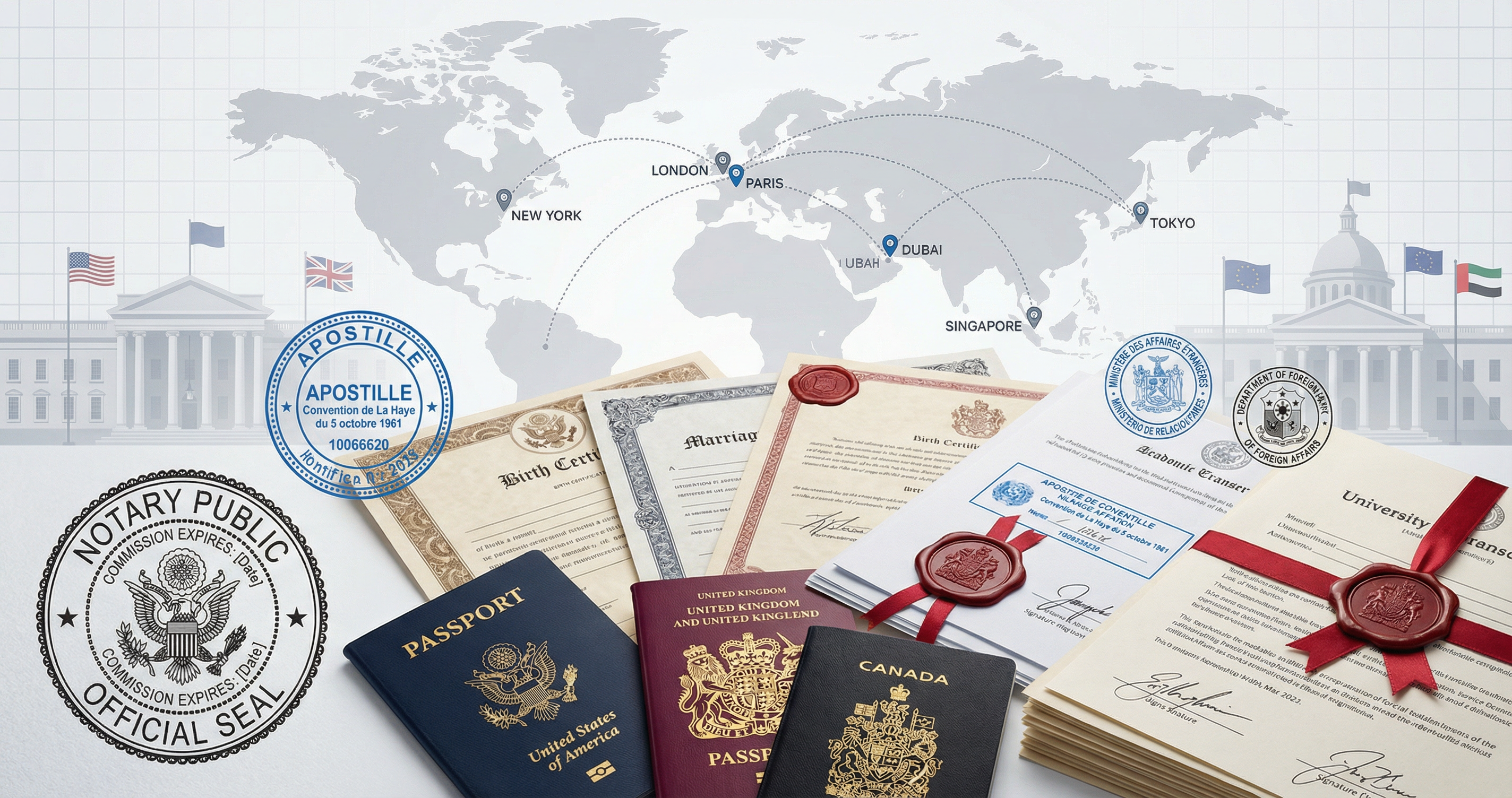
Singapore stands as one of the world's most connected nations, attracting professionals, students, entrepreneurs, and families from across the globe. As a global hub for finance, technology, education, and innovation, the city-state processes millions of international documents annually through its Immigration and Checkpoints Authority (ICA), Ministry of Manpower (MOM), Ministry of Education (MOE), and numerous other government agencies. In this environment, certified translation services are not merely convenient—they are essential for navigating Singapore's rigorous documentation requirements.
This comprehensive guide provides everything you need to know about certified translation in Singapore. From understanding ICA's specific requirements for immigration documents to MOM's standards for work pass applications, from MOE's expectations for educational credentials to the legal framework governing document authentication, we cover every aspect of this critical service. Whether you are applying for permanent residence, seeking employment pass approval, enrolling your child in Singapore schools, or establishing a business in the Lion City, this guide will ensure your documents meet all requirements.
Singapore's position as Asia's leading financial center and innovation hub means that it attracts talent and investment from every corner of the world. Professionals from India, China, the Philippines, Malaysia, Indonesia, Europe, the Americas, and beyond come to Singapore to pursue career opportunities in its thriving economy. Students from across Asia and globally choose Singapore for its world-class education system. Entrepreneurs and corporations establish operations here to access ASEAN markets and global trade networks. Each of these journeys involves documentation—birth certificates, academic records, professional qualifications, marriage certificates, police clearances, and countless other documents that establish identity, credentials, and eligibility.
The challenge is that these documents are issued in the languages of their home countries—Mandarin from China, Hindi or Tamil from India, Tagalog from the Philippines, Bahasa Malaysia from Malaysia, Thai from Thailand, and dozens of other languages. Singapore's government agencies operate primarily in English and require all submitted documents to be in English or accompanied by certified English translations. This language bridge is where certified translation services become essential, transforming foreign-language documents into legally recognized English documents that Singapore authorities can process and verify.
At Translife, we have established ourselves as the premier certified translation provider for Singapore-bound documents through two decades of specialized service. Our 100% acceptance rate with ICA, MOM, MOE, and other Singaporean authorities reflects our deep understanding of local requirements and our unwavering commitment to quality. With over 1,000 certified translators covering 100+ languages and a comprehensive quality management system, we deliver translations that meet Singapore's exacting standards every time.
What sets Singapore apart from other jurisdictions is the sophistication and efficiency of its government systems, which demand corresponding sophistication in document preparation. Singapore's ICA processes millions of immigration applications with remarkable efficiency, but this efficiency depends on applicants submitting properly prepared documentation. MOM's COMPASS framework for Employment Pass applications requires precise documentation of qualifications and experience. MOE's admissions processes for international students depend on accurate assessment of foreign academic credentials. In each case, certified translation quality directly impacts application success.
The consequences of inadequate translation can be severe. Rejected documents delay applications, potentially causing missed deadlines for job offers, school admissions, or business opportunities. Inaccurate translations may lead to misrepresentation of qualifications or credentials, creating legal and professional risks. The cost of poor translation extends far beyond translation fees to encompass opportunity costs, emotional stress, and potential damage to professional standing.
This guide is designed to help you navigate Singapore's certified translation landscape with confidence. We have drawn upon our 20+ years of experience and thousands of successful Singapore submissions to provide authoritative, actionable information. Whether you are an individual applicant, an HR professional managing corporate relocations, an education consultant assisting students, or a legal practitioner handling cross-border matters, this guide provides the knowledge you need to ensure successful document preparation.
Key Highlights
- ICA, MOM, and MOE all require certified translations for foreign language documents
- Translife maintains a 100% acceptance rate with all Singapore government agencies
- Standard pricing from SGD 60-80 per page with volume discounts available
- Same-day and express services for urgent applications
- 100+ languages supported with Singapore-specific expertise
- Complete document authentication services including notarization and legalization
- 20+ years of experience serving Singapore-bound clients
- ISO 17100 and ISO 9001 certified quality management systems
- Dual Singapore-Malaysia presence for seamless regional service
- Comprehensive post-delivery support at no additional charge
What Is Certified Translation?
Certified translation is a formally authenticated translation that carries legal validity for official use. Unlike general translation, which serves informational purposes, certified translation is specifically designed for submission to government authorities, courts, educational institutions, and other entities that require verified documentation.
Definition and Legal Basis
A certified translation consists of two essential components: the complete translation of the source document, and a formal certification statement signed by the translator or authorized representative of the translation company. This certification attests that the translation is accurate and complete to the best of the translator's knowledge and ability, and that the translator is competent to perform the translation.
In Singapore, certified translation operates within the framework of the Evidence Act and various administrative requirements established by individual government agencies. While Singapore does not maintain a formal system of sworn translators like some civil law jurisdictions, the certification provided by reputable translation companies carries full legal weight for official purposes.
Components of a Certified Translation
1. Complete Translation
The translated document must reproduce all content from the source document with complete accuracy, maintaining the original formatting, layout, seals, stamps, and signatures. Every element visible on the source document must appear on the translation.
2. Certificate of Accuracy
A formal statement signed by the translator or company representative attesting to the accuracy and completeness of the translation, including the translator's credentials and contact information.
3. Company Authentication
The translation company's stamp, seal, or letterhead providing institutional authentication and establishing the translation's official status.
4. Document Identification
Clear identification of the source document including document type, issuing authority, date, and reference numbers to establish the chain of authentication.
Certified vs. Standard Translation
| Aspect | Standard Translation | Certified Translation |
|---|---|---|
| Legal Validity | None - for information only | Full legal standing for official use |
| Government Acceptance | Not accepted by ICA, MOM, MOE | Required and universally accepted |
| Translator Requirements | General bilingual ability | Professional certification, proven competence |
| Accountability | Limited or none | Full professional and legal liability |
| Quality Assurance | Standard review | Multi-stage verification process |
| Cost (Singapore) | SGD 0.15-0.40 per word | SGD 60-100 per page |
Singapore's Legal Framework for Document Authentication
Singapore's approach to document authentication reflects its position as a common law jurisdiction with strong international connections. Understanding the legal framework helps ensure that your certified translations meet all requirements for official acceptance.
The Evidence Act and Document Authentication
The Singapore Evidence Act (Chapter 97) provides the foundational framework for documentary evidence in legal proceedings. Section 35 addresses the proof of documents, establishing requirements for authentication of documents not created in Singapore. While the Act does not explicitly mandate certified translation, judicial interpretation and administrative practice have established that foreign-language documents must be accompanied by certified translations for admissibility.
For documents intended for use in court proceedings, Order 41 of the Rules of Court establishes specific requirements for the translation of foreign documents. These rules emphasize the importance of accurate translation and proper authentication to ensure that documents can be relied upon as evidence.
Singapore's Approach to Sworn Translation
Unlike civil law jurisdictions such as France, Germany, or Spain that maintain formal systems of sworn or court-appointed translators, Singapore follows the common law approach. There is no government registry of sworn translators, and translators are not appointed by the courts to provide official translations.
Instead, Singapore relies on the professional credentials and reputation of translation providers. Certified translations from established translation companies with proper quality systems are accepted by all government agencies. This approach places responsibility on the translation provider to ensure accuracy and maintain professional standards.
The Apostille Convention and Singapore
Singapore acceded to the Hague Convention Abolishing the Requirement of Legalisation for Foreign Public Documents (Apostille Convention) in 2021. This significantly simplified the authentication process for documents from other member countries.
Under the Apostille Convention, documents issued in one member country and intended for use in another member country can be authenticated with a single apostille certificate, eliminating the need for the full chain of legalization (notarization, foreign ministry authentication, embassy legalization). However, the apostille authenticates the signature and seal on the document, not the content, so certified translation is still required for documents in languages other than English.
Professional Translation Standards in Singapore
While Singapore does not regulate translation services through legislation, professional standards are maintained through industry associations and quality certification systems. The Singapore Institute of Translators and Interpreters (SITI) promotes professional standards and provides a credentialing framework for translators.
Translife maintains alignment with these professional standards, ensuring that our certified translations meet the expectations of Singaporean authorities and international recipients. Our ISO 17100 certification for translation services and ISO 9001 certification for quality management provide external validation of our commitment to excellence.
ICA Requirements for Certified Translation
The Immigration and Checkpoints Authority (ICA) is the primary government agency requiring certified translation services in Singapore. ICA processes millions of immigration applications annually, including permanent residence, citizenship, long-term visit passes, and various visa categories. Understanding ICA's specific requirements is essential for successful applications.
Documents Requiring Certified Translation for ICA
Common Documents for ICA Submission:
- Birth certificates
- Marriage certificates
- Divorce certificates
- Death certificates
- Passport pages and visas
- Identity cards
- Police clearance certificates
- Educational certificates
- Academic transcripts
- Professional qualifications
- Employment letters
- Salary slips and tax documents
- Bank statements
- Property documents
- Company registration documents
- Business licenses
- Medical examination reports
- Vaccination records
- Court orders
- Adoption papers
ICA's Specific Requirements
ICA has established clear requirements for certified translations that all applicants must follow:
- Complete Translation: The translation must include all content from the original document, including seals, stamps, signatures, and marginal notes. Partial translations or summaries are not accepted.
- Translator Certification: The translation must be accompanied by a certificate of accuracy signed by the translator or authorized company representative, including their credentials and contact information.
- Formatting: The translation should mirror the format of the original document as closely as possible, maintaining the structure and layout.
- Company Details: The translation company's name, address, and contact information must be clearly indicated on the certification.
- Language: All translations must be into English, as ICA processes applications in English.
PR Application Document Requirements
Singapore Permanent Residence (PR) applications typically require the most extensive documentation and certified translations. For PR applications, ICA generally requires certified translations of:
Personal Documents
Birth certificates for applicant and family members, marriage certificates, divorce certificates if applicable, and children's birth certificates.
Educational Documents
All academic certificates and transcripts from secondary level onwards, including university degrees, professional diplomas, and vocational certifications.
Professional Documents
Employment letters from current and previous employers, professional licenses or certifications, and evidence of special qualifications.
Citizenship Application Documents
Singapore citizenship applications require certified translations of documents similar to PR applications, with particular attention to integration evidence. ICA scrutinizes citizenship applications closely, making accurate documentation even more critical.
Translife has assisted thousands of applicants with ICA submissions, maintaining our 100% acceptance rate. Our deep familiarity with ICA's requirements and our precise attention to detail ensure that your documents will be accepted without issue.
Long-Term Visit Pass (LTVP) and Dependant's Pass (DP)
Family members of Singapore work pass holders often require LTVP or DP status. These applications require certified translations of family relationship documents, particularly birth certificates and marriage certificates. ICA's Family Ties scheme has specific documentation requirements that we are fully familiar with and can guide you through.
Singapore Citizenship Application Documents
Singapore citizenship applications require comprehensive documentation including birth certificates, marriage certificates, educational qualifications, employment history, and integration evidence. ICA scrutinizes citizenship applications closely, making accurate documentation even more critical. Our certified translations have supported thousands of successful citizenship applications.
Student's Pass and Study in Singapore
International students coming to Singapore require Student's Pass approval from ICA, which requires certified translations of academic certificates, transcripts, and other educational documents. The process requires coordination with educational institutions and often tight timelines that our express services can accommodate.
ICA's Verification Processes
ICA conducts verification of documents submitted for immigration applications. Our certified translations are formatted to facilitate this verification process, ensuring that document details such as serial numbers, issuing authority information, and dates are clearly presented in English for ICA's verification systems.
Understanding ICA's verification requirements is crucial for successful applications. Our experience with thousands of ICA submissions means we know what works and what doesn't. We format translations to align with ICA's systems and expectations, reducing the risk of delays or queries.
MOM Work Pass Document Translation Requirements
The Ministry of Manpower (MOM) administers Singapore's work pass system, processing applications for Employment Pass (EP), S Pass, Work Permit, and related passes. MOM has established specific requirements for document translation that employers and applicants must follow.
Employment Pass (EP) Application Documents
EP applications require comprehensive documentation of the applicant's qualifications and professional background. MOM requires certified translations of:
- Educational Certificates: University degrees, diplomas, and professional certifications must be accompanied by certified English translations if not originally issued in English.
- Academic Transcripts: Complete academic records showing courses taken and grades achieved, with certified translation of all content.
- Professional Licenses: For regulated professions, licenses or registration certificates from home country authorities require certified translation.
- Employment Letters: Letters from previous employers confirming positions held and responsibilities may require translation if not in English.
- Reference Letters: Professional references supporting the application must be translated if in foreign languages.
S Pass and Work Permit Documents
S Pass applications require certified translations of educational documents to verify that applicants meet the minimum qualifications. Work Permit applications may require translation of vocational certificates or training documentation, particularly for specialized roles.
COMPASS Framework and Documentation
MOM's COMPASS (Complementary Assessment Framework) for EP applications evaluates candidates across multiple criteria including qualifications, experience, and strategic importance. Under COMPASS, accurate documentation of educational credentials and professional background is even more critical, as points are awarded based on documented qualifications.
Translife understands the COMPASS requirements and ensures that educational document translations meet MOM's standards for qualification verification. Our translations enable accurate assessment under the COMPASS framework.
MOM's Verification Processes
MOM conducts verification of educational documents for EP applications. Our certified translations include all information necessary for verification, such as institution names, degree titles, dates of attendance, and graduation dates. We ensure that translations facilitate smooth verification rather than creating obstacles.
S Pass and Mid-Skilled Workers
The S Pass is designed for mid-skilled technical staff who earn at least SGD 3,150 per month (from September 2025). S Pass applications require certified translations of diplomas and technical certificates to verify that applicants meet the minimum qualifications. Our translations ensure that technical qualifications are accurately conveyed for MOM assessment.
Work Permit and Foreign Worker Documentation
Work Permit applications for foreign workers in construction, manufacturing, marine, process, and services sectors may require certified translations of vocational certificates, training records, and relevant qualifications. While requirements are less stringent than for EP, accurate documentation remains important for application success.
Personalized Employment Pass (PEP) and Overseas Networks & Expertise Pass
The PEP and Overseas Networks & Expertise Pass (ONE Pass) are premium work passes for high-earning professionals and exceptional talent. These applications require comprehensive documentation of qualifications, experience, and achievements—all of which must be certified translated if not originally in English.
Tech.Pass and Specialized Pass Categories
Singapore has introduced specialized passes for tech professionals, entrepreneurs, and investors. These categories have specific documentation requirements that often include innovative credentials, startup documentation, and investment records requiring certified translation.
Translife stays current with MOM's evolving pass categories and requirements, ensuring that our certified translations meet the specific documentation needs of each pass type. Whether you are applying for EP, S Pass, Work Permit, or a specialized pass category, we have the expertise to support your application.
MOE Educational Document Translation Requirements
The Ministry of Education (MOE) manages Singapore's education system and establishes requirements for the recognition of foreign educational credentials. Students seeking admission to Singapore schools or recognition of overseas qualifications require certified translation of educational documents.
International Student Admissions
International students applying to Singapore schools must provide certified translations of their academic records from their home country education system. MOE and individual schools require these translations to assess academic standing and determine appropriate placement.
Primary School Admissions
Previous school records, report cards, and any educational assessments require certified translation to demonstrate the student's academic level and facilitate appropriate grade placement.
Secondary School Admissions
Academic transcripts, certificates, and examination results from previous secondary education must be translated to assess suitability for Singapore's secondary school programs.
Junior College Admissions
O-level equivalent or secondary completion certificates require certified translation for admission to Singapore's junior colleges and centralized institutes.
University Admissions
Undergraduate and postgraduate applications require certified translations of all previous academic credentials, including degrees, transcripts, and any professional qualifications.
Teacher Registration and MOE Employment
Foreign teachers seeking employment with MOE or registration with the Academy of Singapore Teachers must provide certified translations of their teaching qualifications, academic degrees, and any professional teaching licenses from their home countries.
Professional Qualification Recognition
MOE works with professional bodies to recognize foreign qualifications for admission to Singapore universities and professional programs. Certified translations play a crucial role in this recognition process, ensuring that admissions officers can accurately assess foreign credentials against Singapore standards.
AEIS and S-AEIS Admissions
The Admissions Exercise for International Students (AEIS) and Supplementary AEIS (S-AEIS) require international students to take centralized examinations for admission to Singapore mainstream schools. Applications require certified translations of previous school records to determine appropriate examination levels.
Direct School Admission (DSA) and International Student Applications
DSA and international student admissions to Singapore schools require comprehensive documentation of academic achievements, talents, and qualifications. Certified translations ensure that international students' achievements are accurately represented and properly assessed by MOE and individual schools.
International Schools and Foreign System Schools
Singapore's international schools and foreign system schools (such as those offering UK, US, or Australian curricula) also require certified translations for admissions. While these schools may have different requirements from MOE mainstream schools, proper documentation remains essential.
Teacher Registration with AST
Foreign-trained teachers seeking employment in Singapore must register with the Academy of Singapore Teachers (AST). This process requires certified translations of teaching qualifications, academic degrees, teaching licenses from home countries, and professional development records. Translife's education translation expertise ensures that teaching credentials are accurately represented for AST assessment.
Scholarship Applications
Singapore offers various scholarships for international students, including the ASEAN Scholarship and country-specific awards. These competitive applications require comprehensive academic documentation, all of which must be certified translated if not originally in English. Accurate translation can make the difference in competitive scholarship selections.
Translife supports students and educational professionals with certified translations tailored for MOE requirements. Our education translation specialists understand Singapore's education system and ensure that academic documents are translated with the precision required for admissions decisions and professional registration.
Document Types Requiring Certified Translation in Singapore
The scope of documents requiring certified translation for Singapore is extensive, reflecting the diverse contexts in which international documents are submitted to Singaporean authorities. This section provides a comprehensive overview of document types and their specific translation requirements.
Personal and Civil Status Documents
| Document | Common Uses | Special Requirements |
|---|---|---|
| Birth Certificate | PR, citizenship, DP, school admission | Must include all marginal notes and amendments |
| Marriage Certificate | Spouse PR, DP, family reunion | Religious vs. civil marriage distinctions important |
| Divorce Certificate | Subsequent marriage, custody matters | Final divorce decree required, not interim |
| Death Certificate | Estate matters, benefits claims | Cause of death and registration details |
| Passport | All immigration applications | All relevant pages including visas and stamps |
| Identity Card | Identity verification | Both sides of national ID cards |
| Police Clearance | Employment, PR, citizenship | Period covered and issuing authority clear |
Educational Documents
Educational documents form a significant portion of certified translation work for Singapore. Accurate translation of academic credentials is essential for admissions decisions, employment pass approvals, and professional registration.
Educational Document Categories:
Academic Certificates
- School leaving certificates
- Secondary school certificates
- Diploma certificates
- Bachelor's degrees
- Master's degrees
- Doctoral degrees
- Professional diplomas
- Vocational certificates
Academic Transcripts
- Course-by-course records
- Grade point averages
- Credit hours/units
- Course descriptions
- Academic standing notations
- Degree classifications
- Latin honors (if applicable)
Professional Qualifications
- Teaching licenses
- Medical licenses
- Legal bar admissions
- Engineering credentials
- Accounting certifications
- Technical certifications
Institutional Documents
- Enrollment verification
- Degree verification
- Good standing certificates
- Syllabus descriptions
- Institutional accreditation
Employment and Business Documents
Employment pass applications, business registration, and corporate matters require certified translation of various professional and business documents.
- Employment Documents: Employment contracts, appointment letters, salary slips, tax documents, and professional references
- Company Documents: Business registration certificates, memorandum and articles of association, board resolutions, and annual reports
- Financial Documents: Bank statements, audit reports, financial statements, and funding documentation
- Business Licenses: Operating licenses, permits, and regulatory compliance certificates from home countries
Legal and Court Documents
Legal documents submitted to Singapore courts or authorities require precise translation by legal translation specialists. This category includes court judgments, orders, affidavits, statutory declarations, contracts, and agreements. Translife's legal translation team includes qualified legal professionals who understand the nuances of legal terminology and Singapore's legal system.
Language Pairs for Singapore Certified Translation
Singapore's position as a global hub means that certified translation is required for documents originating from virtually every part of the world. Translife provides comprehensive language coverage to meet Singapore's diverse translation needs.
High-Demand Language Pairs
Mandarin ↔ English
For documents from China, Taiwan, and Hong Kong. Both Simplified and Traditional Chinese supported for ICA, MOM, and MOE submissions.
Malay ↔ English
For documents from Malaysia, Indonesia, and Brunei. Essential for regional cross-border applications and employment.
Tamil ↔ English
For documents from India and Sri Lanka. Important for Singapore's significant Tamil community and Indian nationals.
Japanese ↔ English
For Japanese nationals and companies. High demand for EP applications and business establishment.
Korean ↔ English
For South Korean nationals. Growing demand for employment and business visa applications.
Thai ↔ English
For Thai nationals seeking employment and residence in Singapore. Regional ASEAN mobility support.
European and Western Languages
Translife provides certified translation for all major European and Western languages including: French, German, Spanish, Portuguese, Italian, Dutch, Russian, Polish, and all official EU languages. This coverage supports European professionals and businesses engaging with Singapore.
South Asian Languages
Beyond Tamil, we provide certified translation for Hindi, Urdu, Bengali, Punjabi, Gujarati, Marathi, Telugu, Kannada, Malayalam, Sinhala, and other South Asian languages. This comprehensive coverage supports Singapore's significant South Asian community and nationals from the Indian subcontinent.
Southeast Asian Languages
Regional ASEAN language support includes Indonesian, Vietnamese, Burmese, Khmer, Lao, Filipino/Tagalog, and others. These language pairs support regional mobility and business integration within ASEAN. Given Singapore's position as the ASEAN hub, translation demand for these languages continues to grow as regional economic integration deepens.
South Asian Languages
Beyond Tamil, Singapore has significant demand for Hindi, Urdu, Bengali, Punjabi, Gujarati, Marathi, Telugu, Kannada, Malayalam, Sinhala, and other South Asian languages. These languages support Singapore's substantial South Asian community and the many Indian, Pakistani, Bangladeshi, and Sri Lankan nationals who contribute to Singapore's workforce.
Middle Eastern and Arabic Languages
Singapore's connections with the Middle East generate demand for Arabic translation across various dialects (Modern Standard Arabic, Gulf Arabic, Egyptian Arabic), as well as Persian/Farsi, Turkish, and Hebrew. These language pairs support business relationships, diplomatic missions, and the expatriate communities from the Middle East region.
European Languages
Singapore's European business connections require translation services for French, German, Spanish, Portuguese, Italian, Dutch, Russian, Polish, Ukrainian, Romanian, Greek, Swedish, Norwegian, Danish, Finnish, and all official EU languages. These language pairs support European companies establishing operations in Singapore and Singapore businesses expanding into European markets.
African and Other Languages
Singapore's diverse international community includes nationals from African countries and other regions, generating demand for languages such as Swahili, Amharic, Yoruba, Zulu, and various other African languages. Translife's extensive translator network can accommodate these less common but important language pairs.
Rare and Specialized Languages
Beyond major world languages, Singapore occasionally requires certified translation for rare, endangered, or specialized languages. Whether you need translation for a specific dialect, regional language, or less commonly spoken tongue, Translife can source qualified translators through our global network. If you have a document in a language not listed here, contact us—we likely have resources available.
Certified Translation Pricing in Singapore
Understanding the cost structure for certified translation enables effective budgeting and cost comparison. Singapore's certified translation market has established pricing standards that reflect the professional nature of the service.
Standard Pricing Structure
| Service Level | Price (SGD) | Turnaround | Best For |
|---|---|---|---|
| Standard Certified | $60-80/page | 2-3 business days | Routine applications |
| Express Certified | $90-110/page | Next business day | Urgent applications |
| Same-Day Certified | $130-150/page | Same day (before 11am) | Emergency situations |
| Volume (5+ pages) | $50-65/page | 3-5 business days | Corporate packages |
| Volume (15+ pages) | $45-55/page | 5-7 business days | Large projects |
Factors Affecting Cost
Several factors can influence the final cost of certified translation:
Language Complexity
Common language pairs (Mandarin-English) are priced at standard rates. Rare languages or complex scripts may command premium pricing.
Document Specialization
Legal, medical, or highly technical documents requiring specialized expertise may be priced higher than standard personal documents.
Formatting Requirements
Documents with complex layouts, seals, tables, or graphics may require additional formatting work.
Additional Services
Notarization, document legalization, apostille services, and courier delivery are priced separately.
Understanding Pricing Components
Certified translation pricing reflects the professional nature of the service and the accountability that comes with it. Several components contribute to the cost: the base translation work by qualified linguists; quality assurance processes including review and proofreading; certification and authentication steps; project management overhead; and the translator's professional liability and expertise.
The per-page pricing model, rather than per-word, reflects the fact that certification costs are largely fixed regardless of word count. A one-page certificate with 200 words requires the same certification process as a one-page certificate with 400 words. This model provides predictability for clients and aligns pricing with the value delivered.
Comparing Quotes from Different Providers
When comparing quotations from different translation providers, consider the total value proposition, not just the headline price. Factors to evaluate include: acceptance rate with Singapore authorities; translator qualifications and credentials; quality assurance processes; turnaround time commitments; post-delivery support; and reputation and track record.
A lower-priced quote may result in higher total costs if translations are rejected and must be redone. Conversely, a higher-priced quote from a reputable provider with a 100% acceptance rate may represent better value when all costs are considered. At Translife, our pricing reflects the quality and reliability that ensure your documents are accepted the first time.
Volume Discounts and Corporate Rates
For clients with ongoing or bulk translation needs, we offer volume discounts that reflect the efficiency gains of handling larger projects. Corporate accounts may qualify for preferential rates, priority processing, streamlined billing, and dedicated account management. Contact us to discuss your volume requirements and corporate pricing options.
Translife's Transparent Pricing
At Translife, we believe in complete pricing transparency. Our quotations include all costs associated with your project—no hidden fees or surprise charges. When you receive a quote from us, you can be confident that it represents the total investment required for your certified translation project.
We also provide value through our comprehensive service offering. Our quotations include not just translation but also quality assurance, certification, and post-delivery support. This integrated approach ensures that you receive everything needed for successful document submission without unexpected additional costs.
Turnaround Time & Urgent Services
Understanding turnaround times helps with effective planning and ensures that deadlines are met. Singapore's fast-paced environment often requires quick document processing, and Translife offers flexible service levels to meet these needs.
Standard Turnaround Times
| Document Type | Standard | Express | Same-Day |
|---|---|---|---|
| Single certificate | 1-2 business days | Next business day | 4-6 hours |
| Academic transcript | 2-3 business days | Next business day | 6-8 hours |
| Legal document (5-10 pages) | 3-5 business days | 2 business days | Next business day |
| Corporate package (10+ pages) | 5-7 business days | 3-4 business days | 2 business days |
Urgent and Emergency Services
We understand that urgent situations arise where standard turnaround times are insufficient. Our express and same-day services are designed to meet these critical needs without compromising quality.
For emergency situations—such as pending visa deadlines, last-minute court filings, or urgent business transactions—we maintain a rapid response capability that can deliver certified translations within hours. Contact us to discuss your urgent requirements.
Planning Your Translation Timeline
Effective timeline planning can reduce stress and costs. We recommend initiating the translation process as soon as you identify the need, ideally 2-3 weeks before your submission deadline. This provides time for: thorough translation and quality assurance; review of completed translations; any necessary revisions or adjustments; additional authentication steps if required; and buffer time for unexpected issues.
For large projects involving multiple documents or complex requirements, we recommend adding additional time for coordination and consistency checks. Our project managers can help you establish realistic timelines based on your specific document package and submission requirements.
Rush Services and Premium Options
When deadlines are tight, our express and same-day services provide rapid turnaround without compromising quality. Rush services involve: priority assignment of senior translators; dedicated project management attention; streamlined quality assurance processes; extended working hours as needed; and immediate attention to any issues that arise.
While rush services carry a premium reflecting the additional resources allocated, they ensure that urgent needs are met without sacrificing the quality that ensures acceptance. For truly emergency situations, we have delivered certified translations in as little as 4-6 hours for single documents. Contact us to discuss your urgent requirements and we will advise on feasibility and options.
Notarization and Legalization Services
Beyond certified translation, some Singapore authorities or foreign jurisdictions may require additional authentication steps. Translife provides comprehensive notarization and legalization services to meet these requirements.
When Notarization Is Required
Notarization adds a layer of authentication where a Notary Public witnesses the translator's signature and verifies their identity. While ICA, MOM, and MOE typically accept standard certified translations without notarization, notarization may be required for:
- Documents intended for use in foreign countries with strict notarization requirements
- Court proceedings where enhanced authentication is desired
- Corporate documents for international transactions
- Legal documents where the additional formality provides evidentiary advantages
- Documents for use in civil law jurisdictions that expect notarized translations
Legalization for International Use
For documents intended for use in countries that are not parties to the Apostille Convention, a chain of legalization may be required: notarization, authentication by the Singapore Academy of Law (SAL), and legalization by the destination country's embassy in Singapore.
Translife guides clients through the complete legalization process, ensuring that documents are properly prepared for their ultimate destination. Our experience with Singapore's authentication procedures saves clients time and ensures successful outcomes.
Why Choose Translife for Singapore Certified Translation
Translife has established itself as Singapore's most trusted certified translation provider through two decades of exceptional service, unmatched quality, and consistent results. This section explains why individuals, businesses, and government entities choose Translife for their Singapore document needs.
100% Acceptance Rate with Singapore Authorities
Translife proudly maintains a 100% acceptance rate for certified translations submitted to ICA, MOM, MOE, Singapore courts, and other government agencies. This remarkable record is not coincidental—it reflects our deep understanding of Singapore's requirements and our rigorous quality processes.
Our acceptance rate guarantee means confidence for our clients. When you submit documents translated and certified by Translife, you can proceed knowing they will be accepted. In the rare event that questions arise, we provide comprehensive support to address concerns and ensure acceptance.
Translife Singapore: By the Numbers
Deep Understanding of Singapore Requirements
Through thousands of successful Singapore submissions, we have developed intimate familiarity with the specific requirements of ICA, MOM, MOE, and other authorities. We understand the nuances of their documentation expectations and ensure that every translation meets these standards.
Comprehensive Language Coverage
With 1,000+ certified translators covering 100+ languages, we provide Singapore's most comprehensive language coverage. From high-demand languages like Mandarin, Malay, and Tamil to specialized languages for specific nationalities, we have qualified translators ready to deliver.
Multi-Channel Service Delivery
We serve clients through multiple channels designed for convenience: online document upload and delivery for clients anywhere, in-person service at our offices, and courier service for physical document handling. Our Singapore clients benefit from our regional presence in Southeast Asia.
End-to-End Document Solutions
Beyond certified translation, we provide complete document authentication services including notarization, legalization, and apostille assistance. This integrated approach saves time and coordination effort by providing a single source for all document needs.
Client-Centered Service Philosophy
At Translife, we believe that excellent service extends beyond delivering quality translations. Our client-centered approach includes: clear communication throughout the project lifecycle; proactive updates on project progress; flexibility to accommodate changing requirements; responsive support for questions and concerns; and genuine commitment to your success. We view each client relationship as a partnership, not a transaction.
Technology and Innovation
We leverage technology to enhance service delivery while maintaining the human expertise essential for quality translation. Our secure online platform enables convenient document submission and delivery. Translation memory systems ensure consistency across related documents. Quality assurance tools support our human reviewers. These technological capabilities, combined with our expert translators, deliver optimal results.
Proven Track Record
Our 20+ years in the certified translation industry and thousands of successful Singapore submissions demonstrate our reliability. We have served clients from virtually every country that sends nationals to Singapore, handling virtually every document type that Singapore authorities require. This extensive experience means we have encountered—and successfully resolved—virtually every translation challenge that can arise.
When you choose Translife, you are choosing a partner with demonstrated capability, unwavering commitment to quality, and genuine dedication to your success. Our 100% acceptance rate is not a marketing claim—it is the result of consistent excellence verified by thousands of successful client outcomes.
Common Mistakes to Avoid in Singapore Certified Translation
Avoiding common pitfalls can save time, money, and frustration. Understanding these mistakes helps ensure smooth processing of your Singapore applications.
Selecting Inadequate Certification
Some applicants assume that any translation will suffice, or conversely, over-certify documents. Standard translations are rejected by ICA and MOM. Understanding the appropriate certification level for your specific situation is essential.
Poor Quality Source Documents
Illegible scans, photographs with glare, or incomplete documents can impede accurate translation and lead to rejection. Provide clear, complete, high-resolution copies of original documents.
Last-Minute Translation Requests
Waiting until deadlines are imminent creates unnecessary stress and may force selection of expedited services at higher cost. Initiate the translation process as soon as you identify the need.
Prioritizing Price Over Quality
Selecting providers based solely on lowest price often proves counterproductive. Inferior translations may be rejected, requiring re-translation at additional cost and causing delays that can have serious consequences for applications.
Failing to Verify Translator Credentials
Not all translation providers employ qualified translators. Some may use automated translation tools with minimal human review, or employ translators without proper certification or subject matter expertise. Always verify that your provider uses professional, certified translators with relevant qualifications and experience.
Neglecting Document Authentication Chain
For documents intended for international use, particularly in countries not party to the Apostille Convention, a chain of authentication may be required. Neglecting to plan for notarization, SAL authentication, and embassy legalization can result in documents that cannot be used as intended.
Quality Assurance and Professional Standards
Quality assurance is the foundation of reliable certified translation. The consequences of translation errors can range from administrative delays to serious legal repercussions, making rigorous quality control essential for Singapore's demanding documentation environment.
The Multi-Stage Quality Assurance Process
Translife implements a comprehensive multi-stage quality assurance process that exceeds industry standards. This systematic approach ensures that every certified translation meets Singapore's exacting requirements:
Pre-Translation Analysis
Project managers analyze source documents for legibility, complexity, and special requirements, establishing project parameters and selecting appropriate translators with relevant subject matter expertise.
Translation by Qualified Linguists
Subject matter experts perform the initial translation, applying specialized knowledge and reference materials to ensure accuracy. All our translators are native speakers with professional certification.
Editorial Review
Senior translators review the translation against the source, verifying accuracy, completeness, terminology consistency, and appropriate style for the document type and intended use.
Proofreading and Formatting
Dedicated proofreaders check for typographical errors, formatting consistency, and presentation quality, ensuring professional appearance that meets Singapore authority standards.
Final Verification
Project managers conduct comprehensive final checks, verifying that all components are present, properly formatted, and ready for certification according to Singapore requirements.
Certification and Delivery
Authorized representatives apply certification statements, signatures, and seals, completing the official authentication process for ICA, MOM, MOE, or other authority submission.
ISO Certification and Quality Management
Translife maintains ISO 17100:2015 certification for translation services and ISO 9001:2015 certification for quality management systems. These internationally recognized certifications provide external validation of our commitment to excellence and demonstrate that our quality management systems meet global standards.
Our ISO 17100 certification specifically covers translation services, requiring demonstrated translator competence, documented quality processes, and continuous improvement systems. This certification is particularly valuable for Singapore clients, as it aligns with Singapore's emphasis on quality and professionalism in service delivery.
Technology-Enhanced Quality Control
We leverage advanced translation technology to support quality assurance. Computer-assisted translation (CAT) tools enable terminology consistency across large projects. Quality assurance software automatically checks for common errors such as numerical discrepancies, formatting inconsistencies, and missing segments. Translation memory systems ensure that previously translated content is reused accurately.
While technology supports our quality processes, we maintain that human expertise remains essential for certified translation. Our quality assurance combines technological efficiency with the irreplaceable judgment of experienced linguists who can assess context, nuance, and cultural appropriateness in ways that automated systems cannot.
Continuous Professional Development
The translation industry evolves continuously, with new terminology, changing regulations, and evolving best practices. Translife invests in continuous professional development for our translator team, ensuring they remain current with Singapore's changing requirements and international translation standards.
Our translators participate in regular training on Singapore's immigration policies, MOM's COMPASS framework, MOE's admission requirements, and other relevant topics. This ongoing education ensures that our translations reflect current practices and requirements, reducing the risk of issues with authority submissions.
Industry-Specific Translation Requirements
Different industries have unique documentation requirements and specialized terminology that demand subject matter expertise. Understanding these industry-specific needs ensures that certified translations meet professional standards and authority expectations.
Legal and Judicial Translation
Legal translation demands the highest precision, as errors can affect case outcomes, contractual rights, and legal standings. Singapore's legal system, based on English common law, requires translations that accurately convey legal concepts, terminology, and the intent of original documents.
Legal Document Categories We Translate:
- Court judgments and orders
- Writs and summonses
- Affidavits and statutory declarations
- Depositions and transcripts
- Appellate records
- Arbitration documents
- Mediation agreements
- Commercial contracts
- Employment agreements
- Lease and tenancy agreements
- Loan and financing documents
- Partnership agreements
- Shareholder agreements
- Intellectual property documents
Translife's legal translation team includes qualified lawyers and legal professionals who understand Singapore's legal system and the requirements of the Singapore courts. We have served as certified translation providers for numerous matters before the State Courts, High Court, and Court of Appeal.
Medical and Healthcare Translation
Medical translation supports international patient care, clinical research, pharmaceutical regulation, and healthcare compliance in Singapore's world-class medical system. Accurate translation of medical records, clinical trial documentation, drug labeling, and regulatory submissions is essential for patient safety and regulatory compliance.
Our medical translators hold relevant healthcare qualifications and follow strict protocols for medical terminology accuracy. We understand the critical importance of precision in medical documentation, where errors can have serious health consequences.
Financial and Banking Translation
Singapore's position as a leading financial center means that financial translation is in high demand. Banks, investment firms, insurance companies, and financial regulators require certified translation for cross-border transactions, regulatory filings, audit processes, and customer due diligence.
Financial translation demands precision in numerical data, currency conversion, and regulatory terminology. Our financial translators understand the importance of accuracy in figures and the specialized vocabulary of international finance, including MAS regulatory requirements.
Technical and Engineering Translation
Singapore's construction, manufacturing, and technology sectors require translation of technical specifications, engineering drawings, patents, and technical manuals. These documents demand translators with technical backgrounds who understand specialized terminology and can convey complex concepts accurately.
Translife maintains a team of technically qualified translators with backgrounds in engineering, IT, and applied sciences. This expertise ensures that technical documents are translated with the precision required for professional and regulatory purposes in Singapore.
Corporate and Business Translation
Corporate document translation supports Singapore's vibrant business ecosystem, enabling foreign investment, international trade, and cross-border corporate transactions. We translate company registration documents, governance materials, financial reports, and commercial contracts with the accuracy required for ACRA submission and business operations.
The Certified Translation Process Explained
Understanding the certified translation process helps clients prepare effectively and ensures smooth project execution. At Translife, we have refined our process over two decades to maximize efficiency while maintaining uncompromising quality standards for Singapore clients.
Phase 1: Initial Consultation and Document Assessment
Every certified translation project begins with thorough assessment. During this phase, our project managers review source documents for legibility, complexity, and special requirements. We identify the document type, determine the target use and receiving authority, assess urgency, and provide detailed quotations with transparent pricing.
This initial assessment is crucial for identifying potential challenges early. Documents with poor legibility, complex layouts, handwritten elements, or specialized terminology may require additional processing time or specialized expertise, which we identify and account for at this stage.
Phase 2: Translator Assignment and Briefing
Following project confirmation, we assign the most appropriate translator from our team. Translator selection considers language pair expertise, subject matter knowledge, document type experience, and availability for the required timeline.
The assigned translator receives a comprehensive project brief including source documents, client background information, specific terminology requirements, formatting guidelines, and certification specifications. For large or complex projects, we may assign a team of translators under a lead linguist to ensure consistency.
Phase 3: Translation Execution
During translation, the linguist produces a complete, accurate rendering of the source document in English. Key aspects include maintaining structural layout and formatting, accurately reproducing all seals, stamps, and signatures, researching and correctly translating specialized terminology, and preserving all numerical data exactly as they appear.
Phase 4: Review and Quality Assurance
Every certified translation undergoes multi-stage quality assurance: self-review by the translator, editorial review by senior translators, proofreading by dedicated proofreaders, and final verification by project managers. This systematic approach ensures accuracy before certification.
Phase 5: Certification and Delivery
Upon completion of quality assurance, the translation is formally certified according to project specifications. The certification package includes the translated document, the Certificate of Accuracy signed by the translator or authorized representative, and any additional authentication as required.
We deliver completed projects through multiple channels: secure digital delivery via encrypted email or client portal, physical delivery by courier for original documents requiring wet signatures, and in-person collection where applicable.
Phase 6: Post-Delivery Support
Our commitment extends beyond project delivery. We provide comprehensive post-delivery support including clarification of translation elements, minor revisions if issues are identified, assistance if receiving authorities raise questions, and guidance on additional authentication steps if requirements change.
Digital and Online Certified Translation Services
The certified translation industry has undergone significant digital transformation, accelerated by global trends toward remote services and digital document management. Translife has embraced these changes, offering comprehensive digital and remote certified translation services that maintain full legal validity.
Online Certified Translation Process
Our digital platform enables complete online processing of certified translation projects. Clients can upload documents securely, receive instant quotations, track project progress, make payments, and receive completed translations—all without physical visits. This online capability is especially valuable for clients located outside Singapore.
Digital Signatures and Electronic Certification
Singapore's Electronic Transactions Act recognizes the validity of electronic signatures, enabling certified translations to be authenticated digitally. While ICA, MOM, and MOE generally accept digitally certified translations, some circumstances may still require physical signatures. We provide both options to meet specific requirements.
Security and Confidentiality
Digital document handling requires robust security measures. Translife employs encryption for data transmission and storage, secure access controls, and confidentiality protocols that meet Singapore's PDPA requirements. Our digital systems are designed to protect sensitive personal and corporate information throughout the translation process.
Whether you prefer digital or traditional service delivery, Translife provides the same high-quality certified translations with the certification format appropriate for your submission requirements. Our flexible approach ensures convenience without compromising on quality or legal validity.
Singapore vs Malaysia: Translation Requirements Comparison
As neighboring countries with close economic and cultural ties, Singapore and Malaysia share many similarities in their approach to document authentication. However, important differences exist that clients should understand when preparing documents for either jurisdiction. This section provides a detailed comparison of translation requirements in both countries.
Legal System Differences
Both Singapore and Malaysia operate under common law legal systems inherited from British colonial history. However, Malaysia maintains a dual legal system with Islamic law (Syariah) applicable to Muslims for personal matters, while Singapore has a unified common law system. This difference affects document authentication for family-related matters, particularly marriage, divorce, and inheritance documents.
For certified translation purposes, this means that documents from Malaysia may require additional consideration of whether they were issued under civil or Syariah jurisdiction. Singapore authorities generally accept both but may have different verification procedures. Translife's expertise in both jurisdictions ensures appropriate handling of such documents.
Government Authority Requirements Comparison
| Aspect | Singapore | Malaysia |
|---|---|---|
| Immigration Authority | ICA (Immigration & Checkpoints Authority) | JIM (Jabatan Imigresen Malaysia) |
| Work Pass Authority | MOM (Ministry of Manpower) | Jabatan Tenaga Kerja / ESOS |
| Education Authority | MOE (Ministry of Education) | MOE / MOHE (Ministry of Higher Education) |
| Notarization Required | Generally not required for ICA/MOM | Generally not required for JIM |
| Apostille Acceptance | Yes (since 2021) | Yes (since 2022) |
| Standard Pricing | SGD 60-80 per page | RM 180-220 per page |
Cross-Border Document Recognition
Documents issued in Malaysia for use in Singapore, or vice versa, benefit from the close relationship between the two countries. Both are members of the Commonwealth, and both have acceded to the Apostille Convention. This facilitates document authentication for cross-border use.
Malaysian documents for Singapore typically require certified translation into English, which Translife provides with full acceptance by Singapore authorities. Similarly, Singapore documents for Malaysian use require translation into Malay or English, depending on the receiving authority's requirements.
Language Considerations
Singapore's official languages are English, Mandarin, Malay, and Tamil, with English serving as the primary language of administration and business. Malaysia's official language is Malay (Bahasa Malaysia), though English is widely used, especially in business and education.
For certified translation, this means that documents destined for Singapore are typically translated into English, while documents for Malaysia may need translation into Malay or English depending on the specific authority. Translife's comprehensive language coverage supports both scenarios.
Translife's Dual-Jurisdiction Expertise
With offices in both Singapore and Malaysia, Translife offers seamless certified translation services for clients operating across both jurisdictions. Our translators understand the nuances of both systems, ensuring that documents are properly prepared for their intended destination.
Whether you need Malaysian documents translated for Singapore submission, or Singapore documents prepared for Malaysian authorities, Translife provides the expertise and quality assurance to ensure acceptance. Our 100% acceptance rate applies to submissions in both countries, reflecting our deep understanding of each jurisdiction's requirements.
Success Stories & Case Studies
Case Study 1: Tech Company EP Applications
Challenge: A multinational technology company needed to transfer 28 engineers to Singapore on Employment Passes, with documents from China, India, Japan, and South Korea requiring certified translation.
Solution: Translife coordinated translations across multiple language pairs, ensuring MOM's COMPASS requirements were met for each applicant's educational credentials.
Outcome: All 28 EP applications were approved without documentation queries. The company established its Singapore operations on schedule.
Case Study 2: PR Application Family Documents
Challenge: A Malaysian professional seeking Singapore PR had complex family documentation including birth certificates from different Malaysian states, requiring careful translation and certification.
Solution: Translife translated the complete document package, ensuring ICA's specific requirements for family ties documentation were fully met.
Outcome: The PR application was approved in the first attempt. The client and family are now permanent residents of Singapore.
Case Study 3: International Student Admissions
Challenge: A student from Thailand needed urgent certified translation of her high school records for admission to a Singapore junior college, with the application deadline approaching.
Solution: Translife provided same-day certified translation of all academic documents, ensuring MOE's requirements were met for the admissions process.
Outcome: The student met the application deadline and was accepted into her preferred junior college in Singapore.
Case Study 4: Financial Services License Application
Challenge: A Hong Kong-based asset management firm needed to apply for a Capital Markets Services license from the Monetary Authority of Singapore (MAS), requiring certified translations of corporate documents, financial statements, and regulatory filings from Hong Kong.
Solution: Translife assembled a team of financial translation specialists familiar with Hong Kong and Singapore regulatory terminology. We translated the complete application package including memorandum and articles of association, audited financial statements for three years, compliance policies, and senior management credentials.
Outcome: The MAS accepted all certified translations without query. The firm received its CMS license within the expected timeframe and commenced operations in Singapore's financial district.
Case Study 5: Cross-Border Legal Dispute
Challenge: An Indonesian company was involved in a commercial dispute with a Singapore counterparty, requiring certified translations of Indonesian contracts, correspondence, and court documents for submission to the Singapore International Commercial Court.
Solution: Translife assigned our senior Indonesian-English legal translation team to handle the document package. We provided certified translations of contracts, email correspondence, board resolutions, and Indonesian court filings, with proper legal terminology and formatting for Singapore court requirements.
Outcome: The Singapore International Commercial Court accepted all certified translations without objection. The translations facilitated the legal proceedings, enabling the parties to move forward with the dispute resolution process.
Case Study 6: Multi-Generational Family PR Application
Challenge: An extended family from the Philippines—grandparents, parents, and children—sought Singapore PR through the sponsor scheme. The documentation spanned three generations with documents from multiple Philippine government agencies, requiring complex verification and translation.
Solution: Translife managed the complete document package for all family members, coordinating certified translations of birth certificates, marriage certificates, family registers, and relationship evidence. We ensured consistency across all documents and proper formatting for ICA's family ties assessment.
Outcome: ICA accepted all certified translations without query. The family received PR approval, allowing them to establish their multi-generational household in Singapore.
Case Study 7: Biotech Startup EP Applications
Challenge: A biotechnology startup from Switzerland was establishing Singapore operations and needed to transfer five key scientists on Employment Passes. The team held advanced degrees from Swiss and German institutions, with complex academic credentials requiring specialized translation.
Solution: Translife provided certified translations of doctoral degrees, research publications, patents, and professional credentials. Our science-specialized translators ensured accurate rendering of technical terminology, research areas, and academic achievements for MOM's COMPASS assessment.
Outcome: All five EP applications were approved. The startup successfully established its R&D center in Singapore, contributing to the country's biotech ecosystem.
Case Study 8: Medical Emergency Patient Transfer
Challenge: An Indian national working in Singapore required emergency medical treatment for a critical condition. The treating hospital needed immediate certified translation of extensive Indian medical records, diagnostic reports, and treatment history to make informed care decisions.
Solution: Translife activated our medical emergency protocol, assigning medically qualified translators to work through the night. We delivered certified translations of medical histories, diagnostic imaging reports, laboratory results, and previous treatment records within 12 hours.
Outcome: The Singapore hospital received complete medical documentation enabling appropriate treatment decisions. The patient received timely care, and the accurate translation of complex medical terminology ensured continuity of care across the healthcare systems.
Frequently Asked Questions About Certified Translation in Singapore
Does ICA accept all certified translations?
ICA accepts certified translations from reputable translation companies that meet their requirements. Translife maintains a 100% acceptance rate with ICA because our translations fully comply with their standards for accuracy, completeness, and certification format.
How much does certified translation cost in Singapore?
Standard certified translation in Singapore typically costs SGD 60-80 per page. Express services are SGD 90-110 per page, and same-day services are SGD 130-150 per page. Volume discounts are available for larger projects. Translife provides transparent quotations with no hidden fees.
How long does certified translation take?
Standard certified translation takes 2-3 business days. Express service provides next business day delivery, and same-day service is available for urgent needs. Large projects may require additional time depending on document volume and complexity.
Do I need notarization for ICA submissions?
Generally, ICA does not require notarization for certified translations. Standard certified translation from a reputable provider like Translife is sufficient. Notarization may be required for specific circumstances or for documents intended for foreign use.
What languages does Translife support for Singapore?
Translife provides certified translation for 100+ languages, covering all major languages required for Singapore submissions including Mandarin, Malay, Tamil, Japanese, Korean, Thai, Indonesian, and all European languages.
Can I get same-day certified translation?
Yes, Translife offers same-day certified translation for urgent situations. Documents received before 11:00 AM can typically be completed by end of business day. This service carries a premium but maintains our full quality standards.
Does MOM require certified translation for EP applications?
Yes, MOM requires certified English translations of all educational documents and professional qualifications that are not originally issued in English. This includes degrees, transcripts, and professional licenses.
What if my certified translation is rejected?
Translife maintains a 100% acceptance rate with Singapore authorities. In the extremely rare event of questions or issues, we provide comprehensive support including clarification, additional certification if needed, and direct communication with authorities—all at no additional charge.
Can you translate documents for MOE school admissions?
Yes, Translife regularly provides certified translations for MOE school admissions, including academic transcripts, certificates, and educational records from overseas schools. We understand MOE's requirements for international student documentation.
Do I need to provide original documents?
For translation purposes, clear scanned copies are typically sufficient. However, some authorities may require sight of original documents during the application process. We recommend checking with the specific authority about their requirements.
Does Singapore accept the Apostille Convention?
Yes, Singapore acceded to the Apostille Convention in 2021. Documents from other member countries can be authenticated with an apostille certificate. However, certified translation is still required for documents in languages other than English.
How do I get a quote from Translife?
You can upload your documents through our secure online portal, email them to us, or contact us by phone. We provide detailed quotations within minutes, specifying cost, turnaround time, and any special requirements.
What makes Translife different from other translation providers?
Translife distinguishes itself through our 100% acceptance rate with Singapore authorities, 20+ years of specialized experience, ISO certifications, comprehensive language coverage, and dedicated Singapore expertise. Unlike generalist translation companies, we focus specifically on certified translation for official purposes.
Can you handle large corporate projects?
Yes, we regularly handle large corporate projects involving hundreds of documents. Our project management systems, team of 1,000+ translators, and scalable processes enable us to deliver large projects on time without compromising quality. Volume discounts apply to large projects.
Do you provide translation for rare languages?
Yes, beyond our core language pairs, we provide certified translation for rare and specialized languages. If you have a document in a language not commonly seen in Singapore, contact us—we likely have qualified translators available through our extensive global network.
What is your confidentiality policy?
We maintain strict confidentiality for all client documents. Our translators and staff are bound by confidentiality agreements, and our systems employ encryption and secure access controls. We can execute specific NDAs for sensitive matters and handle documents according to Singapore's PDPA requirements.
Can I see samples of your certified translations?
Yes, we can provide sample certified translations upon request, with confidential information redacted. These samples demonstrate our formatting, certification style, and quality standards. Contact us to request sample documents relevant to your needs.
What payment methods do you accept?
We accept bank transfers, credit cards, PayNow, and corporate invoicing for established clients. Payment terms are typically net 14 days for corporate accounts. For urgent projects, payment confirmation is required before project commencement.
Do you provide post-submission support?
Yes, we provide comprehensive post-delivery support. If authorities raise questions about our translations, we offer clarification, additional certification, and direct communication with the authority—all at no additional charge. Our commitment is to ensure your documents are accepted.
How do you ensure terminology consistency?
We use translation memory systems and maintain client-specific glossaries to ensure consistency across related documents. For large projects, dedicated project managers oversee terminology coordination, and senior reviewers verify consistency before certification.
What is your revision policy?
If issues are identified with our translations, we provide revisions at no additional cost. Our 100% acceptance rate means such situations are rare, but we stand behind our work completely. Revisions are prioritized to meet your submission deadlines.
Can you translate handwritten documents?
Yes, we can translate handwritten documents provided they are legible. Handwritten legal documents, historical records, and personal correspondence can all be certified translated. We may need to clarify certain sections with you to ensure accuracy.
Do you handle document legalization for other countries?
Yes, we provide comprehensive legalization services for documents intended for use in other countries. This includes notarization, Singapore Academy of Law authentication, and embassy legalization. We guide clients through the complete process for their specific destination country.
What are your operating hours?
Our offices operate during standard business hours, but our online document submission is available 24/7. For urgent projects, we have staff available outside regular hours. Contact us anytime—we respond to inquiries promptly regardless of when they are received.
Can you translate documents for Singapore courts?
Yes, we regularly provide certified translation for Singapore court proceedings. Our legal translation team includes qualified legal professionals familiar with court procedures and evidentiary requirements. We format translations to meet Singapore court standards.
Do you offer corporate accounts?
Yes, we offer corporate accounts for businesses with ongoing translation needs. Corporate clients benefit from preferential pricing, dedicated account management, streamlined billing, and priority processing. Contact us to discuss setting up a corporate account.
How do I know if my translation is certified correctly?
A properly certified translation includes: the complete translated document; a certificate of accuracy signed by the translator or authorized representative; translator credentials and contact information; company details and authentication; and clear identification of the source document. Translife ensures all these elements are present and properly formatted.
Can you translate documents from Singapore for use abroad?
Yes, we provide certified translations of Singapore documents for use in other countries. Whether you need Singapore documents translated into Chinese for China, Arabic for the UAE, or any other language, we can assist. We also provide notarization and legalization services for international document authentication.
What file formats do you accept?
We accept most common file formats including PDF, JPG, PNG, TIFF, Word, and scanned images. For best results, we recommend clear, high-resolution scans or photographs of original documents. If you have documents in unusual formats, contact us—we can usually accommodate your needs.
How do you handle complex documents with multiple pages?
For multi-page documents such as academic transcripts, contracts, or legal bundles, we maintain consistent formatting and terminology throughout. Volume discounts apply to larger projects, and our project management systems ensure consistency across all pages. Each page is properly certified as part of the complete document set.
Do you provide translations for ASEAN countries?
Yes, as a regional translation provider with presence in Singapore and Malaysia, we specialize in ASEAN language pairs. We provide certified translations for Thai, Vietnamese, Indonesian, Filipino, Burmese, Khmer, Lao, and other ASEAN languages, supporting regional mobility and business integration.
What is your refund policy?
If we are unable to deliver your translation as quoted, we provide a full refund. However, given our 100% acceptance rate, this situation is extremely rare. For projects already commenced, we work with clients to resolve any issues to their satisfaction. Our priority is ensuring you receive translations that meet your needs.
Do you have experience with Singapore PR applications specifically?
Yes, we have extensive experience with Singapore PR applications. We understand the specific document requirements for ICA, including the types of translations needed for different applicant categories (professionals, investors, family ties). Our certified translations have supported thousands of successful PR applications.
Can you help with document collection guidance?
Yes, we provide guidance on which documents typically require translation for different Singapore applications. While we cannot obtain documents on your behalf, we can advise on document requirements based on your specific situation, helping ensure you have everything needed before starting your translation project.
Comprehensive Summary: Key Takeaways for Singapore Certified Translation
This guide has covered extensive ground regarding certified translation in Singapore. To help you navigate this information effectively, we have compiled the key takeaways that every applicant, employer, student, and business should remember when preparing documents for Singapore authorities.
Essential Requirements Summary
For ICA (Immigration & Checkpoints Authority):
- All foreign-language personal documents require certified English translation
- Translations must be complete, including all seals, stamps, and marginal notes
- Standard certified translation is typically sufficient (notarization usually not required)
- Translator credentials and company details must be clearly stated
- Digital submissions generally accepted with clear scanned copies
For MOM (Ministry of Manpower):
- Educational documents must be certified translated for EP, S Pass applications
- Professional licenses and qualifications require translation if not in English
- COMPASS framework requires accurate documentation of qualifications
- Verification processes require precise translation for smooth processing
- Employment letters from foreign employers may require translation
For MOE (Ministry of Education):
- Academic transcripts and certificates require certified translation
- Previous school records must be translated for placement assessment
- Teacher registration documents require translation
- Professional qualification recognition requires accurate documentation
- Course descriptions may be needed for credit transfer consideration
Cost and Timeline Planning
Budget planning for certified translation should consider: standard pricing of SGD 60-80 per page for most documents; express service premiums of 50-100% for urgent needs; volume discounts for larger projects (5+ pages); additional costs for notarization if required; and potential need for document legalization for international use. Obtaining a detailed quotation upfront helps avoid unexpected costs.
Timeline planning should account for: standard turnaround of 2-3 business days for most documents; express options for urgent situations; potential delays for complex or lengthy documents; time required for any additional authentication steps; and buffer time before submission deadlines to address any unexpected issues. Starting early is the best way to manage both cost and timeline effectively.
For complex projects involving multiple documents, consider creating a project checklist that tracks: document collection status; translation status for each document; certification completion; any additional authentication steps; delivery confirmation; and submission status. This systematic approach ensures nothing falls through the cracks.
Quality Indicators to Look For
When selecting a certified translation provider for Singapore documents, look for: demonstrated acceptance rate with ICA, MOM, and MOE; professional certifications such as ISO 17100; transparent pricing without hidden fees; clear turnaround time commitments; comprehensive post-delivery support; and experience with your specific document types and language pairs.
Additional quality indicators include: membership in professional translation associations; positive client testimonials and references; clear quality assurance processes; willingness to provide sample work; professional presentation and communication; and established physical presence or verifiable business registration. These factors collectively indicate a provider's reliability and professionalism.
Common Pitfalls to Avoid
The most common issues that cause problems with Singapore certified translation include: submitting uncertified or improperly certified translations; providing poor quality source documents that are illegible or incomplete; waiting until the last minute without buffer time; selecting providers based solely on lowest price; failing to verify translator credentials and company reputation; and neglecting to confirm specific requirements with the receiving authority.
Other pitfalls to avoid include: using automated translation tools like Google Translate for official documents; relying on bilingual friends or family members who are not professional translators; assuming that all translation providers offer the same quality; failing to keep copies of original documents; not understanding the difference between translation and interpretation; and overlooking the importance of proper formatting in official documents.
Translife's Value Proposition
Translife offers Singapore clients: 100% acceptance rate guarantee with all government agencies; 20+ years of specialized certified translation experience; 1,000+ certified translators covering 100+ languages; ISO 17100 and ISO 9001 quality certifications; comprehensive service from translation through legalization; transparent pricing with no hidden fees; multi-channel service delivery for maximum convenience; and dedicated post-delivery support at no additional charge.
Beyond these core offerings, Translife provides value through our regional expertise, with deep knowledge of both Singapore and Malaysia requirements that benefits clients operating across both jurisdictions. Our dual presence enables seamless service for cross-border matters, and our understanding of ASEAN regional requirements supports clients with broader regional needs.
We also provide value through our educational approach. We believe informed clients make better decisions, so we take time to explain requirements, answer questions, and ensure clients understand their options. This educational service helps clients avoid common mistakes and make choices that serve their interests best.
Next Steps for Your Translation Project
To begin your certified translation project: gather all documents requiring translation; ensure source documents are clear and legible; identify the receiving authority (ICA, MOM, MOE, etc.); determine your timeline and urgency level; contact Translife for a free consultation and quotation; review the quotation and confirm project details; submit documents through your preferred channel; and receive completed translations with full certification.
We recommend starting the process early to avoid last-minute stress. Early initiation allows time for any questions about your documents, potential need for additional source documents, and thorough quality assurance. It also provides buffer time should any issues arise with authority submissions.
For first-time clients, we offer complimentary consultations to explain the process, answer questions, and ensure you understand exactly what to expect. Our team is experienced in guiding clients through their first certified translation project, making the process straightforward and stress-free.
Our team is standing by to assist with your Singapore certified translation needs. Whether you have a single document or a complex multi-document project, we have the expertise, resources, and commitment to ensure your success.
Conclusion: Your Trusted Partner for Singapore Certified Translation
Navigating Singapore's rigorous documentation requirements demands certified translation services that combine accuracy, reliability, and deep understanding of local authority expectations. Whether you are applying for permanent residence through ICA, seeking employment pass approval from MOM under the COMPASS framework, enrolling your child in Singapore schools through MOE, or establishing a business in Asia's leading financial hub, certified translation is an essential step in your journey.
This comprehensive guide has explored every aspect of certified translation in Singapore—from the legal framework and authority requirements to pricing, turnaround times, and quality assurance. We have detailed the specific requirements of ICA, MOM, and MOE, explained the document types commonly requiring translation, and outlined the common mistakes to avoid. We have examined quality assurance processes, industry-specific requirements, the translation workflow, digital capabilities, and the comparison between Singapore and Malaysia requirements.
At Translife, we have built our reputation as Singapore's premier certified translation provider through two decades of consistent excellence. Our 100% acceptance rate with all Singapore government agencies reflects not just our quality processes but our genuine commitment to our clients' success. We understand that behind every document is a person pursuing opportunities, a family seeking reunion, a professional advancing their career, or a business expanding its reach. Our role is to ensure that language barriers never stand in the way of these aspirations.
With 1,000+ certified translators covering 100+ languages, comprehensive service capabilities, transparent pricing, and unwavering quality standards, Translife delivers certified translations that meet Singapore's exacting requirements every time. Our multi-channel service delivery—online, in-person, and through courier—ensures accessibility regardless of your location or preferences. Our dual presence in Singapore and Malaysia provides seamless service for clients operating across both jurisdictions.
The case studies presented in this guide demonstrate real-world outcomes that illustrate our capabilities. From corporate EP applications to family PR submissions, from student admissions to legal proceedings, from medical emergencies to financial services licensing, Translife has successfully delivered certified translations that enabled our clients to achieve their Singapore goals.
As Singapore continues to attract global talent, investment, and innovation, the demand for certified translation services will only grow. The country's commitment to maintaining high standards for documentation and authentication means that quality translation services remain essential. Translife is committed to meeting this demand with excellence, ensuring that every document we translate meets the standards that have earned us our reputation.
The future of certified translation in Singapore will likely see continued evolution, with increasing digitalization of government processes, growing integration of ASEAN markets, and sustained demand from global mobility trends. Translife remains at the forefront of these developments, continuously adapting our services to meet changing requirements while maintaining the quality and reliability that define our brand.
Our commitment extends beyond individual transactions to building lasting relationships with our clients. Many of our clients return to us for additional services as their Singapore journey progresses—from initial work pass applications to PR applications, from family reunification to citizenship. This ongoing relationship enables us to provide increasingly personalized service as we come to understand each client's specific needs and preferences.
For corporate clients, we offer partnership arrangements that streamline the translation process for ongoing mobility needs. HR departments, immigration consultants, and relocation specialists benefit from our corporate account services, which provide priority processing, dedicated support, and consistent quality across all their translation requirements.
We also recognize that the certified translation process can be stressful, particularly when important life decisions depend on timely document processing. Our team approaches each project with empathy and understanding, providing reassurance and clear communication throughout the process. We are not merely a service provider—we are your partner in achieving your Singapore goals.
The testimonials and case studies shared in this guide represent only a fraction of the successful outcomes we have facilitated. Behind each one is a story of ambition realized, families reunited, careers advanced, and businesses established. These stories motivate us to maintain the highest standards and continuously improve our services.
Looking ahead, Translife remains committed to our founding principles: quality without compromise, service with integrity, and genuine commitment to client success. As Singapore continues to evolve as a global hub, we will evolve with it, ensuring that our certified translation services meet the changing needs of individuals and businesses seeking to be part of Singapore's remarkable story.
We thank you for considering Translife for your certified translation needs. Whether you are at the beginning of your Singapore journey or are well along the path, we are here to support you with expertise, reliability, and unwavering commitment to your success. The path to Singapore may have its complexities, but with the right partner, those complexities become manageable steps toward your goals.
The decision to engage professional certified translation services is an investment in your Singapore future. Quality translation ensures that your documents are accepted, your applications proceed smoothly, and your opportunities are not delayed by documentation issues. With Translife, this investment comes with the assurance of our 100% acceptance rate and our complete commitment to your satisfaction.
We understand that choosing a translation provider involves trust. We invite you to verify our credentials, speak with our team, and review our track record. We are confident that you will find Translife to be the professional, reliable partner that thousands of satisfied clients have discovered over our 20+ years of service to the Singapore market.
As Singapore continues its journey as a leading global city, the importance of professional certified translation services will only grow. Translife remains committed to supporting this journey, ensuring that language barriers do not impede the flow of talent, ideas, and opportunities that make Singapore exceptional. We look forward to being part of your Singapore story.
We invite you to experience the Translife difference. Contact us today for a consultation, quotation, or to initiate your certified translation project. Join the thousands of satisfied clients who have successfully navigated Singapore's documentation requirements with Translife as their trusted partner. Your Singapore journey deserves the best—and with Translife, that is exactly what you receive.
Ready to Get Started with Singapore Certified Translation?
Contact Translife today for a free consultation and quotation. Our Singapore specialist team is ready to assist with all your certified translation needs, ensuring 100% acceptance by ICA, MOM, MOE, and all Singapore authorities.
Online document upload available 24/7 • Serving Singapore clients from our regional offices • 100% acceptance guarantee
Related Articles
Certified Translation Malaysia Complete Guide 2026
Comprehensive guide to certified translation requirements in Malaysia.
Singapore Translation Market Analysis
In-depth analysis of Singapore's translation industry and market trends.
Certified Translation Process Worldwide
Global guide to certified translation and document legalization.