Choosing the right language partner is a procurement decision, not a formality. Whether you are legalising a birth certificate for a visa, localising a tender document, or translating a clinical trial protocol, the provider you pick determines whether the output is accepted by the authority that matters, whether your deadline holds, and whether your confidential data stays confidential. This guide gives you a concrete framework for comparing a translation company in Malaysia against an agency or a freelancer, with the specific criteria, pricing benchmarks, and red flags that separate a reliable translation services provider from a risky one.
Translation Company vs Translation Agency vs Freelancer
The terms "translation company" and "translation agency" are often used interchangeably in Malaysia, and in practice the distinction is less about the label than about the operating model behind it. What actually changes your outcome is whether you are buying from a single individual or from an organisation with internal quality controls, accountability, and the capacity to scale. Understanding the three common models — and where each genuinely fits — prevents the most expensive mistake in language procurement: matching a high-stakes job to the wrong type of supplier.
The Independent Freelancer
A freelance translator is a single linguist working directly with you. For a short, non-critical document in a common language pair — say, an informal Bahasa Malaysia to English summary that no authority will ever review — a competent freelancer can be the most economical choice. You deal directly with the person doing the work, communication is fast, and overheads are low.
The trade-offs become significant as stakes rise. A freelancer typically translates and self-reviews, which means there is no independent second linguist checking the work — a structural weakness for any document where accuracy carries legal or financial consequences. Capacity is capped at one person's working hours, so volume spikes and tight deadlines are difficult to absorb. If the freelancer falls ill, travels, or simply stops responding, there is no backup and no project manager to escalate to. Crucially, many freelancers cannot issue the certified, company-stamped translations that Malaysian government bodies, courts, and embassies require for official acceptance.
The Translation Agency
A translation agency acts as an intermediary, maintaining a roster of vetted linguists and assigning your project to suitable people. A good agency adds value through vendor selection, project coordination, and a single point of contact, and it can usually cover far more language pairs than any individual. The model scales reasonably well because the agency can draw on multiple translators at once.
The quality of agency work depends heavily on how rigorously the agency vets and manages its linguists, and on whether it enforces a genuine review step rather than passing through whatever the contracted translator delivers. Some agencies are essentially brokers that forward files with minimal quality control; others run disciplined, multi-linguist workflows indistinguishable from an established translation company. The label alone does not tell you which you are dealing with — the process does.
The Established Translation Company
An established translation company combines the coordination benefits of an agency with institutional accountability: a registered business that can issue certified translations under its own name and stamp, internal quality processes, dedicated project managers, professional indemnity, and the continuity that comes from a team rather than a single contractor. When a document is rejected, when a deadline slips, or when a confidential file must be handled under a binding agreement, there is a named organisation legally answerable for the outcome.
For most business and official requirements in Malaysia — certified documents, technical and legal content, large or recurring volumes, multi-language projects, and anything bound by confidentiality obligations — a translation company is the lower-risk choice. For genuinely low-stakes, single-language, one-off text, a trusted freelancer may be perfectly adequate and more economical. The right answer depends on the consequences of an error, not on a preference for one label over another.
What to Look For in a Translation Company in Malaysia
Once you have decided that an organisation rather than an individual fits your requirement, the next task is to evaluate providers against concrete criteria. The following factors are the ones that most reliably predict whether a given provider of translation services in Malaysia will deliver work that is accurate, accepted, and delivered on time.
Certification and Official Acceptance
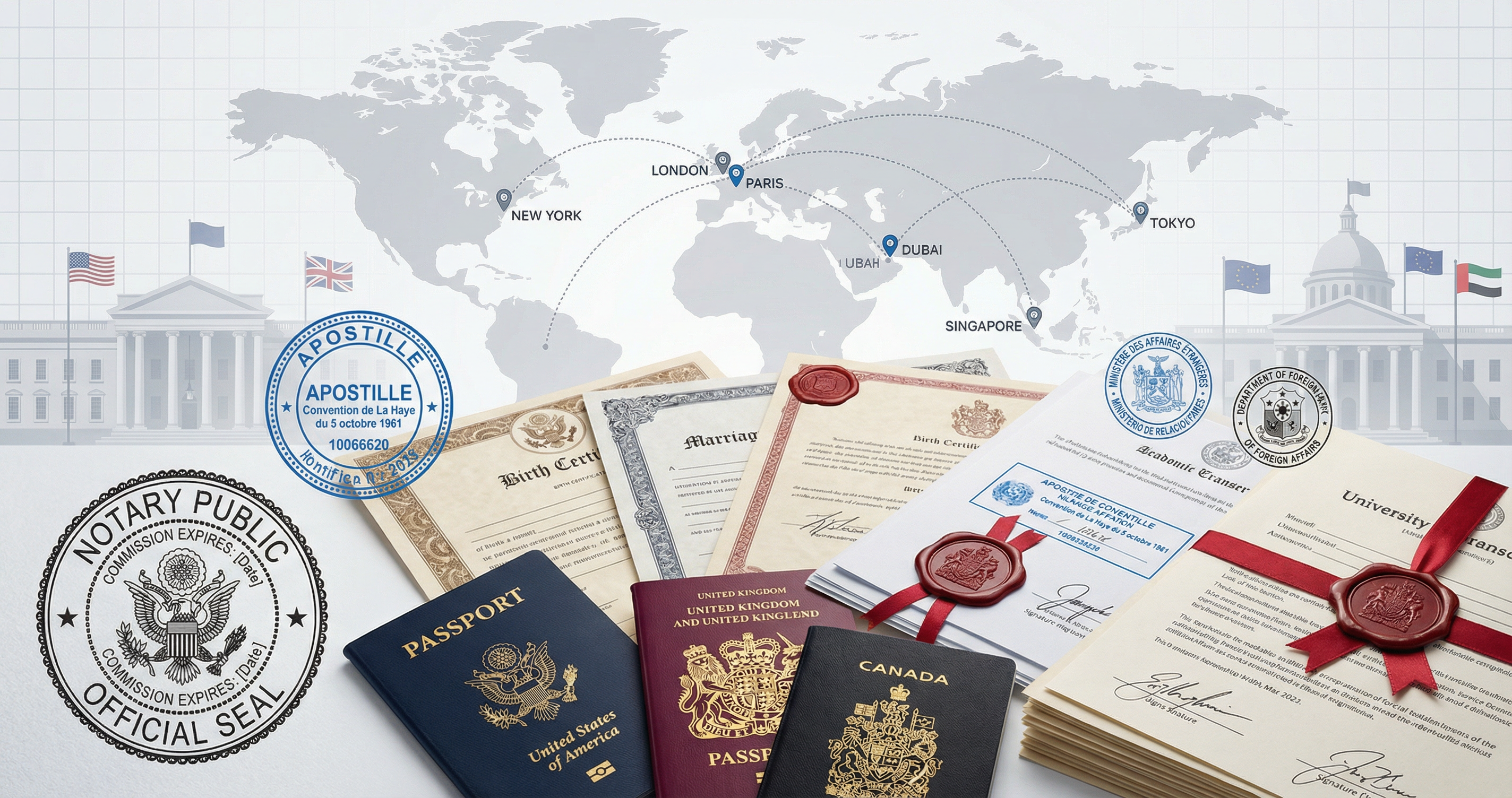
For any official document, the single most important question is whether the translation will be accepted by the body that will receive it. In Malaysia, certified translations are routinely required by the Ministry of Foreign Affairs (Wisma Putra) for legalisation, by the courts, by the Immigration Department, by the National Registration Department, and by foreign embassies processing visa and residency applications. A capable provider issues translations on company letterhead with a certification statement, an authorised signature, and a company stamp, and understands which format each receiving authority expects.
Ask directly whether the provider's certified translations have been accepted by the specific authority you need — Wisma Putra, a particular embassy, a court registry — and whether they can support onward steps such as notarisation or MOFA endorsement where the destination requires it. Generic reassurance is not enough; the provider should be able to describe the exact certification format and the downstream process. If you need court- or embassy-grade work, a dedicated certified translation services line is what you are evaluating, not general business translation.
The Translation-Editing-Proofreading (TEP) Workflow
The most reliable indicator of quality control is whether the provider uses a two-linguist workflow. In a proper Translation-Editing-Proofreading (TEP) process, one qualified linguist translates the source, a second independent linguist edits and reviews the translation against the source, and a final proofreading pass checks the formatting, numbers, names, and readability of the target text. The second pair of eyes catches errors the original translator is structurally unlikely to see in their own work.
Single-pass translation — one person translating and self-checking — is cheaper and faster, and it is acceptable for low-stakes internal content. For anything official, technical, legal, or public-facing, insist on TEP. Ask the provider explicitly: is my document reviewed by a second linguist, or only by the person who translated it? A provider that runs genuine TEP will answer without hesitation and may describe the roles involved.
Subject-Matter Specialisation
A linguist who is excellent at general correspondence is not automatically qualified to translate a patent claim, a pharmaceutical dossier, a financial statement, or a construction contract. Specialised content carries domain terminology, conventions, and regulatory expectations that a generalist will mishandle. The best providers assign work to linguists with demonstrable experience in the relevant field — legal, medical, technical, financial, marketing — and maintain glossaries to keep terminology consistent across a document and across projects.
When evaluating a provider for specialised work, ask whether they have handled your document type before and whether they can assign a linguist with that specific background. For ongoing or high-volume technical work, ask how they manage terminology — a provider that builds and reuses a client glossary will produce far more consistent results than one that treats every document as a blank slate.
Confidentiality, NDA, and Data Security
Translation frequently involves sensitive material: personal identity documents, unpublished financial results, litigation files, medical records, and commercially confidential contracts. A serious provider will sign a non-disclosure agreement without resistance, will limit access to your files to the linguists actually working on them, and will be able to explain how documents are transmitted, stored, and disposed of after the project closes.
Be specific about your requirements. If your data must not be processed through public machine-translation tools — a real risk where free online engines retain submitted text — say so and confirm the provider's practice in writing. A provider that cannot describe its confidentiality controls, or that is reluctant to sign an NDA, should be treated with caution regardless of price.
Dedicated Project Management
For anything beyond a single short document, a dedicated project manager is the difference between a smooth engagement and a frustrating one. The project manager is your single point of contact: they scope the work, assign the right linguists, manage the schedule, handle queries that arise during translation, coordinate multi-language deliveries, and chase the details so you do not have to. Without a named owner, large or multi-part projects tend to fragment, deadlines slip silently, and accountability evaporates.
Ask whether you will have a named contact for the duration of the project and how queries and revisions are handled. A provider that assigns a project manager and has a clear escalation path is far better equipped to handle complications than one where you are routed to whoever happens to answer.
Language Coverage and Turnaround Capacity
Malaysia's multilingual environment and international trade mean that requirements often span several languages at once — Bahasa Malaysia, English, Mandarin Chinese, Tamil, and the languages of major trading partners and migrant communities. A provider with broad in-house and vetted language coverage can handle a multi-language project as a single coordinated engagement rather than forcing you to manage several suppliers.
Capacity matters as much as coverage. Ask realistically how much the provider can turn around in your required timeframe and whether they can surge for a large or urgent job without sacrificing the review step. Beware of any provider that promises an implausibly fast turnaround on a large volume — quality work has throughput limits, and a guarantee that ignores them is a warning sign, not a feature.
Transparent Pricing
A trustworthy provider gives you a clear, itemised quotation: the basis of the charge (per word or per page), what is included (translation, review, certification), and any add-ons such as notarisation, MOFA endorsement, or rush handling. Vague flat quotes that do not explain what you are paying for make it impossible to compare providers and often conceal either a cut-down process or undisclosed extras that appear later.
How Much Do Translation Services Cost in Malaysia?
Pricing is one of the hardest things to research because rates vary widely by language pair, document type, complexity, and urgency. The figures below are typical ranges intended to help you sanity-check a quotation, not fixed prices — always obtain a written quote for your specific documents, because the variables that move the price are significant.
Per-Word Versus Per-Page Pricing
Two pricing models dominate the Malaysian market. Per-word pricing, common for general business and technical translation, charges a rate for each word of the source (or sometimes target) text and is well suited to variable-length documents. Per-page pricing is common for certified document translation, where a standardised page is typically defined as around 200 words. For certified document translation, certified translations commonly start from around RM180 per 200-word page, with the exact figure depending on the language and document.
Neither model is inherently better; what matters is that the provider states which model applies and how a "page" or word count is measured. When comparing quotes, make sure you are comparing like with like — a low per-page rate that defines a page as 150 words is not necessarily cheaper than a higher rate based on a 250-word page.
Factors That Move the Price
Several factors push a quotation up or down, and understanding them helps you read a quote critically:
- Language rarity. Common pairs such as English and Bahasa Malaysia are the most economical. Rarer languages, where few qualified linguists are available, command higher rates.
- Technical complexity. Legal, medical, scientific, and highly technical content requires specialist linguists and careful terminology work, which costs more than general text.
- Urgency and rush rates. Tight deadlines that require overtime, weekend work, or splitting a document across multiple linguists typically attract a rush surcharge.
- Certification and legalisation add-ons. A certified translation costs more than an uncertified one, and onward steps such as notarisation or MOFA endorsement are priced separately, often per document.
- Formatting and desktop publishing. Documents that must replicate complex layouts, tables, or graphics require additional work beyond the translation itself.
- Volume. Large or recurring projects may qualify for volume rates, while very small jobs sometimes carry a minimum charge.
Interpretation Pricing
Interpretation — spoken language, as opposed to written translation — is priced differently. Interpreters are usually engaged per half-day or full day rather than per word, with the rate depending on the mode (consecutive or simultaneous), the subject matter, and the languages involved. Simultaneous interpreting for conferences typically requires specialised equipment — booths, headsets, receivers — which is quoted separately, and demanding assignments may require two interpreters working in rotation. When budgeting for an event, account for interpreter day rates, equipment, and any travel separately from any written translation you also need.
Red Flags to Avoid
Some warning signs reliably indicate a provider that will cost you more in rejected documents, missed deadlines, or compromised data than you save on price. Treat the following as reasons to look elsewhere:
- Suspiciously cheap flat rates. A price far below the market usually means a step has been removed — most often the independent review — or that the work will be machine-translated with little human involvement.
- No certification capability. If you need official acceptance and the provider cannot issue a properly certified, stamped translation, the document will likely be rejected regardless of how accurate it is.
- Machine translation with no human review. Raw machine output may be acceptable for gist comprehension, but presenting it as a finished professional translation — especially for official, legal, or published content — is a serious risk.
- Reluctance to sign an NDA. A provider unwilling to commit to confidentiality in writing should not be trusted with sensitive material.
- No named project manager or point of contact. Without an accountable owner, complex projects fragment and problems go unaddressed.
- No revision or correction policy. A serious provider stands behind its work and will correct genuine errors. Absence of any revision policy suggests the provider does not expect to be held accountable.
- Implausible turnaround guarantees. Promising a very large volume in an impossibly short time means quality controls are being skipped.
A 10-Point Checklist for Choosing a Translation Provider
Use this checklist when comparing providers. The more of these a provider satisfies, the lower your risk:
- Can they issue certified translations accepted by the specific authority you need (Wisma Putra, courts, immigration, the relevant embassy)?
- Do they run a two-linguist Translation-Editing-Proofreading (TEP) workflow for your document, not single-pass self-review?
- Can they assign a linguist with proven experience in your subject area (legal, medical, technical, financial)?
- Will they sign a non-disclosure agreement and explain how your files are secured and disposed of?
- Do they assign a named project manager as your single point of contact?
- Do they cover all the languages your project requires, ideally as one coordinated engagement?
- Can they realistically meet your deadline without dropping the review step?
- Is the quotation transparent and itemised, with the pricing basis and any add-ons clearly stated?
- Do they have a clear revision and correction policy if something needs fixing?
- Do they have a verifiable track record and references for work comparable to yours?
Why Businesses Choose Translife
Translife is a Malaysia translation company and agency that has operated since 2005, serving more than 10,000 clients across over 100 languages. The criteria above are not abstract — they describe how the company is built to operate, which is why organisations with official, technical, and high-volume requirements engage a translation agency in Malaysia that combines certification, a human-first review process, and dedicated project management.
Certified translations are produced for acceptance by Malaysian government bodies — including for Wisma Putra legalisation, the courts, and immigration — with support for onward notarisation and MOFA endorsement where a destination requires it. Work follows a human-first Translation-Editing-Proofreading workflow, with an independent second linguist reviewing the translation rather than the translator checking their own output. For high-volume programmes, AI-assisted options are available where appropriate, always under human review rather than as a substitute for it.
With over 100 languages covered and offices in Subang Jaya (headquarters), Penang, Johor Bahru, and Singapore, multi-language and cross-border projects can be coordinated as a single engagement under a dedicated project manager. If you want to see how this maps to your specific documents, you can request a free quote with your file details and required turnaround.
Frequently Asked Questions
What is the best translation company in Malaysia?
There is no single "best" provider for every job — the right choice depends on what you need. For certified official documents, the best provider is one whose certified translations are accepted by your target authority and who can support notarisation and MOFA endorsement. For technical or legal content, it is one that assigns specialist linguists and runs a two-linguist review. The most reliable way to choose is to score candidates against the 10-point checklist above: certification, genuine TEP review, subject-matter fit, confidentiality, project management, language coverage, capacity, transparent pricing, a revision policy, and a verifiable track record.
How much does translation cost in Malaysia?
Costs vary by language pair, document type, complexity, and urgency. General translation is often priced per word, while certified document translation is commonly priced per page, frequently starting from around RM180 per 200-word page. Add-ons such as notarisation, MOFA endorsement, and rush handling are charged separately, and rarer languages and highly technical content cost more. Because the variables are significant, the only reliable figure is a written quote for your specific documents.
Translation company or freelancer — which is better?
It depends on the stakes. For a short, low-risk document in a common language that no authority will review, a trusted freelancer can be adequate and economical. For certified documents, technical or legal content, large or recurring volumes, multi-language projects, or anything bound by confidentiality, a translation company is the lower-risk choice because it provides an independent review step, certification under its own name, dedicated project management, and continuity that a single individual cannot guarantee.
Are certified translations accepted by Malaysian authorities?
Yes, when they are produced and certified correctly. Malaysian authorities — including the Ministry of Foreign Affairs (Wisma Putra) for legalisation, the courts, the Immigration Department, and foreign embassies processing applications — accept certified translations that carry a certification statement, an authorised signature, and the company stamp in the expected format. Acceptance depends on the specific authority and purpose, so confirm with your provider that their certified translations have been accepted by the body you are submitting to, and whether onward notarisation or MOFA endorsement is required.
How long does translation take?
Turnaround depends on length, complexity, language pair, and the level of review required. A short certified document may be ready within a couple of working days, while large or specialised projects that go through a full two-linguist review take longer. Onward steps such as notarisation or MOFA endorsement add their own processing time. Rush handling can compress the schedule for an additional fee, but a responsible provider will not shorten a deadline by removing the review step.
Do translation companies in Malaysia handle Bahasa Malaysia, Chinese, and Tamil?
Yes. Bahasa Malaysia, English, Mandarin Chinese, and Tamil are core language pairs for the Malaysian market, and established providers handle them routinely alongside many other languages. An established translation company can typically coordinate a project spanning several of these languages at once as a single engagement, which is more efficient than managing separate suppliers for each language.
Conclusion
Choosing a translation provider in Malaysia comes down to matching the stakes of your document to the right operating model, then evaluating candidates against concrete criteria rather than marketing claims. For low-risk text, a competent freelancer may suffice. For certified, technical, confidential, or high-volume work, an established translation company that runs a genuine two-linguist review, issues accepted certification, signs an NDA, and assigns a dedicated project manager is the lower-risk choice — and transparent, itemised pricing lets you compare options fairly.
Run any provider through the 10-point checklist, watch for the red flags, and insist on a written quote for your specific documents. If you want a starting point, compare providers of translation services in Malaysia against these criteria, and when you are ready, request a free quote with your file details and deadline to get an accurate price and timeline.
Comparing Translation Companies in Malaysia?
Translife is a Malaysia translation company and agency operating since 2005, with 100+ languages, certified translation accepted by Malaysian government bodies, a human-first two-linguist review process, and dedicated project managers across offices in Subang Jaya, Penang, Johor Bahru, and Singapore. Send your documents and deadline for an accurate quote and timeline.
Request a Free Quote →