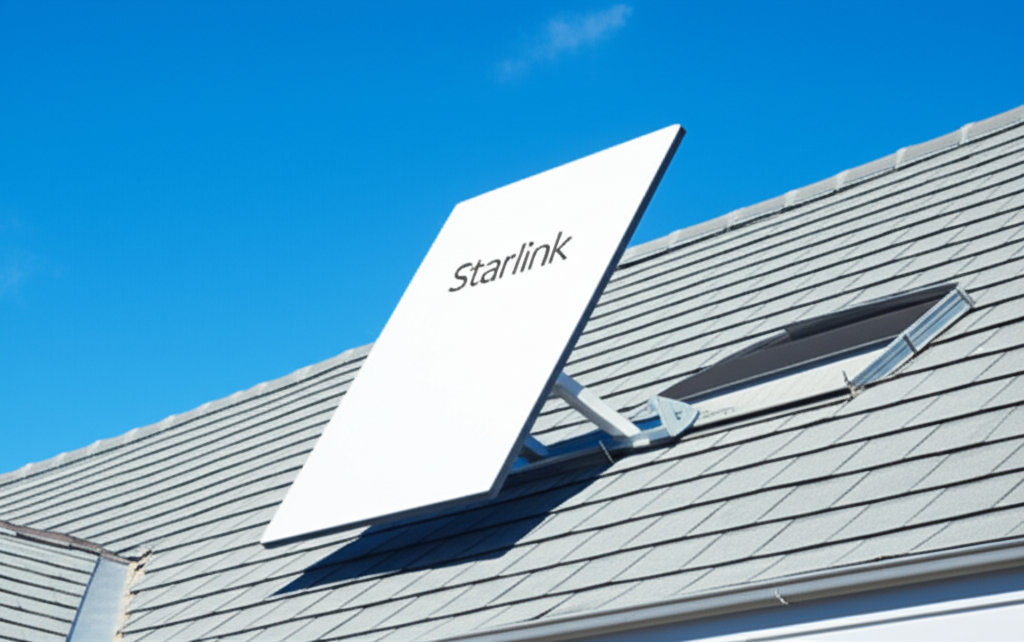
Across Malaysia, some of the most economically important work happens exactly where the internet does not reach: oil palm estates deep in the Sabah interior, highway construction corridors that stretch for kilometres, quarries and mines carved into remote hills, festivals on open padang land, and island resorts scattered across steep terrain. For all of them, remote-site internet in Malaysia is no longer a luxury — it is the difference between a site that runs on real-time data and one that runs blind. This complete guide explains how modern wireless connectivity — a satellite or fixed backhaul combined with long-range 5 GHz wireless bridges — brings reliable internet to any location in Malaysia without waiting months for a fixed line or trenching cable across difficult ground. Whether you manage a plantation, run a construction package, operate an industrial site, or organise outdoor events, this is how you get connected.
Executive Summary: Connectivity Beyond the Fibre Line
Key Takeaways at a Glance
- →Wireless connectivity delivers internet to locations with no fixed line by combining a backhaul (usually Starlink) at one point with long-range wireless bridges that distribute it across the site — up to 5 km per link.
- →It is the standard solution for plantations, construction sites, mining, oil & gas, industrial estates, resorts, and outdoor events across Peninsular Malaysia, Sabah, and Sarawak.
- →A temporary network can be surveyed, deployed, and commissioned in as little as 72 hours, and Starlink activates the same day it lands on site.
- →Line-of-sight — not distance to a fibre exchange — is the deciding factor for wireless range, which is why a proper site survey matters more than anything else.
- →The model can be short-term rental, a managed contract, or a permanent turnkey install you own — chosen to fit the site.
For decades, connectivity in Malaysia followed the fibre. If a fixed line reached your building, you had internet; if it did not, you relied on whatever mobile signal happened to be available — often unusable for business. That model left an enormous amount of the country's productive land effectively offline. Two technologies have collapsed that barrier. The first is low-earth-orbit satellite internet, which delivers a genuine broadband feed almost anywhere with a clear view of the sky. The second is the maturity of enterprise point-to-multipoint wireless bridges, which take that feed and spread it across a wide area without a single metre of buried cable. Together they make the internet source location-independent, and turn “we can't get connectivity here” into a solved problem.
The Problem: Malaysia's Connectivity Gap
Malaysia has excellent fixed broadband in its urban centres. Kuala Lumpur, Penang, Johor Bahru, and the Klang Valley enjoy fibre speeds that rival any developed economy. But the moment you leave the served footprint — and much of the country's land area is unserved — the picture changes sharply. A plantation estate, a construction corridor, a quarry, or an offshore support base may sit tens of kilometres from the nearest exchange. Running fibre to these locations is often commercially impossible: the capital cost of trenching and the time to provision (frequently many months, sometimes longer) make it a non-starter for a project that needs connectivity now, or for a temporary site that will move in six months.
Mobile networks fill some of the gap, but not reliably. 4G and 5G coverage thins out quickly outside populated areas, and even where a signal exists, it is shared, congested, and prone to collapse under load — the classic experience of an outdoor event where 8,000 phones arrive and the cell tower buckles. For any operation that depends on connectivity for security cameras, payment systems, telemetry, or simply keeping a site office productive, “sometimes there's signal” is not good enough.
Who Needs Remote-Site & Industrial Internet
The demand for remote-site internet in Malaysia comes from a surprisingly broad set of industries, but they share a common shape: a wide physical footprint, a location the fixed network never reached, and a growing dependence on real-time data. The typical clients include:
- •Plantation and agriculture operators who need connectivity at estate offices, worker camps, weighbridges, and increasingly for field sensors and precision-agriculture telemetry.
- •Construction and infrastructure contractors running site offices, IP CCTV for safety and security compliance, biometric attendance, and cloud-based document control across a large or linear site.
- •Mining, quarrying, oil & gas, and energy operators who need robust connectivity for operations, SCADA and telemetry backhaul, and staff welfare at remote and often harsh sites.
- •Event and festival organisers who need temporary event WiFi for cashless payments, ticketing, live streaming, and crew coordination on grounds with no infrastructure.
- •Resorts, eco-lodges, and off-grid hospitality that need reliable guest WiFi and back-of-house connectivity across dispersed villas and difficult terrain.
- •Government, emergency, and disaster-response teams needing rapid connectivity where fixed lines are down, damaged, or simply were never there.
The Real Cost of No Connectivity
It is easy to treat connectivity as an overhead, but on a modern site the absence of it carries a hard, measurable cost. Consider a construction package required by contract to maintain 24/7 CCTV coverage: without connectivity, footage cannot be centralised or monitored, exposing the contractor to security losses and compliance failures. Consider a plantation whose weighbridge data has to be reconciled manually and driven to head office on a memory stick: every day of delay is a day of blurred inventory and lost control over shrinkage. Consider an event where the payment terminals go offline for twenty minutes during peak trading — thousands of ringgit of sales evaporate, and the brand damage lingers. In every case, the investment in proper wireless connectivity is small next to the cost of the failures it prevents.
How Wireless Connectivity Works: Backhaul + Distribution
Every wireless connectivity deployment, no matter how large, is built from two halves. The first is the backhaul: the internet feed that arrives at one point on your site. The second is the distribution: the wireless links that carry that feed out to every building, device, and zone across the site. Understanding these two halves is the key to understanding the entire field — and to knowing whether a proposal you are given is sound.
Backhaul: Getting Internet to the Site
The backhaul is simply the source of the internet. There are three practical options in Malaysia, and the right one depends on the site:
- •Fixed fibre — the gold standard where it exists, but rarely available at remote or temporary sites, and slow and expensive to provision where it is not.
- •Bonded 4G/5G cellular — useful where mobile coverage is genuinely good, and excellent as a failover link, but unreliable as a sole backhaul in remote areas.
- •Starlink satellite — the game-changer for remote and temporary sites, delivering real broadband almost anywhere with a clear sky, activated the same day.
Starlink as Backhaul: Why It Changed Everything
Before low-earth-orbit satellite internet, remote connectivity meant either an expensive leased microwave link back to civilisation or a slow, high-latency geostationary satellite service that made anything interactive painful. Starlink changed the economics completely. A Starlink terminal delivers roughly 50–200 Mbps with 20–50 ms latency — comparable to a decent fixed line — and works almost anywhere in Malaysia with an unobstructed view of the sky, including deep in Sabah and Sarawak. Crucially for temporary and project work, it can be activated the same day it arrives on site and can be rented month-to-month rather than committed to a multi-year contract.
This is why, for the great majority of remote-site and event deployments, Starlink is the backhaul of choice. It removes the single hardest problem — getting a usable internet feed to a place fibre never reached — and reduces the remaining challenge to distribution, which is fast and flexible to solve. For sites that cannot tolerate any downtime, Starlink is bonded with a 4G/5G link so traffic fails over automatically if one path degrades.
Distribution: Point-to-Point & Point-to-Multipoint Bridges
Once internet lands at the control point, it has to reach everything else on the site. That is the job of long-range 5 GHz wireless bridges — pairs (or groups) of radios that create dedicated network links between locations that cannot be joined by cable. Enterprise bridges from vendors like TP-Link Omada, Ubiquiti, and Cambium are purpose-built for this: weatherproof, high-gain, and engineered to hold a stable link across kilometres and through tropical weather.
PtP vs PtMP: Which One Your Site Needs
A point-to-point (PtP) bridge links exactly two locations — two radios facing each other, forming a single high-throughput pipe. It is the right choice when you need to connect one remote building, camera tower, or camp back to a hub. A point-to-multipoint (PtMP) configuration uses one base-station radio to serve several remote “subscriber” radios at once, so a single hub can distribute connectivity to many buildings or zones efficiently. Most remote-site and event deployments use PtMP because it scales cleanly: as the site grows, you add another remote unit rather than re-engineering the whole network.
Rule of thumb
One remote location to connect → point-to-point. Several remote locations fanning out from a hub → point-to-multipoint. Very large or obstructed sites → a mix, sometimes with a repeater hop to clear a hill or tree line. The survey decides.
Range, Line-of-Sight & Antenna Planning
The most common misconception about wireless bridges is that range is fixed. It is not — it depends on four things. Line-of-sight is by far the most important: the two radios must be able to “see” each other, because 5 GHz signals do not bend around hills or punch through dense canopy. Antenna gain matters next: high-gain dish antennas focus the signal into a tight beam and reach much further than the panel antennas built into basic units. Antenna height is the practical lever that makes line-of-sight achievable — mounting radios on masts or existing structures clears trees and buildings. Finally, the radio environment — how much competing 5 GHz traffic surrounds the site — affects real-world throughput.
With clear line-of-sight, enterprise bridges reliably deliver a link up to about 5 km; with elevated high-gain dishes, considerably more. In plantation and highland terrain, mast heights and repeater hops are planned during the survey so that hills and canopy do not break the chain. This is why no reputable provider quotes a wireless deployment without a survey: the survey is what turns “it should work” into a link that holds through a downpour.
The Local Layer: WiFi, VLANs & Segmentation
At each remote unit, connectivity has to be delivered to actual people and devices. That is done with enterprise access points — the same technology deployed for indoor event WiFi and structured cabling installations. Throughout the network, VLANs and SSIDs segment traffic so that guest WiFi is isolated from operations, and IoT or CCTV traffic runs on its own network. This is not a nicety — it is what keeps the whole deployment secure and stable. A bandwidth spike on the guest network can never starve your payment terminals or security cameras when the two live on separate segments with quality-of-service rules enforcing priority.
The Hardware: What Enterprise Wireless Looks Like
There is a world of difference between the consumer “WiFi bridge” kits sold online and the enterprise hardware used in a professional deployment. Consumer kits are fine for extending WiFi to a garden shed; they are not built for a plantation link that has to hold through monsoon season or a construction site that runs 18 CCTV cameras across 6 km. A professional remote-site deployment typically includes:
- •The backhaul terminal — a Starlink dish (or fibre ONT / bonded cellular router) at the control point.
- •An enterprise router and firewall — handling routing, NAT, VLAN segmentation, firewall rules, and failover between links.
- •A base-station radio — the PtMP hub that radiates to remote units, typically on a mast for line-of-sight.
- •Remote bridge radios — one per remote location, with high-gain antennas aligned back to the base.
- •Enterprise access points — delivering local WiFi to people and devices at each unit.
- •Weatherproofing and power — IP-rated enclosures, proper earthing and surge protection, PoE, and UPS or generator-backed power for sites without stable mains.
The brands that dominate serious deployments — TP-Link Omada, Ubiquiti, and Cambium — are chosen because their radios hold stable links at range, their management platforms allow remote monitoring, and their hardware survives the Malaysian climate. Matching the hardware to the site, rather than buying whatever is cheapest, is the single biggest determinant of whether a network is still working reliably a year later.
Industry Applications Across Malaysia
The architecture is the same everywhere — backhaul plus distribution — but each industry stresses it differently. Here is how wireless connectivity is applied across the sectors that most need it in Malaysia.
Plantations & Agriculture
Malaysia's oil palm and rubber estates are vast, and almost none of them sit near a fibre line. A typical estate needs connectivity at the main office for reporting, payroll, and cloud systems; at worker camps for welfare and communication; and at the weighbridge, where accurate, real-time data is central to controlling shrinkage and reconciling production. Increasingly, estates also want to backhaul field data — soil moisture, weather stations, and other IoT sensors for precision agriculture. A Starlink backhaul at the office feeding a PtMP network out to the camps, weighbridge, and a sensor gateway solves all of this at once, and typically comes online within 72 hours — a transformation for an estate that spent years on patchy mobile signal.
The operational benefits compound quickly. Once the weighbridge is online, fresh-fruit-bunch data flows straight into the estate management system, closing the gap between what is harvested and what is recorded and making shrinkage far harder to hide. Once the camps have connectivity, worker welfare improves and staff retention with it — a real concern on remote estates. Once field sensors are backhauled, managers can act on rainfall and soil data rather than driving out to check gauges by hand. And because the network is managed and monitored, the estate is not left to troubleshoot it alone: a weakening link or a failing radio is flagged and addressed remotely before it disrupts operations. For estate groups running multiple properties, standardising on the same wireless architecture across all of them turns connectivity from a recurring headache into a predictable, supported utility.
Construction & Infrastructure
Construction sites are connectivity-hungry and often linear — a highway package can stretch for kilometres with multiple site offices, a batching plant, and laydown yards spread along the alignment. Construction site WiFi in Malaysia has to support cloud-based document control and BIM at each office, 24/7 IP CCTV for safety and security compliance, and biometric attendance systems. Because the works move as the project progresses, the network has to be relocatable. A wireless deployment — Starlink at the main office, PtMP bridges to the satellite offices and plant, dedicated bandwidth for CCTV on a segmented VLAN — delivers exactly this, and the kit follows the works down the corridor rather than being abandoned.
There is also a compliance and dispute-resolution dimension that contractors value. Centralised, continuously recorded CCTV protects against theft of plant and materials — a significant cost on large sites — and provides an evidentiary record for safety incidents and contractual disputes. Biometric attendance backhauled in real time supports accurate payroll and workforce reporting. Cloud-based document control and BIM coordination, functioning reliably from every office along the corridor, keep site teams working from the current drawings rather than outdated printouts. None of this is possible without dependable connectivity, and for a linear site none of it is practical to deliver with cable. Wireless is not merely the convenient option here; it is frequently the only one that fits the geometry and the timeline of the works.
Mining & Quarrying
Mines and quarries combine remoteness with harsh physical conditions and a real dependence on data: fleet management, weighbridge and dispatch systems, SCADA and telemetry from fixed plant, and safety-critical communications. Connectivity here has to be rugged and reliable. A wireless network with a satellite backhaul and hardened, weatherproof bridge radios brings the pit, the processing plant, the weighbridge, and the site office onto a single managed network, with failover to keep safety and dispatch systems online even if the primary link is disrupted.
Oil, Gas & Energy
Onshore support bases, tank farms, solar and other renewable energy sites, and pipeline facilities all need robust connectivity in locations chosen for their resources, not their proximity to infrastructure. Oil and gas connectivity in Malaysia typically demands strong security segmentation (operational technology strictly separated from corporate and guest traffic), reliable telemetry and SCADA backhaul, and redundancy appropriate to safety-critical operations. Enterprise wireless with proper VLAN isolation, firewalling, and bonded failover meets these requirements while avoiding the cost and lead time of dedicated fixed links.
Events, Festivals & Exhibitions
Outdoor events are the most visible use of temporary event WiFi in Malaysia. A festival on open land has no venue WiFi, and mobile networks collapse the moment the crowd arrives. The event needs connectivity for cashless payment terminals across dozens of stalls, ticket scanning at the gates, a live-stream broadcast, and crew coordination. A Starlink backhaul with a bonded cellular failover, distributed by wireless bridges to the gates, stalls, and broadcast area, and segmented so payments never compete with guest browsing, keeps the event running through peak trading and even through a downpour. For indoor and hybrid conferences, this pairs naturally with dedicated event WiFi and conference equipment.
Resorts & Off-Grid Hospitality
Island resorts and eco-lodges face a particular challenge: they must deliver excellent guest WiFi as a competitive necessity, across villas scattered over steep or forested terrain, often with no fixed line anywhere near. A single overloaded mobile router cannot do it. Wireless connectivity — a Starlink backhaul at the lobby, PtMP links across the terrain to villa clusters, the dive centre, and the staff village, and enterprise access points delivering seamless WiFi — gives guests reliable connectivity and keeps the property management system and payment systems stable on a separate, isolated network.
IoT, Telemetry & CCTV Backhaul
Across all of these industries runs a common thread: the need to carry data from distributed devices back to a central point. IoT connectivity in Malaysia — soil and weather sensors on plantations, SCADA and telemetry at industrial sites, IP CCTV at construction corridors and remote facilities — is a natural fit for point-to-multipoint wireless. A PtMP network sized for the data profile (light for sensors, heavier for video) brings every device onto a managed, secure network reporting to a control room or the cloud. As sites add more sensors and cameras over time, the same network scales to absorb them.
Bandwidth Planning: Sizing the Network Correctly
The most common mistake in remote-site connectivity is under-sizing the network — assuming that because internet has arrived, everything will simply work. In reality, a wireless network has to be sized against real demand, or it will disappoint under load exactly when it matters. Sizing is a two-part exercise: understanding how much traffic the site will actually generate, and ensuring both the backhaul and each wireless link can carry it. Getting this right is the difference between a network that feels like a proper office connection and one that crawls the moment a few people start using it.
Concurrency and Usage Profiles
Bandwidth planning starts with concurrency: how many devices are online at the same time, and what they are doing. Not everyone uses the network at once, but the concurrency rate on a busy site or event is far higher than in an ordinary office. Usage then falls into rough bands. Light usage — email, messaging, web browsing, basic cloud apps — needs roughly 0.5 to 1 Mbps per active user. Moderate usage, including video calls, larger cloud applications, and social uploading, needs about 2 to 3 Mbps per user. Heavy usage — HD video streaming, live broadcasting, and large file transfers — can demand 5 to 10 Mbps per user. IoT and telemetry sit at the opposite extreme: individually tiny, but numerous, and sensitive to reliability rather than raw speed. CCTV is its own category, with each HD camera consuming a steady 2 to 4 Mbps of upload — which, across a dozen cameras, quickly becomes the dominant load on a site.
Translating this into a real figure: a plantation office with ten staff doing moderate work and a handful of cameras might need 50 to 80 Mbps; a construction corridor with three offices, biometric attendance, and eighteen CCTV cameras might need 100 Mbps or more, weighted heavily toward upload; a festival with cashless payments, ticketing, and a live stream across thousands of attendees is a different calculation again, dominated by the streaming workstation and the payment terminals. The point is that these numbers are calculated, not guessed — and they directly determine the backhaul plan and whether a single Starlink terminal suffices or a bonded or additional feed is required.
Throughput per Link and Aggregation
Beyond the backhaul, each wireless bridge link has its own capacity, and the network must be designed so no single link becomes a bottleneck. Enterprise 5 GHz links can carry substantial throughput over a few kilometres with clear line-of-sight, but that capacity is shared among everything downstream of the link. In a point-to-multipoint design, the base station's capacity is divided among its remote units, so a hub feeding six busy locations must have the headroom to serve all of them at peak. This is why the design stage maps expected load onto the topology: heavy consumers (a camp with many users, or a cluster of cameras) may warrant their own dedicated point-to-point link rather than sharing a crowded PtMP sector. Quality-of-service rules then guarantee that priority traffic — payments, telemetry, safety-critical CCTV — always gets through, even if general browsing has to wait.
Power, Weatherproofing & the Tropical Environment
Connectivity engineering in Malaysia is as much about surviving the environment as it is about radios. Two challenges dominate remote and outdoor sites: power and weather. On the power side, many remote locations have no stable mains supply, or none at all. A professional deployment plans for this explicitly: uninterruptible power supplies protect networking equipment from the frequent fluctuations and brownouts common on generator-fed or long rural supplies, and for genuinely off-grid sites, power is coordinated with generators or solar-plus-battery systems so the network stays up around the clock. A wireless link is worthless if the radio at the far end loses power every evening.
Weather is the other constant. Malaysia's heat, humidity, and intense monsoon rain are hostile to electronics and to radio links alike. Equipment is housed in IP-rated weatherproof enclosures, cable runs are protected and properly sealed, and — critically — every outdoor installation is earthed and surge-protected against lightning, which is a serious and frequent hazard on masts and elevated antennas. On the radio side, heavy rain attenuates 5 GHz signals (so-called rain fade), which is why links are engineered with a healthy signal margin: a link planned to work only in perfect weather will drop in the first real downpour, whereas one designed with margin holds through it. This is another reason enterprise hardware and proper survey work matter — the difference only becomes visible when the weather turns.
The Deployment Process: Survey to Teardown
A professional deployment follows a disciplined process. Skipping steps — especially the survey — is the most common reason wireless projects fail. The five stages are:
Survey & line-of-sight
The provider confirms where the backhaul lands, verifies line-of-sight between every point, identifies mast or pole requirements, and models the coverage the bridges can deliver. This determines everything that follows.
Design & fixed quote
Based on the survey, the network is designed — backhaul type, control-point equipment, number and placement of links, access points, and VLAN segmentation — and quoted as a fixed, itemised proposal with no per-device surcharges.
Deploy & commission
Every dish, mast, radio, and access point is installed and aligned, then commissioned: speed and latency tests on each link, coverage walk-tests, load testing, and integration with CCTV, POS, telemetry, or streaming systems.
Monitor & support
For the deployment's duration, engineers monitor link health, bandwidth, and signal strength. For events, an engineer is on site; for long-term installs, monitoring is remote with spare hardware ready to swap.
Teardown or handover
Temporary jobs are removed cleanly and equipment recovered. Permanent installs are handed over with documentation and credentials, or kept under a managed support contract.
Reliability: Failover, Redundancy & Monitoring
A wireless network is only valuable if it stays up. For sites and events where downtime is not an option, reliability is engineered in from the start. The foundation is dual-link failover: a primary backhaul (usually Starlink) paired with a secondary link (bonded 4G/5G, or a second Starlink), managed by a router that continuously monitors both. If the primary degrades below acceptable thresholds, traffic switches to the backup within seconds — often before anyone notices. On the distribution side, critical links can be built with redundancy, and quality-of-service rules ensure that the traffic that matters most — payments, CCTV, telemetry, streaming — always gets priority regardless of general load.
Live monitoring underpins all of it. Throughout a deployment, engineers watch link health, bandwidth utilisation, signal strength, and latency through management dashboards, with alerts on key thresholds so a congested link or a weakening signal is addressed before it becomes an outage. For long-term sites this is done remotely; for events, an engineer is present on the ground. In both cases, spare radios, access points, and cables are kept ready so a hardware fault is a quick swap, not a lengthy outage.
Security on a Wireless Network
Some operators worry that a wireless network is inherently less secure than a wired one. In practice, a properly engineered wireless deployment applies exactly the same protections as an enterprise office network. Every SSID uses WPA3 / enterprise-grade encryption. VLANs segment traffic so that guest, operations, and IoT/CCTV networks are isolated from one another — a guest device can never see the payment or telemetry network. An enterprise firewall at the control point protects the whole network from external threats and enforces the rules between segments. The wireless bridge links themselves are encrypted point-to-point. For industrial and oil & gas sites, operational-technology traffic is strictly separated from corporate and guest traffic, meeting the segmentation requirements those sectors demand.
What It Costs: Pricing Wireless Connectivity in Malaysia
Because every site is different, wireless connectivity is priced per project rather than off a fixed menu. The cost drivers are the coverage area and distance, the number of devices and users, the backhaul type, the number of point-to-multipoint links required, any mast or pole works, and the duration. As a reference point, Starlink backhaul rental in Malaysia typically starts from around RM 699 per month, with the wireless-bridge distribution, access points, and on-site engineering quoted on top. A single-link remote office is at the affordable end; a multi-hop plantation or a large festival with redundancy and many links is a larger project. A reputable provider gives a fixed, itemised quote after a survey — with no per-device surcharges and no surprise setup fees — so you know exactly what you are paying for.
Rent, Manage, or Own: Choosing a Model
There are three commercial models, and the right one depends on how long you need connectivity and whether you want to manage it yourself:
- •Short-term rental — ideal for events, project phases, and pilots. The provider supplies, deploys, supports, and removes everything; you pay for the period you need it.
- •Managed contract — a permanent network that the provider owns, monitors, and maintains for a monthly fee. Best for sites that want reliability without building an in-house team.
- •Turnkey install you own — the provider surveys, designs, and installs the network, hands over documentation, and optionally supports it. Best for operators with their own IT capability.
Many clients begin with a rental — for an event or a project phase — and convert to a managed or owned install once they have seen the reliability first-hand. This is especially common for plantations and resorts that never had fixed-line service and, having finally experienced dependable connectivity, decide to keep it permanently.
A Note on Sabah & Sarawak
East Malaysia is where wireless connectivity matters most and where it has the greatest impact. Sabah and Sarawak hold much of the country's plantation, forestry, mining, and energy activity, spread across terrain that fixed infrastructure has barely touched. Because Starlink makes the internet source location-independent, a site in the Sabah interior is no harder to connect than one on the peninsula — the deciding factor becomes line-of-sight for the wireless distribution, not distance to an exchange that may be hundreds of kilometres away. Deployments in East Malaysia do require careful survey work for terrain and logistics, but the outcome is the same: reliable internet at sites that were, until recently, considered impossible to connect.
Wireless vs the Alternatives
It is worth being clear about why wireless connectivity wins for remote and temporary sites, because the alternatives each look attractive until you examine them against real requirements.
Waiting for fibre. Where fibre can be provisioned, it is excellent — but at a remote site the lead time is measured in months and the capital cost of trenching across difficult ground is often prohibitive. For a project that needs connectivity this quarter, or a site that will relocate, fibre is simply the wrong tool. Wireless connectivity delivers a comparable experience in days, and moves with the works.
Relying on mobile hotspots. A 4G/5G router is cheap and quick, and for a single user in a covered area it can be fine. But it collapses under the concurrency of a real site or event, offers no coverage once you leave the served footprint, provides no segmentation or security, and gives you no way to reach a building 3 km away. It is a stopgap, not an infrastructure. Its best role is as a failover link alongside a proper backhaul.
Consumer “WiFi extender” kits. The inexpensive bridge kits sold online genuinely work over short, unobstructed distances, and they tempt operators into a do-it-yourself deployment. They fall down on exactly the things that matter at a real site: they lack the antenna gain and radio quality to hold a stable link across kilometres or through rain, they offer no enterprise management or segmentation, and they have no support behind them when a link drops mid-operation. For a garden shed they are fine; for a plantation or a construction corridor they are a false economy.
Geostationary VSAT satellite. Traditional satellite internet still has niche roles, but its high latency makes interactive applications painful and its cost is high. For the overwhelming majority of Malaysian remote sites, low-earth-orbit Starlink has superseded it, combining satellite's go-anywhere reach with latency low enough for video calls, cloud apps, and real-time systems. This is the shift that made the modern wireless approach viable.
Case Studies: Four Malaysian Deployments
The following composite scenarios illustrate how the pieces come together in practice across different industries and terrains.
1. A 2,000-hectare oil palm estate in interior Sabah
The estate had a main office, three worker camps, and a weighbridge, with no fixed line within 15 km and only patchy mobile signal. A Starlink terminal at the main office provided the backhaul, feeding a control point with router and base radio. A point-to-multipoint network distributed connectivity to the three camps, the weighbridge, and a field-sensor gateway up to 5 km away, with VLANs separating office operations, worker guest WiFi, and telemetry. The office, all three camps, and the weighbridge were online within 72 hours; weighbridge and sensor data now reach head office in real time. After years of relying on unusable mobile signal, the estate finally had dependable connectivity — and later converted the rental into a permanent managed install.
2. An outdoor festival on open padang land near KL
With no fixed internet, no venue WiFi, and mobile networks that buckled once 8,000 attendees arrived, the festival needed connectivity for cashless payment terminals across sixty stalls, ticket scanning at the gates, a live stream, and crew coordination. Starlink provided the backhaul with a bonded 4G/5G failover; a base radio at the production tent distributed connectivity via wireless bridges to gates, stalls, and the broadcast area, with separate SSIDs and guaranteed bandwidth for payments, ticketing, crew, and streaming. Cashless payments ran without a single timeout, the gates scanned without queues, and the stream never dropped — including through a downpour that briefly triggered the failover with no vendor losing a sale.
3. A 6-km highway construction corridor
The package had three site offices, a batching plant, and a laydown yard spread along a new alignment with no fixed-line service, and a contractual requirement for 24/7 CCTV. Starlink at the main office fed a control point with router, firewall, and base radio; point-to-multipoint bridges linked the satellite offices, plant, and yard back to the hub. Eighteen IP cameras streamed to a central recorder over dedicated bandwidth on a segmented VLAN, while biometric attendance and site-office WiFi ran on separate networks. All offices, the plant, and the cameras came online across the corridor, and — because the design anticipated it — the network relocates with the works as the alignment advances.
4. An island eco-resort off the east coast
Villas were scattered across steep terrain, served only by an overloaded single mobile router; guests complained about WiFi, the dive centre could not process bookings reliably, and the property management system dropped during check-in. Starlink at the lobby provided the backhaul, and point-to-multipoint bridges carried connectivity across the terrain to villa clusters, the dive centre, and the staff village, with enterprise access points delivering seamless guest WiFi and a separate VLAN isolating the PMS and payment systems. Guest WiFi now reaches every villa, the dive centre processes payments reliably, and the resort converted its temporary trial into a permanent managed contract.
How to Choose a Wireless Connectivity Provider
Not all providers are equal. The kit can be bought by anyone; the engineering, survey discipline, and support are what separate a network that holds from one that fails. When evaluating a provider, look for:
- •A survey-first approach. Anyone who quotes a wireless deployment without surveying the site is guessing. Line-of-sight is everything.
- •Backhaul-agnosticism. A good provider chooses the backhaul that fits your site — Starlink, fibre, or cellular — not whatever they happen to stock.
- •Enterprise hardware and proper segmentation. Consumer kit and a flat network are red flags for anything beyond a trivial site.
- •Genuinely turnkey delivery. One team accountable for survey, design, deployment, support, and teardown — not a box-shifter who leaves you to integrate it.
- •Nationwide reach and support. A provider who can deploy and support across Peninsular Malaysia, Sabah, and Sarawak, with spare hardware and real response times.
Translife has delivered connectivity and event technology across Malaysia and Singapore since 2005, for Fortune 500 clients, government agencies, and events of every scale. Our wireless connectivity service brings all of the above together: survey-first, backhaul-agnostic, enterprise-engineered, genuinely turnkey, and supported nationwide.
Frequently Asked Questions
Can I rent Starlink for an event or project in Malaysia?
Yes. Starlink can be supplied and deployed as a temporary internet backhaul on a rental basis, including activation, configuration, and on-site support, and paired with WiFi and wireless bridges to cover the whole site.
How far can a wireless bridge reach?
Enterprise 5 GHz bridges reliably cover up to about 5 km per link with clear line-of-sight, and further with high-gain dish antennas on elevated masts. Line-of-sight is the deciding factor, confirmed by a survey.
How quickly can a remote site be connected?
Temporary networks can typically be surveyed, deployed, and commissioned within 72 hours, and Starlink activates the same day it arrives on site. Straightforward single-link sites are often faster.
Does this work in Sabah and Sarawak?
Yes. Because Starlink makes the internet source location-independent, remote sites in East Malaysia are connected the same way as those on the peninsula — the constraint is line-of-sight for distribution, not distance to a fibre exchange.
Can it carry CCTV, IoT sensors, and telemetry?
Yes. Point-to-multipoint networks are sized for the data profile and routinely carry IP CCTV, soil/weather sensors, SCADA, and telemetry back to a central control room or the cloud on a segmented, secure network.
Is it secure enough for industrial and business use?
Yes. Deployments use WPA3/enterprise encryption, VLAN segmentation isolating guest, operations, and IoT/CCTV traffic, firewalling at the control point, and failover for critical sites — the same protections as an enterprise office network.
Conclusion: Connect Anywhere
The connectivity gap that once defined remote and industrial work in Malaysia has effectively closed. Between low-earth-orbit satellite backhaul and mature enterprise point-to-multipoint wireless, there is no longer a site too remote, too spread out, or too temporary to connect reliably. A plantation in the Sabah interior, a highway corridor, a quarry, a festival ground, an island resort — all can have dependable, secure, enterprise-grade internet, deployed in days and taken down cleanly when the work is done. The only real question left is line-of-sight, and that is what a survey is for.
Have a site or event that needs connectivity?
Tell us the location, the dates, and how many devices, and we'll come back with a plan and a fixed quote. Translife deploys wireless connectivity nationwide — from the Klang Valley to Sabah and Sarawak.
Request a Wireless Connectivity Quote →