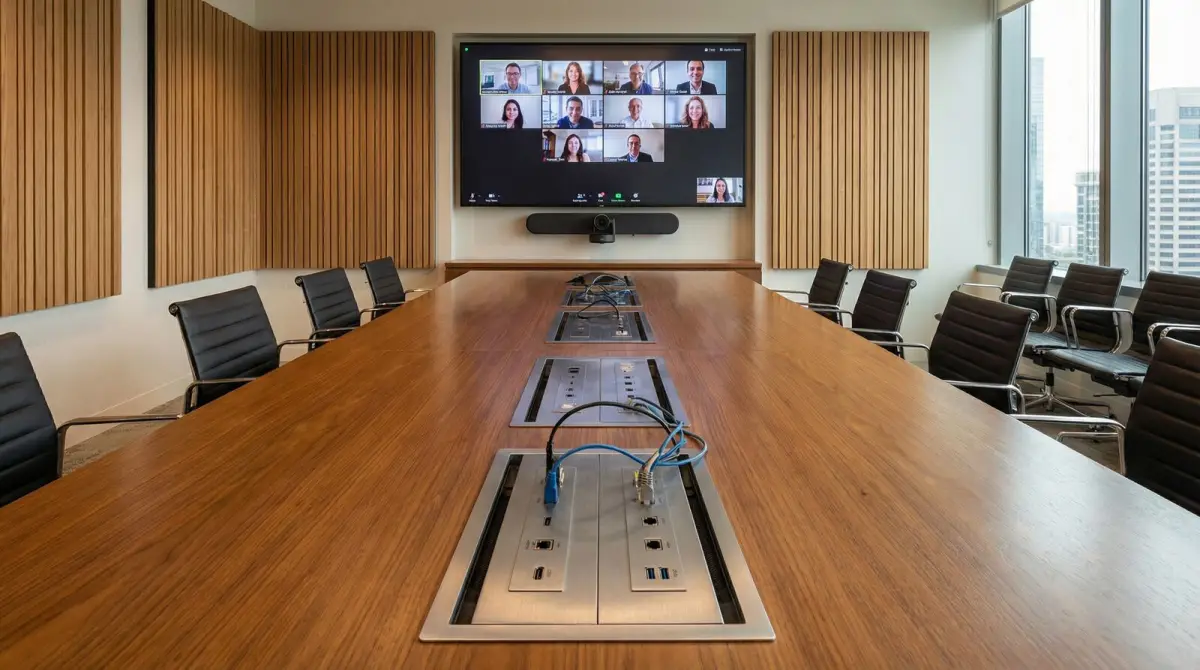
Business-critical outlet connectivity
Restaurant & Retail
WiFi Installation Malaysia
Build a permanent outlet network around POS, staff operations, guest access, CCTV, digital signage, delivery platforms and cloud services—with structured cabling and deliberate traffic separation.
Mon–Fri 9–6 GMT+8 · MY: +60384081397 · SG: +6586605216
Direct answer
A restaurant or retail network should protect transactions first, then provide usable guest WiFi.
An outlet network has several jobs with different risk and performance needs. Payment and order systems, staff devices, printers, CCTV, digital signage, building devices and guest phones should not be treated as one flat wireless network. The project maps every fixed and mobile endpoint, cable route, cloud dependency, busy period and landlord constraint, then designs the access points, switching, gateway policy, internet resilience and handover around real operations.
Technical review
Translife connectivity team
Updated
- New outlets, refurbishments, inherited-network audits and targeted WiFi improvements
- POS, kitchen, staff, guest, CCTV, signage and IoT service paths mapped separately
- Dining, kitchen, counter, stockroom, terrace and mall-unit conditions assessed by zone
- Single-site and multi-branch standards with documented ownership and support boundaries
100+
Languages
10,000+
Clients Served
21+
Years Experience
PM-led
Project-Managed
Selected clients in Malaysia
Search by symptom
The network problems this service addresses
Start with the operational symptom, then measure the radio, cabling and traffic conditions that can produce it.
POS becomes slow at the busiest time
The symptom may come from WiFi contention, weak client signal, a damaged cable, overloaded switching, DNS, internet loss or the payment provider. Testing the full service path avoids replacing access points when the failure sits elsewhere.
Guest devices share the business network
A password or different wireless name does not prove isolation. Switching, routing, firewall policy, management access and representative blocked-path tests must support the intended boundary.
Kitchen and stockroom coverage is weak
Metal equipment, refrigeration, shelving, walls, heat and changing stock can alter radio paths. A strong signal in the dining area does not establish reliable service behind the counter or in a storeroom.
Every branch has a different setup
Unrecorded passwords, consumer routers and supplier-owned accounts make changes slow and risky. A branch standard should define the outcome and ownership while still allowing measured site differences.
One internet fault stops the outlet
Cloud POS, ordering, delivery aggregators and staff communications may share a single connection. Backup service helps only when its capacity, failover policy and local network dependencies match the required continuity scenario.
A mall fit-out leaves no time for testing
Ceiling closure, landlord approvals, electrical works and opening dates compress the network programme. Early outlet, pathway, cabinet and provider coordination reduces late compromises without promising a disruption-free opening.
Diagram 1
Outlet traffic from device to approved destination
The conceptual path shows how a shared physical network can support distinct business services. The final segmentation, equipment and permitted destinations depend on the outlet systems and applicable security assessment.
- 1
Internet & providers
Primary service, any quoted backup and external payment or cloud services enter through a managed edge.
- 2
Gateway policy
Routing, firewall, name services, traffic policy and management access control movement between services.
- 3
Managed distribution
Documented switches, PoE, patching and access points carry traffic across the outlet.
- 4
Service networks
POS, staff, guest, CCTV, signage and approved devices use deliberately assigned paths.
- 5
Outlet endpoints
Terminals, tablets, printers, cameras, displays, scanners and guest devices reach only intended services.
Diagram 2
A transaction depends on more than WiFi bars
The investigation follows the actual order or payment journey. Each layer can create a similar delay, disconnect or timeout, so a successful fix requires evidence at the failing boundary.
POS or staff device
Radio capability, Ethernet link, software state, addressing and local device health.
Outlet access
Access point, cable, switch port, PoE, channel use and physical conditions around the counter or kitchen.
Network policy
VLAN assignment, DHCP, DNS, routing, firewall rules, authentication and management controls.
Internet path
Provider reachability, latency, loss, failover state, shared bandwidth and upstream dependencies.
Application provider
Payment gateway, cloud POS, ordering, delivery, inventory or vendor-managed service availability.
Start with operations
Map the counter, kitchen, dining area, stockroom and external services
A useful design begins with what the outlet must accomplish during a busy service period, not with a generic router package.
The endpoint inventory records every fixed and mobile device that depends on the network: POS terminals, handheld ordering tablets, kitchen display systems, receipt and label printers, payment terminals, staff phones, customer displays, cameras, recorders, digital menus, music systems, delivery-platform tablets, environmental controls and guest devices. For each endpoint, the team identifies whether it is wired or wireless, where it moves, how it receives addressing, which local or cloud destinations it needs and which supplier supports it. Devices that use their own cellular service are still recorded so the continuity plan does not assume they use the outlet WiFi.
The physical map divides the premise into operational zones. The counter may have dense cabling and metal equipment. Kitchens introduce stainless steel, heat, moisture and moving people. Stockrooms change as shelves fill. Dining areas may be open, divided by decorative walls or extended to a terrace. Mall outlets can sit behind shared building structures and many neighbouring wireless networks. Drive-through lanes, pickup points, basement stores or multiple floors add different coverage and pathway questions. Measurements and installation choices follow these real zones.
Busy-period behaviour defines the capacity requirement. A café at opening, a restaurant at lunch or a retailer during a campaign may activate many staff and guest devices at once. Cloud POS, delivery orders, QR ordering, music and CCTV exports can compete for limited upstream service. The scope records which traffic is business-critical, which guest uses can be limited during congestion and which services must continue during a provider fault. This priority discussion is more useful than promising a headline internet speed at every device.
- Inventory endpoints, locations, mobility, network method, vendor and required destinations.
- Mark kitchen, counter, dining, terrace, stockroom, office and landlord-controlled zones.
- Describe peak service periods and the applications that must be protected then.
- Record supplier-owned hardware and accounts before any configuration change.
Select the right project path
New fit-out, operating-outlet upgrade, fault diagnosis or branch rollout
A fit-out has different evidence and scheduling needs from a live outlet with intermittent transaction failures.
For a new outlet or refurbishment, network planning should begin before ceilings, counters and wall finishes close. The design coordinates the provider entry, cabinet, electrical supply, cable pathways, POS and printer outlets, access-point positions, camera links and landlord requirements. Shop drawings and equipment schedules become installation inputs, but on-site validation remains necessary after furniture, shelving and metal equipment are installed. If the tenant, landlord, fit-out contractor, payment provider and CCTV vendor have overlapping responsibilities, the handoff points are written down before commissioning.
An operating-outlet improvement starts with evidence. Staff reports such as ‘the WiFi drops’, ‘the card terminal is slow’ or ‘orders disappear at lunch’ are converted into time, location, device, application and error observations. The assessment checks client links, signal and channel conditions, cable tests, switch counters, power, addressing, DNS, gateway policy, internet quality and provider status. Existing equipment can be retained where it is healthy, supported and suitable. A targeted cable repair, access-point relocation or policy correction may solve the actual cause with less disruption than a full replacement.
A multi-branch rollout needs a repeatable reference design plus a site exception process. The standard can define account ownership, network names, device groups, minimum switch and power capacity, remote management, labels, documentation and acceptance checks. It should not force an identical access-point count into every unit because floor area, walls, mall interference, kitchen layout and provider availability differ. A pilot outlet tests the operating and support model before phased rollout, and every branch receives an as-built record rather than a photograph of the first branch.
Separate by business purpose
POS, staff, guest, CCTV, signage and building-device networks
The goal is controlled communication: each service reaches what it requires without receiving unnecessary access to the rest of the outlet.
A practical design can place payment and POS devices, staff operations, guest internet, CCTV, digital signage and building or IoT devices into distinct network segments. The exact groupings follow vendor requirements and the security assessment. Switch ports, wireless assignments, routing, firewall rules and administrator access must agree. A VLAN is only one implementation mechanism; it is not evidence that traffic cannot cross through a permissive gateway, shared management interface or misassigned port. Handover therefore includes tests of required communication and representative prohibited paths.
Payment security obligations belong to the merchant and its qualified advisers. PCI Security Standards Council guidance explains that segmentation may reduce scope, but whether segmentation is adequate depends on the specific environment and should be assessed appropriately. Translife can implement an agreed architecture and provide network evidence; it does not declare an outlet PCI DSS compliant or replace the payment provider, acquiring bank, Qualified Security Assessor or other responsible specialist. The project also avoids changing terminal configurations without the relevant vendor’s approval.
Legacy and vendor-managed devices often shape the design. Some POS, printer, camera or signage products require local discovery, fixed addressing or particular outbound services. Those requirements are confirmed with documentation or the supplier rather than opening unrestricted communication. Where a device cannot support the intended security mode, the exception is named, restricted as far as practical and assigned an owner. Shared credentials and undocumented remote-access tools are surfaced during discovery rather than silently carried into the new network.
- Document which device groups must communicate and the owner who confirms each path.
- Apply separation consistently across wireless, switch ports, routing, firewall and management.
- Test allowed services and representative blocked paths with recorded endpoints.
- Treat PCI DSS and other compliance conclusions as a separate qualified assessment.
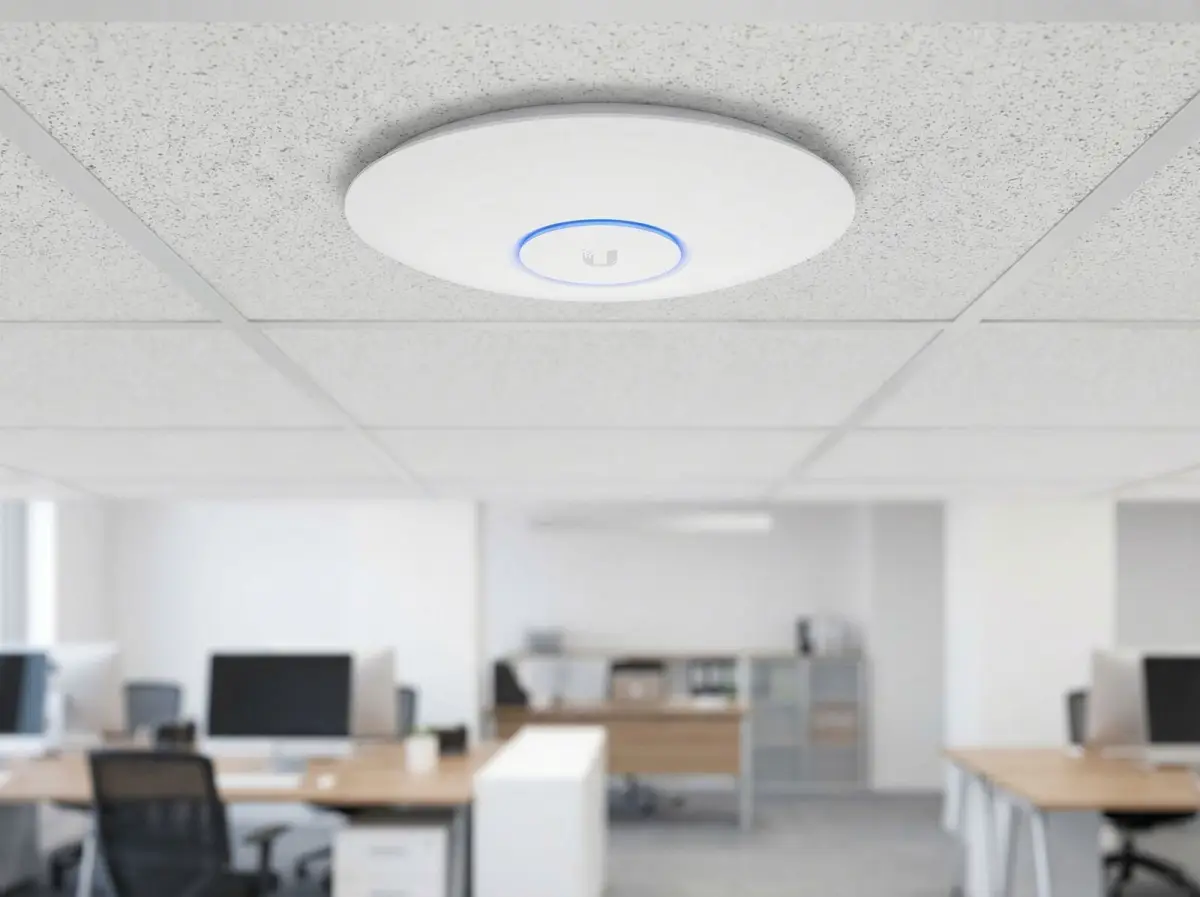
Design for the real outlet
Coverage and capacity across dining, kitchen, counter and mall environments
Strong signal in an empty front-of-house area does not prove reliable ordering, payment or guest service during peak occupancy.
Radio design considers wall and ceiling materials, metal counters, refrigerators, ovens, shelving, mirrors, decorative panels, neighbouring networks and the positions where staff actually hold devices. An access point hidden above a metal ceiling feature may look tidy but perform poorly. In a mall, many adjacent tenants and common-area networks can affect channel use. A survey records current conditions and client requirements, then selects positions and power or channel settings that fit the installed equipment and regulatory domain.
Capacity planning estimates concurrent active devices and application behaviour. Guest phones may remain associated while idle, staff tablets roam between counter and dining zones, and a lunch rush can increase QR ordering and delivery traffic. Adding many access points without a channel and cell plan can increase interference instead of usable capacity. Wired connections are preferred for suitable fixed, business-critical devices because they reduce radio demand and make the path easier to trace, while wireless remains valuable for mobile workflows and areas where safe cabling is impractical.
Validation uses representative devices and operational locations. It can check ordering paths, printer reachability, payment connectivity under vendor-approved conditions, staff roaming, guest internet, DNS and expected cloud services. A busy-period observation can be included where the business approves it, but testing must not obstruct service or expose payment or customer data. The acceptance record names the device, time, place and method and keeps application-provider failures separate from local network results.
- Measure behind counters, in kitchens, at pickup points and in stockrooms—not only customer seating.
- Account for neighbouring mall networks and installed metal or decorative finishes.
- Use wired connections for suitable fixed critical endpoints and reserve WiFi for mobility.
- Validate with representative staff workflows and devices without handling sensitive transaction data.
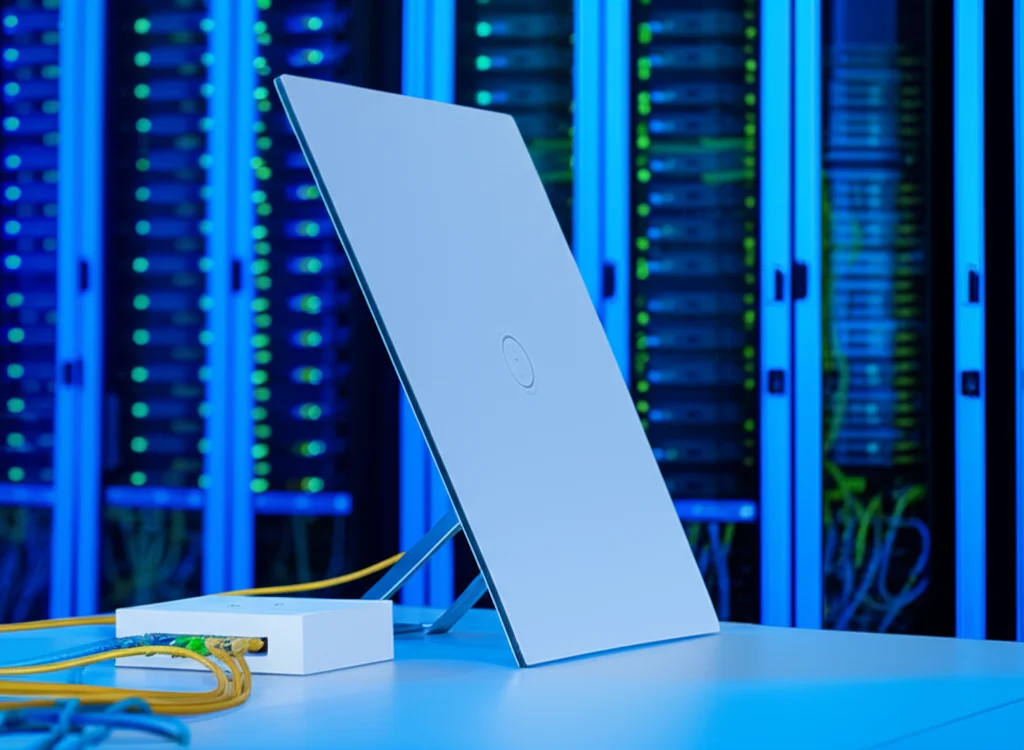
Protect critical operations
Internet resilience, traffic policy and failure scenarios
A second connection is useful only when the outlet knows which services should fail over and which shared components remain single points of failure.
The continuity workshop identifies the cost and operational effect of losing cloud POS, payment reachability, delivery orders, staff communications, guest internet or CCTV remote access. Some payment terminals may have their own independent cellular path; others depend on the outlet network. Some POS platforms can operate in a limited offline mode; others cannot. These behaviours are confirmed with the relevant suppliers. The network plan then prioritises the services that truly need protection rather than assuming every application should consume backup bandwidth equally.
A second fixed provider, cellular service or other suitable backup can connect through a gateway with defined health checks and routing policy. Capacity must be realistic for peak critical traffic, and carrier coverage should be measured at the intended equipment location. Automatic failover and return-to-primary behaviour are tested in an approved window, including DNS and long-lived sessions where relevant. The result is recorded without promising uninterrupted transactions because applications and payment sessions may still react to an address or path change.
Local dependencies remain important. Two internet links do not protect a failed gateway, switch, access point, shared power circuit or damaged cable. A UPS may provide short-duration ride-through for selected network devices but is not a generator or a complete power-continuity plan. Spare equipment, configuration backups, labelled ports and vendor escalation contacts may shorten recovery for other faults. The proposed resilience measures are tied to named failure scenarios and an owner who will test them periodically.

Offer guest access responsibly
Guest WiFi, captive portals, privacy notices and fair-use controls
Guest access can support customers without exposing business services, but a portal does not automatically solve isolation, radio performance or data-protection duties.
A guest network can use a simple accepted-terms page, voucher, password, social or identity option depending on the selected platform and business policy. The operator decides whether customer information is genuinely required. Collecting less data can reduce operational and privacy burden. If personal data is collected, the business should define its purpose, retention, disclosure, security, contact channel and rights handling and use an approved privacy notice. Marketing consent should not be inferred merely because a person requested internet access.
The Personal Data Protection Commissioner’s privacy-notice guide describes the information people should receive about the data controller, collected information, purposes, sources, disclosure, security, rights and contact methods. Technical implementation can display the approved notice and capture the selected choice, but the restaurant or retailer remains responsible for the lawful business process and appropriate professional advice. Translife does not turn a portal licence into an automatic PDPA-compliance claim.
Guest traffic policy can set reasonable bandwidth, session and content controls according to the outlet’s customer promise and platform capability. It should protect critical business traffic without making the service misleading. Client isolation and firewall policy reduce unnecessary local access, while staff have a documented support path for portal failures. The acceptance test verifies guest internet and representative blocked business paths; it does not inspect customer content or promise protection from every unsafe website or compromised personal device.
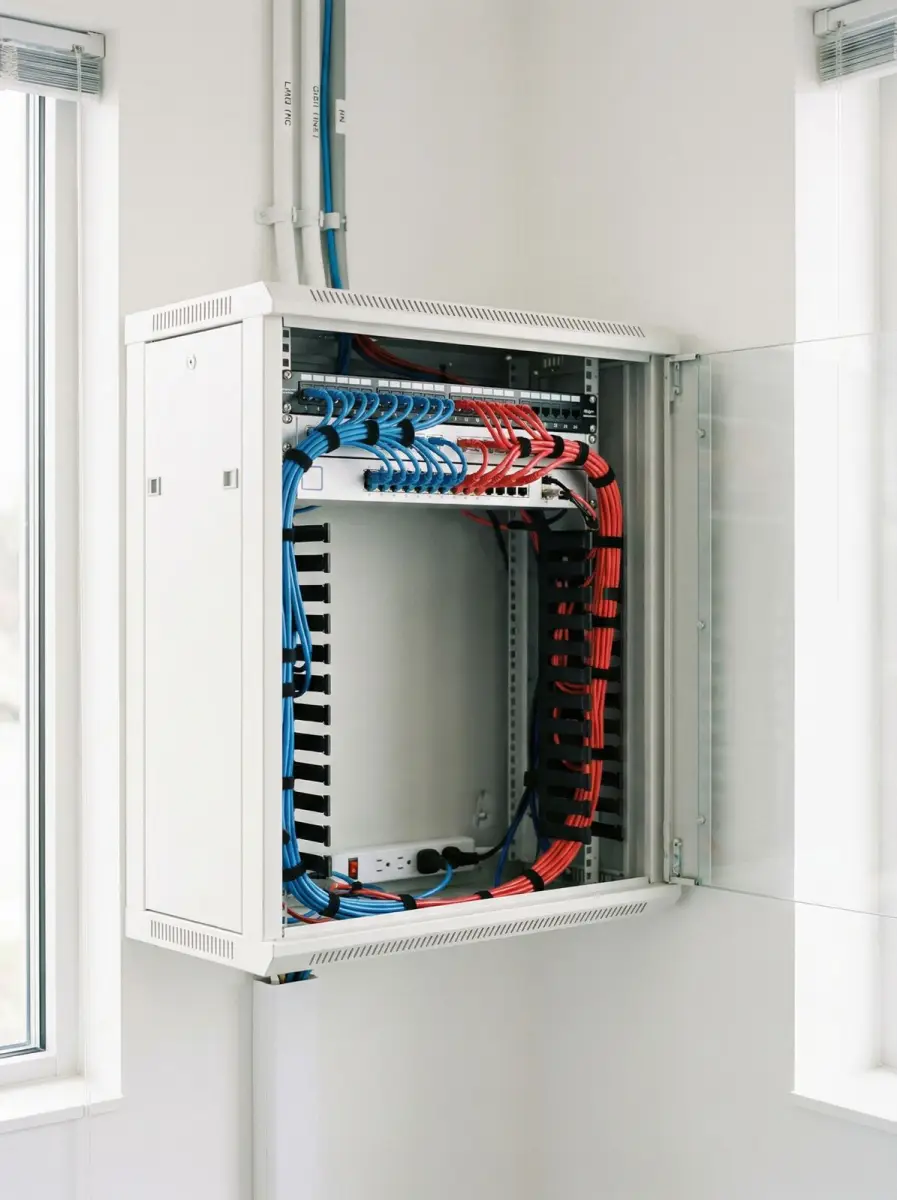
Fit around trading hours
Landlord coordination, after-hours cutover and multi-branch handover
Outlet work needs a practical installation window, explicit third-party responsibilities and a way to return business services safely before opening.
The delivery plan records landlord permits, access hours, loading rules, ceiling permissions, fire-stopping requirements, electrical dependencies, food-safety boundaries and the trades responsible for each task. Work around kitchens or food preparation follows the operator’s site rules. Noisy or disruptive activity is scheduled in an agreed window, while cable routes and equipment positions are approved before finishes are disturbed. Where specialist electrical, fire, structural or security work is needed, appropriately qualified parties are coordinated rather than silently included in a network claim.
Before a live cutover, current settings and administrator ownership are recorded, relevant configurations are backed up and supplier contacts are available. New cabling and switching can be prepared before the change window. The sequence defines when POS, printers, staff devices, CCTV, signage and guest access move, who validates each service and how the previous state can be restored where practical. A successful link light is not sufficient; representative business workflows must be checked before the outlet returns to normal trading.
Handover includes a simple topology, device and port schedule, cable labels, wireless purpose, administrator and licence ownership, provider details, configuration records, known exceptions, support contacts and branch-specific deviations. Staff receive the actions relevant to their role, such as reporting the affected device, location, time and application instead of rebooting unknown equipment. For multiple branches, central management can improve visibility, but local internet, power and physical access still need a named escalation path.
- Agree landlord, fit-out, electrical, fire-stopping and outlet responsibilities before installation.
- Back up relevant configurations and define service-by-service cutover and rollback checks.
- Validate POS and operational workflows with the responsible vendor or operator representative.
- Transfer accounts, licences, labels, branch exceptions and escalation ownership at handover.
Decision guide
Choose the outlet design by operational need
These examples organise the design conversation. Final equipment and quantities follow site conditions, vendor requirements, the security assessment and the operating model.
| Outlet requirement | Questions to answer | Design focus |
|---|---|---|
| POS and payments | Which devices use Ethernet, WiFi or independent cellular service, what destinations are required and who supports each platform? | Stable documented paths, vendor-approved connectivity, controlled segmentation, representative workflow testing and clear compliance ownership. |
| Staff and kitchen operations | Where do tablets, printers, kitchen displays and scanners operate, and what metal, heat or moving-stock conditions affect them? | Measured back-of-house coverage, wired fixed endpoints where suitable, mobility paths and maintainable equipment positions. |
| Customer WiFi | Is a portal needed, will personal data be collected, what service promise applies and which business paths must remain blocked? | Controlled guest internet, approved privacy flow, fair-use policy, client isolation and tested separation from operations. |
| CCTV, signage and IoT | Which devices need local discovery, cloud access, fixed addresses or vendor support, and what bandwidth do they create? | Purpose-specific segments, documented permitted services, suitable wired capacity and restricted management access. |
| Multi-branch operations | Which standards should be common, what varies by landlord and site, and who owns central and local support? | Reference design, branch survey, central visibility, site exceptions, repeatable acceptance and individual as-built records. |
Delivery process
A restaurant and retail network delivery sequence
Every stage keeps business-critical systems, third-party ownership and trading constraints visible rather than treating the outlet as an ordinary guest hotspot.
- 01
Operational discovery
Map outlet zones, peak periods, endpoints, providers, cloud services, suppliers, landlord rules, opening dates and acceptable work windows.
- 02
Site and service-path assessment
Inspect RF conditions, cable routes, cabinet, switching, power, internet, accounts and the full path used by representative business workflows.
- 03
Outlet network design
Define wired and wireless endpoints, placement, capacity, PoE, segmentation, allowed paths, guest policy, resilience and acceptance criteria.
- 04
Fit-out or live-site preparation
Coordinate landlords and vendors, approve routes, prepare labels and configuration, back up the current state and schedule cutover and rollback.
- 05
Workflow validation
Test agreed POS, printing, staff, CCTV, signage and guest paths, plus representative blocked access, with responsible stakeholders present.
- 06
Outlet or branch handover
Transfer topology, labels, accounts, licences, branch exceptions, configuration records, support boundaries and failure-escalation contacts.
Visual field guide
What the physical network work looks like
These illustrative installation views show the components and workmanship discussed on this page; final equipment and routes depend on the survey.
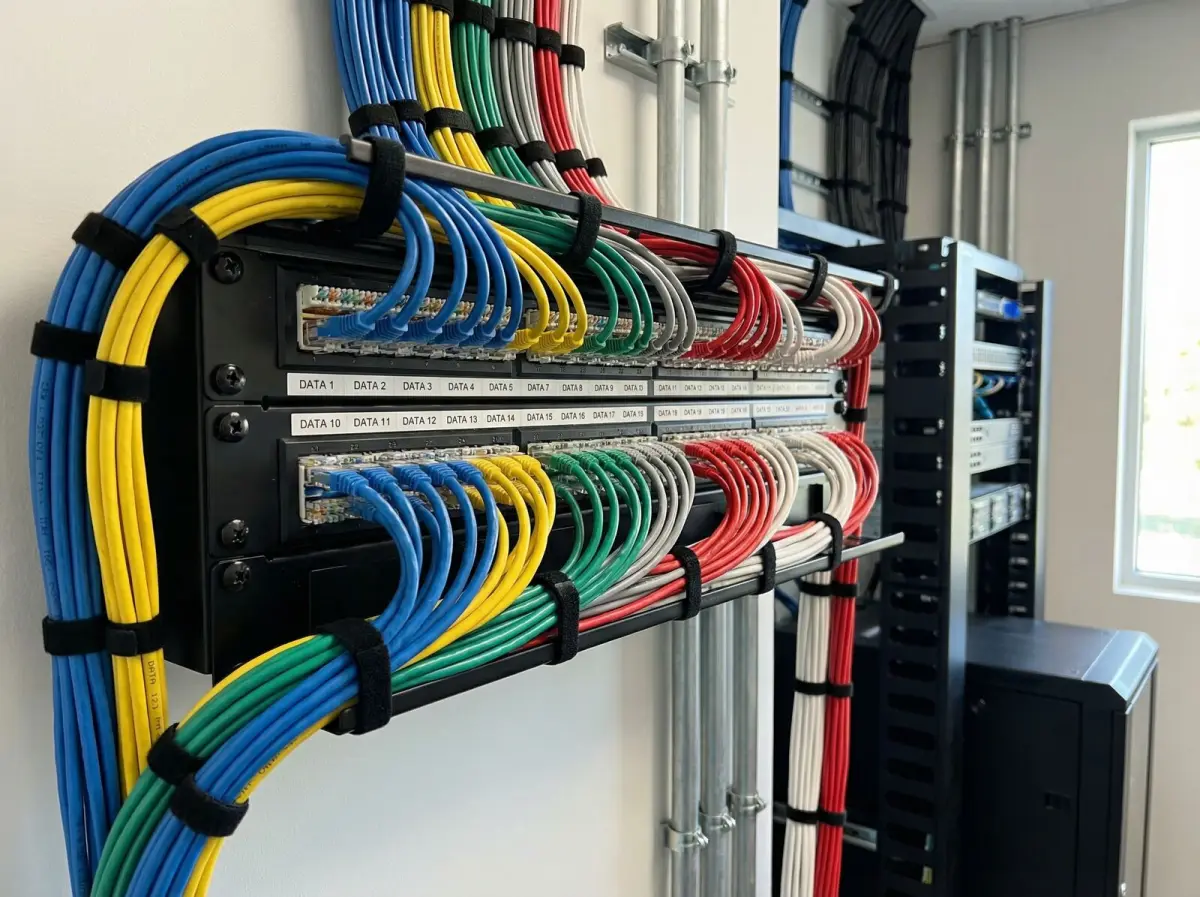
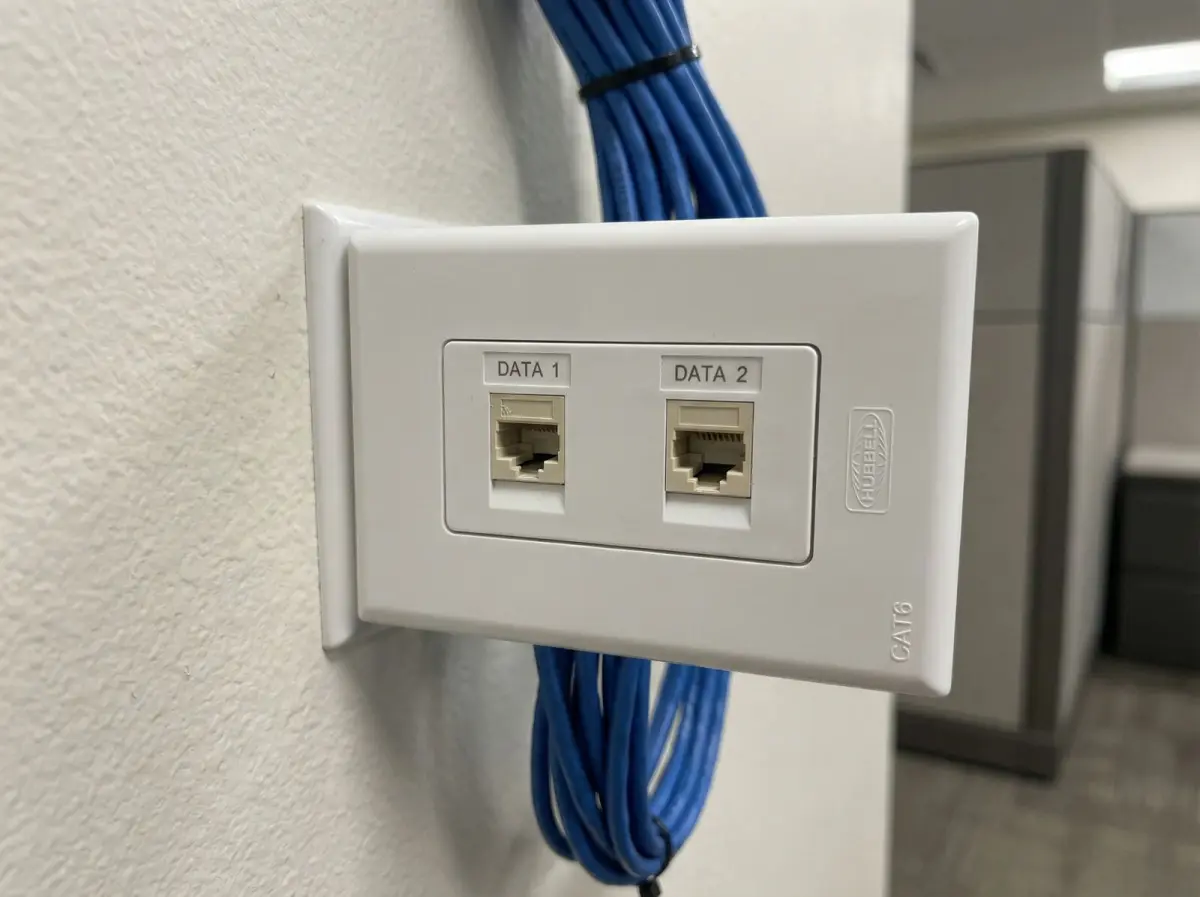
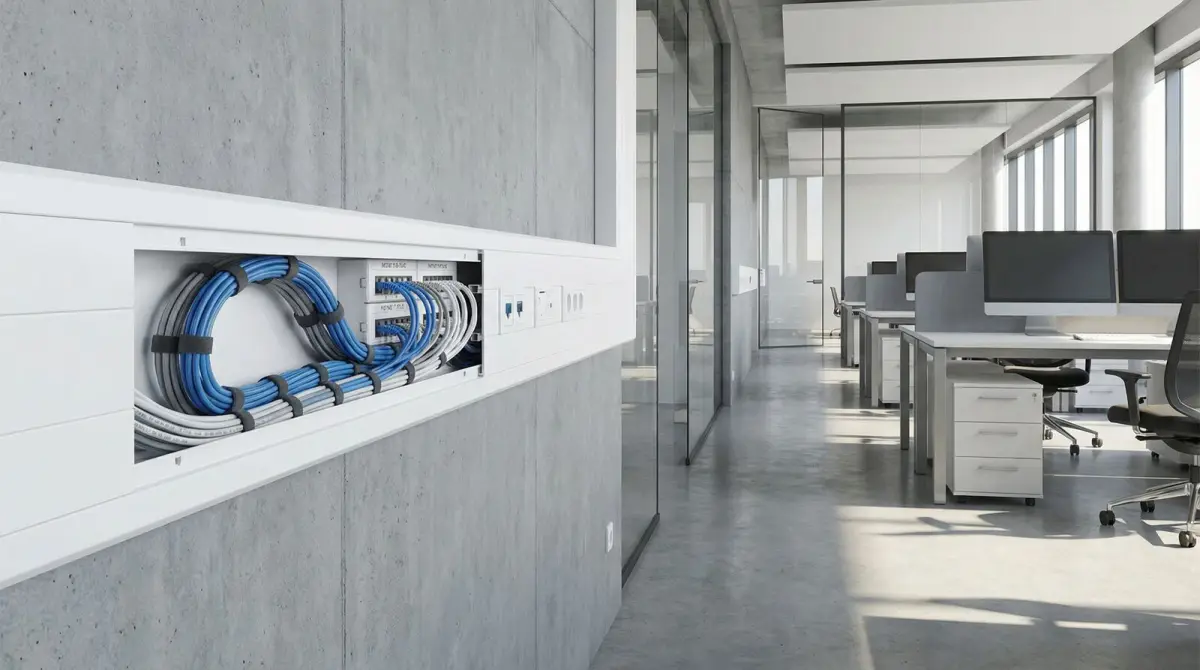
Traceable outlet cabling
Labels connect counters, printers, access points and cameras to documented switch ports.
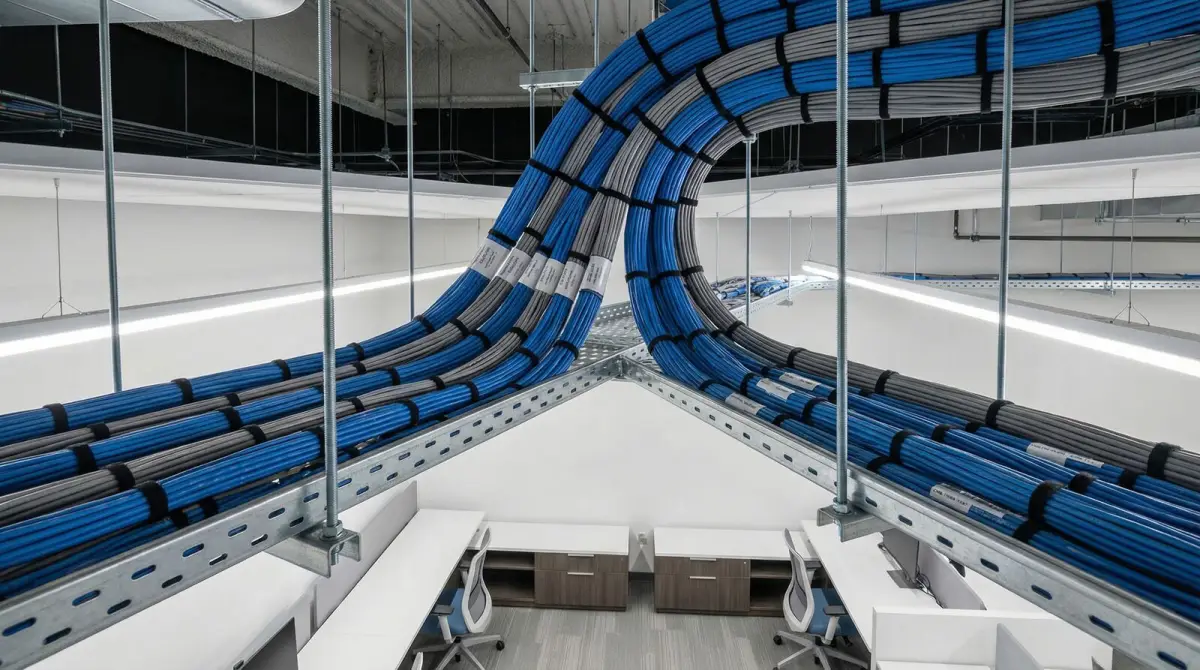
Protected cable routes
Pathways are coordinated with finishes, cleaning, access and landlord requirements.
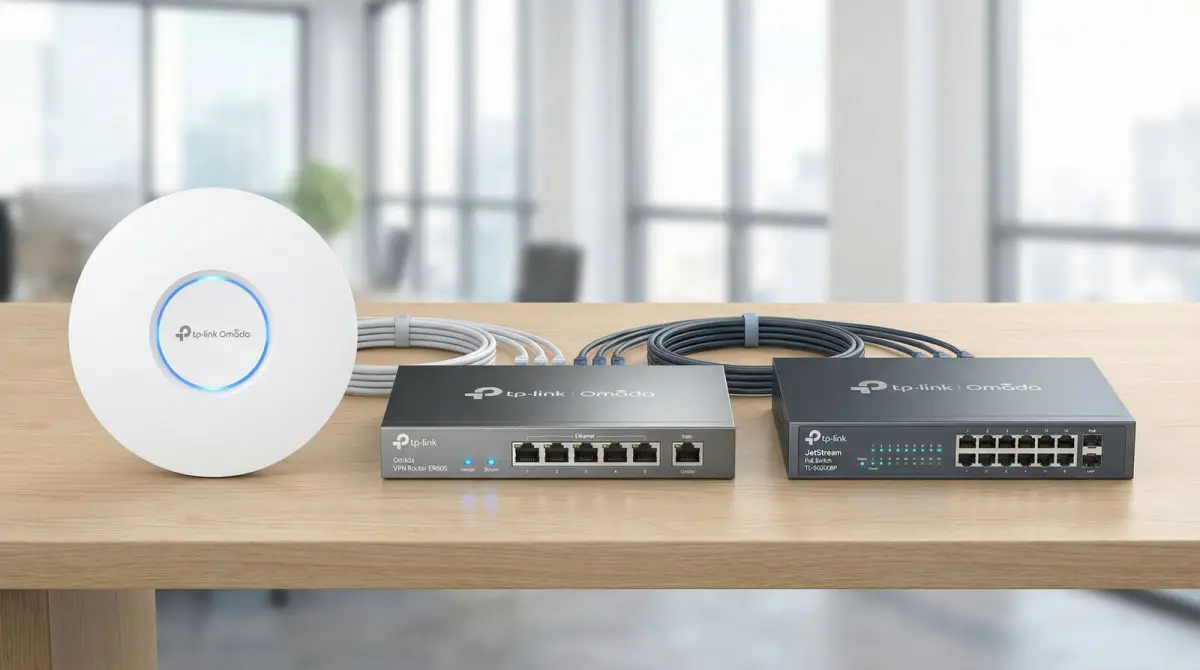
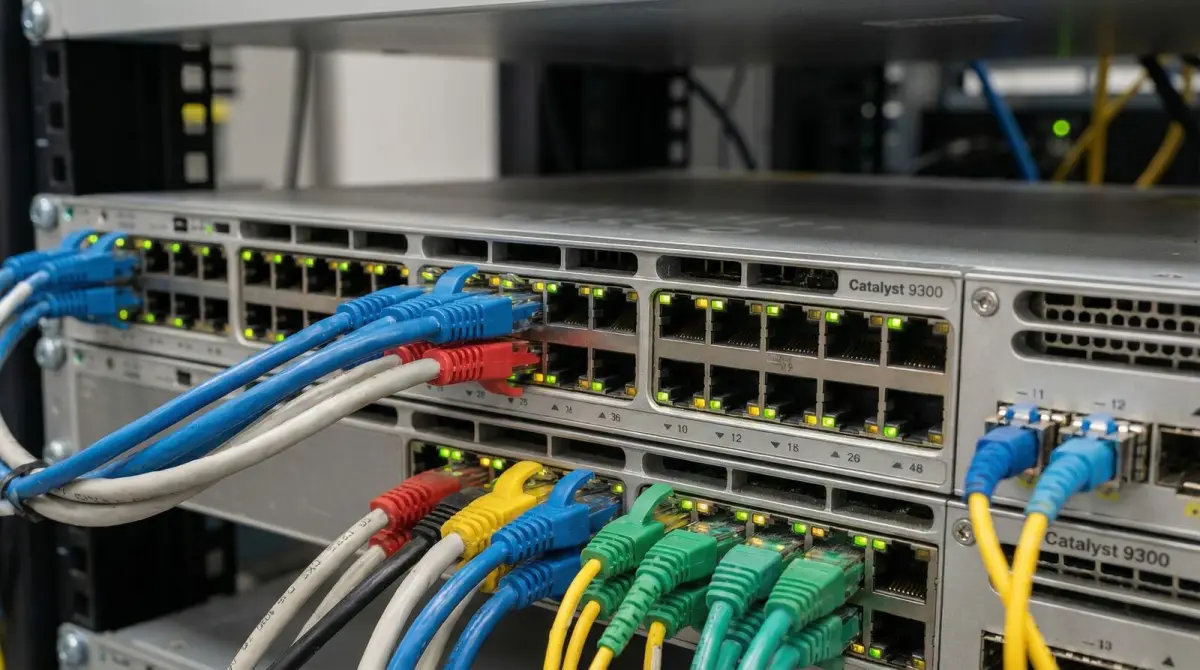
Managed branch platform
Platform selection follows outlet scale, lifecycle, visibility, licence and support needs.
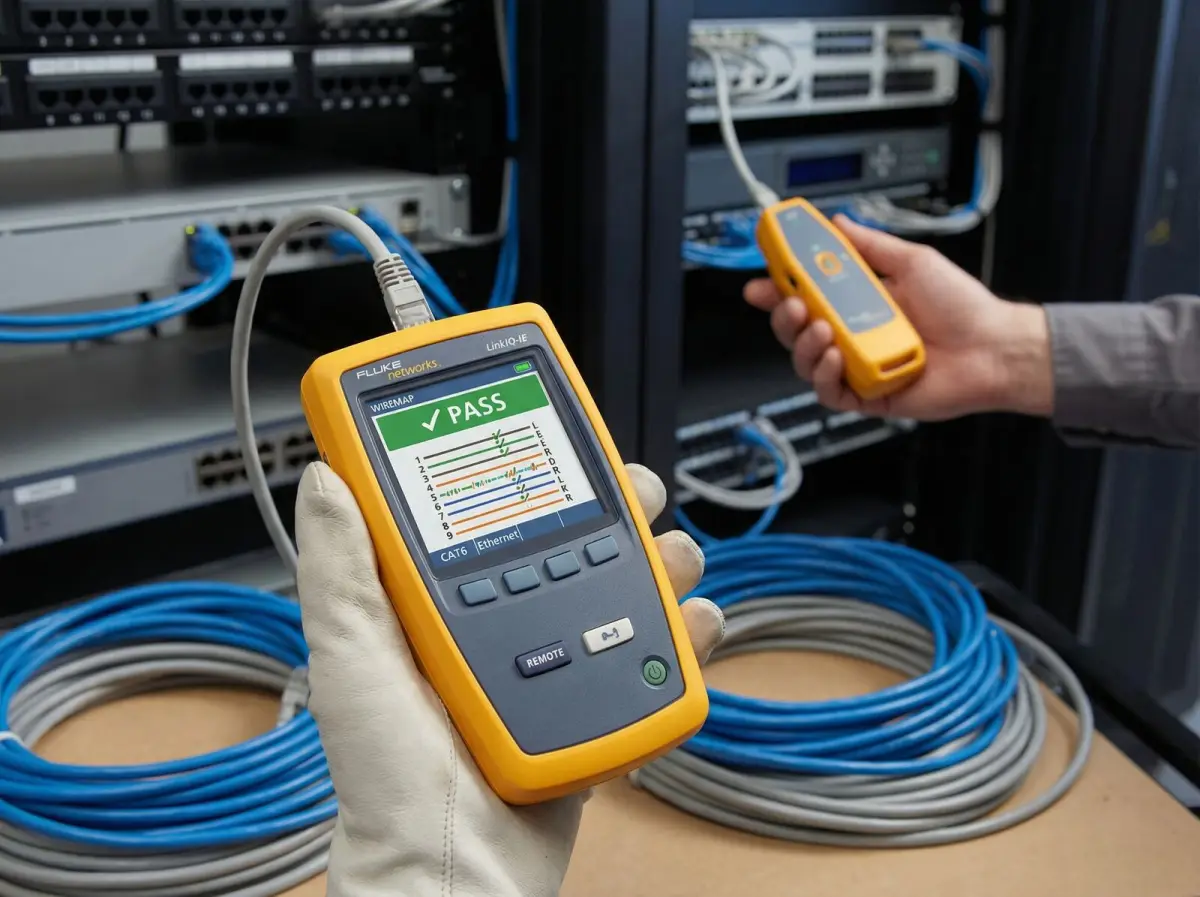
Physical-link validation
Cable evidence helps separate physical faults from wireless, internet and application symptoms.
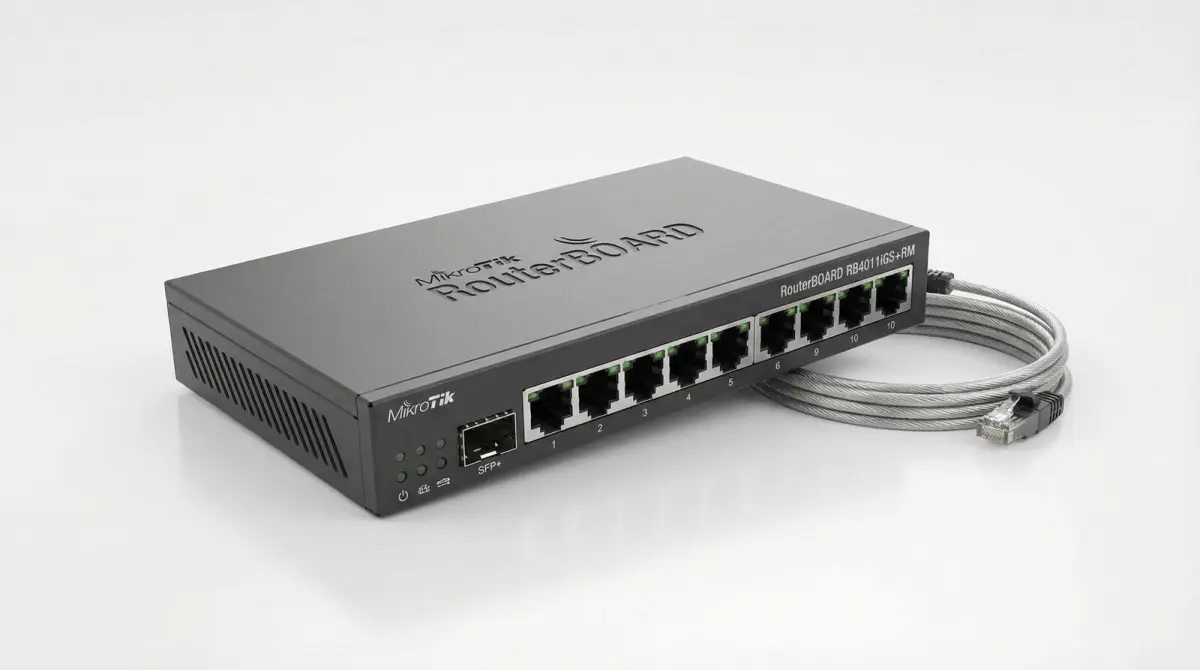
Controlled network edge
Routing and firewall policy implement the approved paths between outlet services.
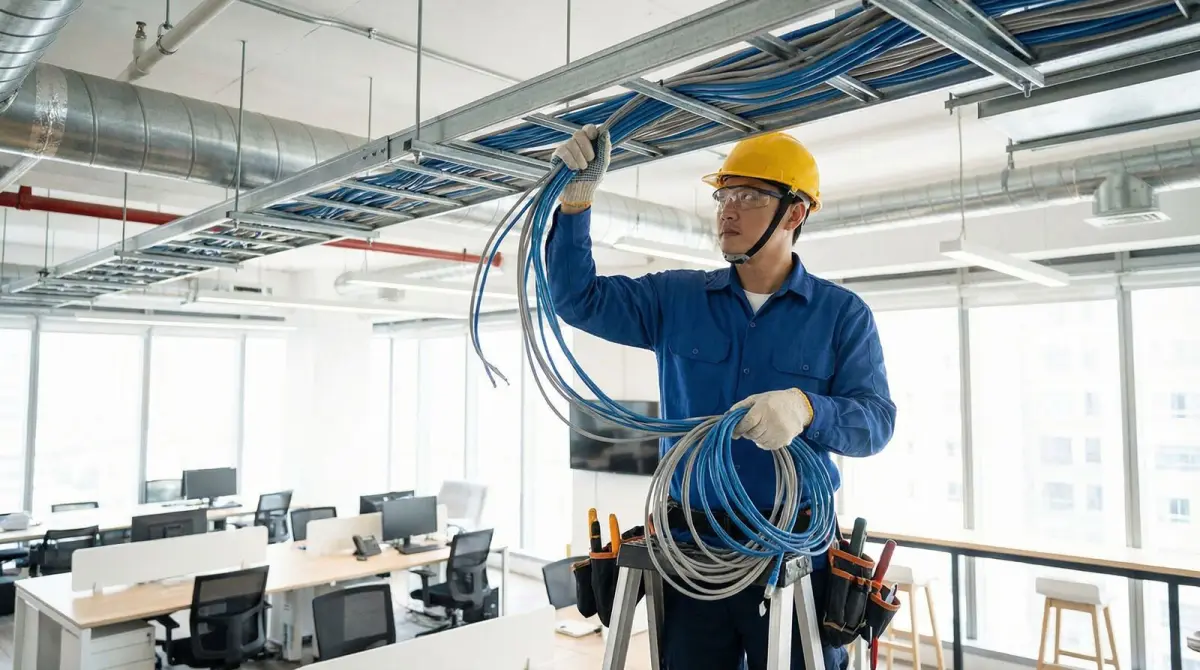
Coordinated installation
Installation is phased around fit-out rules, food-service boundaries and trading windows.
Evidence base
Technical references used for this guide
- Retail network solution
TP-Link Omada Malaysia
Used as a current vendor architecture reference for multi-branch management, POS and business-device connectivity, guest access, segmentation and outlet operations.
- Can network segmentation reduce PCI DSS scope?
PCI Security Standards Council
Used to qualify that segmentation may reduce assessment scope but adequacy is specific to the environment and should be validated by an appropriate PCI DSS assessor.
- A Quick Guide to Privacy Notice
Personal Data Protection Commissioner Malaysia
Used to frame the operator’s privacy-notice responsibilities when a customer portal collects personal information or marketing choices.
FAQ
Questions Malaysian organisations ask before improving WiFi
Straight answers about scope, evidence, disruption and long-term operation.
Should restaurant POS terminals use WiFi or Ethernet?
Suitable fixed terminals generally benefit from a planned wired connection because the path is stable and easier to trace, while handheld and mobile workflows may require WiFi. The POS vendor’s supported network method, outlet layout, cable safety and continuity requirement determine the final choice.
How should guest WiFi be separated from POS and staff systems?
Guest, POS and staff devices can use controlled network segments with matching wireless, switch, routing, firewall and management policies. Different network names or VLANs alone do not prove isolation. Required communication and representative blocked paths should be documented and tested.
Does network segmentation make an outlet PCI DSS compliant?
No. Segmentation can be part of reducing or controlling the cardholder-data environment, but adequacy and compliance depend on the specific implementation and assessment. The merchant should work with its payment providers and appropriately qualified PCI DSS advisers.
Why does POS slow down during lunch or dinner service?
Possible causes include device or application state, weak WiFi, radio contention, damaged cabling, overloaded switching, addressing or DNS faults, internet loss, provider congestion or the POS platform itself. Evidence from the full transaction path is needed before choosing a fix.
Can a restaurant offer branded guest WiFi?
A compatible platform may support branding, terms, vouchers or identity options. The operator decides what information is necessary and remains responsible for its privacy notice, consent, retention and marketing process. A portal is separate from radio coverage and network isolation.
How is WiFi improved in a kitchen or stockroom?
The assessment measures the real work positions and considers metal equipment, refrigeration, shelving, heat, moisture, stock and walls. The solution may involve access-point placement, a safe cable route, suitable hardware, channel design or wired connections for fixed devices.
Can mall outlets install their own network equipment?
Usually the tenant must follow the lease, fit-out guide and landlord or mall management approval process. Provider entry, pathways, ceiling access, mounting, fire stopping, work hours and shared-building services should be confirmed before installation is quoted as final.
Can one network design be copied to every retail branch?
A reference design can standardise ownership, security intent, equipment roles, labels and tests, but each branch still needs site validation. Floor plan, construction, mall interference, kitchen or stock layout, internet availability and landlord rules can change quantities and positions.
Should CCTV and digital signage share the guest network?
They should not receive guest access by convenience. Their required local and cloud destinations, bandwidth and management method should be documented and placed into controlled wired or wireless service groups with only the communication they require.
Will a backup internet connection prevent all payment outages?
No. A suitable backup can protect some provider-path failures, but it does not automatically protect a failed gateway, switch, access point, power circuit, POS service or payment-provider outage. Capacity, failover behaviour and application response must be tested for the named scenario.
Can an operating restaurant or shop be upgraded after hours?
Yes where access, landlord rules and third-party availability allow. The plan should state preparation, expected interruptions, configuration backup, service-by-service cutover, rollback and validation so POS and operations are checked before the next trading period.
What is needed for a restaurant or retail WiFi quotation?
Useful inputs include a floor plan, outlet type and opening date, endpoint and vendor list, POS and payment requirements, current internet and equipment, peak periods, guest-access policy, landlord rules, cable routes, branch count, complaints and acceptable work windows.
Explore more
Continue planning your connectivity project
Use the service page that matches the next decision in your network plan.
Testimonials
What Our Clients Say
Trusted by corporations, SMEs, and government agencies in Malaysia and Singapore.
“Great suggestion of the output format of translation which I never thought of. It helps our people at site understand the translation much easier.”
DHL Malaysia
Plan with evidence
Request a restaurant or retail network assessment
Share the floor plan, outlet or branch count, POS and payment systems, endpoint list, peak periods, current internet and equipment, guest-access needs, landlord constraints, opening date and preferred work windows. We will use those inputs to define a suitable assessment and installation scope.
Prefer to provide drawings first? Use the contact page and describe the premises, operating hours, known dead zones and approximate user or device count.