Consecutive starting team
Start with one interpreter per active language pair. Long, intensive, specialist or multi-room programmes may require an additional interpreter after the agenda is reviewed.
100+
Languages
10,000+
Clients Served
21+
Years Experience
PM-led
Project-Managed
Selected clients in Singapore
Direct answer
The organiser chooses the mode from the speaking format, counts the active language channels, sizes the interpreter team, designs the audio workflow and sends the briefing pack. Those five decisions determine whether the event needs a single consecutive interpreter, simultaneous teams and equipment, or a remote or hybrid workflow.
Reviewed by Translife Language Services Team · Updated
Five-step checklist
Mode and language channels come before equipment and price because they determine the team and audio design.
Use consecutive interpretation when speakers can pause. Use simultaneous interpretation when the programme must continue while listeners receive a real-time language channel.
Count each language that participants need to hear. English speakers interpreted into Mandarin and Japanese require two active output channels.
Start with one interpreter per consecutive channel. For simultaneous sessions longer than one hour, plan two interpreters per active channel, subject to the agenda and language direction.
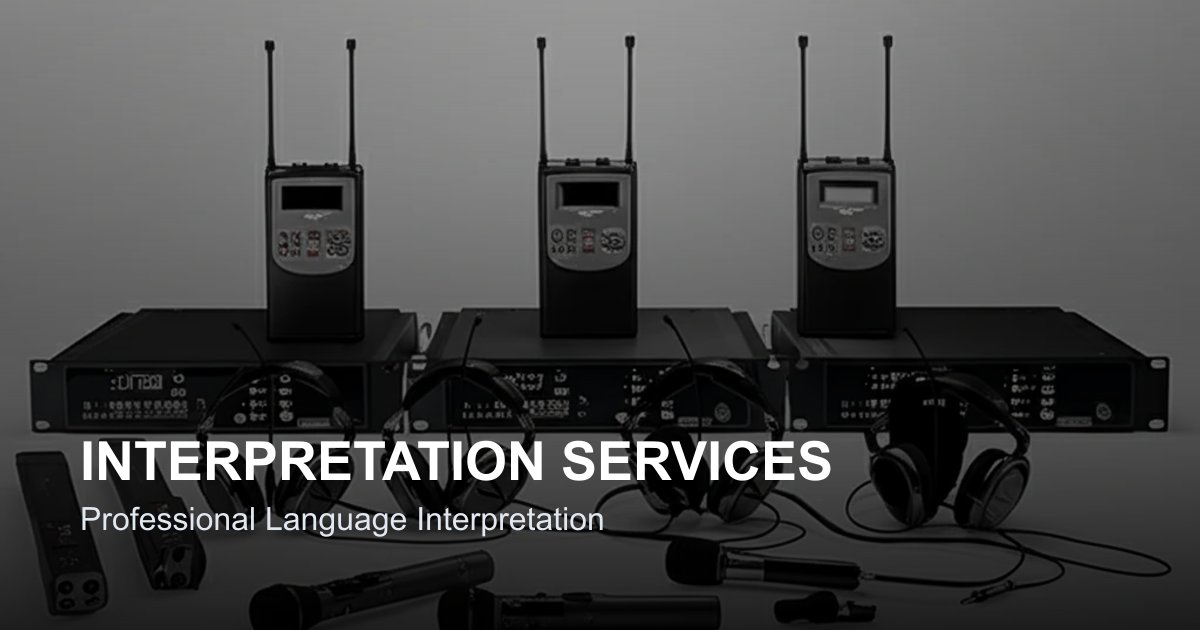
Confirm microphones, interpreter working position, booths or remote channels, receivers or app access, sound check, internet and technical ownership.
Provide the agenda, speaker names and titles, slides, scripts, terminology, participant profile, schedule, venue rules and confidentiality instructions.
Mode decision
The speaking flow decides the mode. Audience size alone does not.
| Decision | Consecutive | Simultaneous |
|---|---|---|
| Speaking flow | Speaker pauses; interpreter follows | Interpreter works while speaker continues |
| Best fit | Meetings, interviews, training and site visits | Conferences, AGMs, panels and continuous presentations |
| Time impact | Adds time because content is delivered twice | Preserves the programme's speaking pace |
| Equipment | Usually none for a quiet small group | Audio channels and interpreter equipment required |
The European Commission defines consecutive interpretation as interpreting after the speaker finishes and simultaneous interpretation as interpreting while the person speaks using dedicated equipment.
Team and channels
An active channel is a language participants need to hear. The spoken source and interpreted outputs form the working language direction.
Start with one interpreter per active language pair. Long, intensive, specialist or multi-room programmes may require an additional interpreter after the agenda is reviewed.
For sessions longer than one hour, plan two interpreters per active language channel. The interpreters rotate while monitoring terminology, numbers and continuity for the same output channel.
Singapore cost
A useful estimate shows the rate basis and exclusions instead of hiding every cost inside one number.
Consecutive interpreter labour starts from S$500 per interpreter per day in Singapore. Simultaneous interpreter labour starts from S$1,000 per interpreter per day. Singapore on-site work uses a daily minimum with no half-day rate.
Online interpretation starts from S$200 per interpreter per hour. Booths, receivers, headsets, platform licences, technicians, travel, overtime, specialist preparation and rare-language availability remain outside that starting labour amount.
Calculate a starting Singapore estimateAudio workflow
The interpreter needs clean source audio; listeners need a reliable path to the interpreted channel.
Interpreter briefing
Preparation helps interpreters resolve names, titles, acronyms and specialist terminology before the speaker reaches them.
Sources
Reviewed 17 July 2026. These sources support the visible rates and planning definitions; the event quotation controls Translife's commercial scope.
Singapore event planning FAQ
Concise answers aligned with the guide, estimator and visible source links.
Use consecutive interpretation when speakers can pause and discussion matters more than programme speed. Use simultaneous interpretation when the speaker must continue and listeners need real-time interpreted audio.
For planning, use two interpreters per active language channel when simultaneous interpretation runs longer than one hour. The final team depends on duration, intensity, subject, breaks and language direction.
Not usually for a quiet small meeting. A portable microphone or tour-guide system may still be needed for a large group, moving site visit or noisy venue.
An on-site setup commonly needs an interpreter working position or booth, microphones, console and transmission, plus receivers and headsets or app access. Remote and hybrid formats need platform channels, clean audio and technical rehearsal.
Send the agenda, speaker names and titles, slides or scripts, terminology and acronyms, participant profile, schedule, venue or platform details and confidentiality rules.
Book once the date, language direction and draft programme are known. Larger, multi-day, specialist or rare-language events need more lead time because interpreter and equipment availability must align.
Explore more
Estimate the starting labour, review the service scope or choose a specific interpretation mode.
Selected clients in Singapore