Even world-class conference interpreters and low-latency AI engines sound garbled when a hotel mixing board feeds echoing room audio, speakers sprint through unshared acronyms, or floor Q&A happens without handheld microphones. Use this production-tested checklist—built by Translife Communication Pte. Ltd. (Singapore Global HQ, +65 8660 5216)—to eliminate every common venue failure before delegates arrive.
Direct 5-Point Production Gate
Every flawless multilingual conference clears five concrete gates before opening remarks: (1) balanced pre-fader XLR audio without room reverb, (2) a 200-term locked glossary and NDA-protected slide pack at T-48h, (3) direct stage sightlines + pillar-checked Bosch IR angles, (4) dual-path Ethernet/cellular failover for hybrid QR streams, and (5) strict floor-mic runner discipline during Q&A.
Why Conference Interpretation Fails (and How Checklists Prevent It)
Over 85% of live simultaneous interpretation complaints stem from audio routing or venue coordination—not language ability. When an interpreter misses half a sentence because walk-in music shares the same output bus as the lectern mic, or when a Bosch infrared radiator faces a glass atrium instead of seating rows, audience satisfaction drops within minutes.
Whether you deploy full physical ISO 4043 booths and Bosch IR hardware or zero-hardware Pikka Speech QR audio, locking technical handoffs between your event producer, FOH sound engineer, and interpretation lead guarantees calm, uninterrupted delivery.
1. Pre-Event AV Audio Feed & Routing Spec
Send this exact specification to your venue AV production lead at least two weeks prior to load-in:
- Dedicated Pre-Fader XLR Aux Output: Provide a clean line-level male XLR feed carrying lectern, handheld, lapel, and video playback dialogue ONLY—never ambient room mics or house delay speakers.
- Separate House Music & Stingers: Keep walk-in tracks and award fanfares routed off the interpreter bus so neither human booths nor cloud ASR process background lyrics.
- Hybrid Return Isolation (Mix-Minus): When remote Zoom/Teams speakers join a live ballroom, configure a mix-minus bus so remote presenters hear the floor without hearing their own translated echo.
- USB Audio Interface for Pikka Hybrid (+$25 / +$49 USD): When pairing physical booth consoles with Pikka Speech Hybrid Human Channels, capture each language console output cleanly over balanced XLR-to-USB capture at 48 kHz.
2. 200-Term Glossary Lock & Briefing Under NDA
No interpreter—human or AI—should hear your product codenames, M&A acronyms, or executive names for the first time from stage:
- Execute Mutual NDA Early: Sign confidentiality terms before circulating board scripts, embargoed earnings decks, or technical agendas. See our Security & NDA Center.
- Lock 200 Core Terms: Upload your event microsite URL, speaker roster, and proprietary product terms into Pikka Speech's 200-term AI URL glossary builder and share the exact term sheet with paired human interpreters.
- Use the 12-Hour Rehearsal Pass: Run a live 15-minute test and rehearsal clip 24–48 hours before show start to confirm pronunciation of uncommon proper nouns and numeric scales.
3. Booth Placement, Stage Sightlines & Bosch IR Coverage
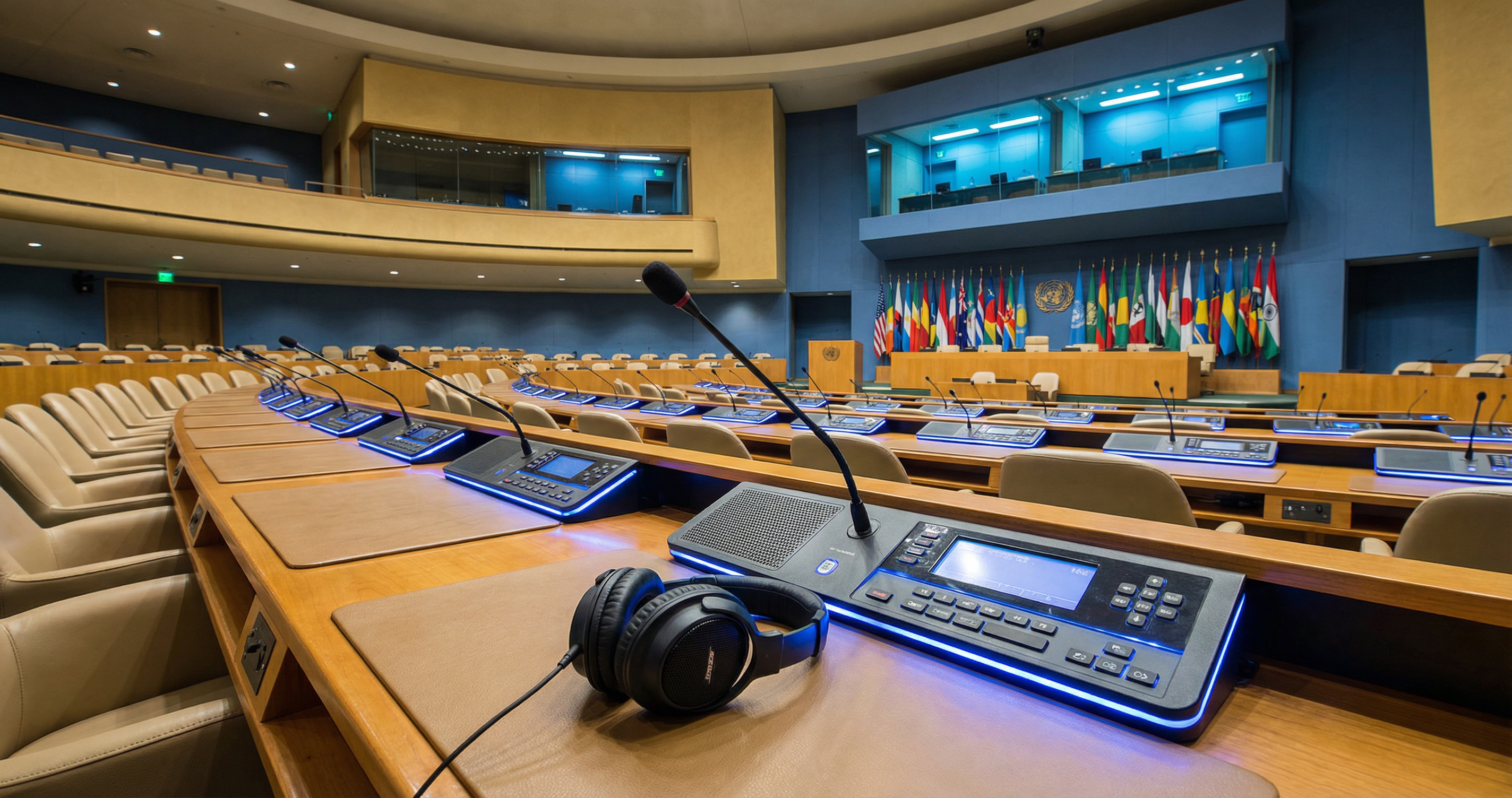
Physical booth placement determines both interpreter stamina and infrared signal reach across the ballroom:


- Avoid Daylight & Chandelier Shadows: Angle digital IR emitters away from harsh direct window glare and behind-pillar dead zones. Add a second radiator ($220–$420 USD/day) in L-shaped halls.
- Reserve 3 Hours Prior to Doors: Allow T-3 hours for booth assembly, cable taping, walk testing with a Bosch receiver in the back row, and sanitized headset staging.
4. Hybrid Webcast Routing & Zero-Drop Network Failover
When streaming QR audio to delegate phones or connecting remote RSI interpreters, never rely on public guest hotel Wi-Fi alone:
- Hardwired Ethernet + Cellular/Starlink Backup: Put your encoding laptop on a dedicated hardwired VLAN drop while keeping a bonded 5G router or Starlink event backup on standby.
- Opus Low-Bandwidth Resilience: Pikka's ~15x compressed Opus audio mode keeps mobile browser playback responsive even inside crowded 1,000-person exhibition halls.
- Print QR Cards & Hold-Slide Banners: Place giant QR scan banners at badge pickup, table tents, and lower thirds of stage holding slides so attendees connect before the keynote begins.
5. Floor Mic Discipline & Panel Q&A Protocol
The #1 breakdown point in live conferences is open-floor Q&A. Coach your MC to enforce three habits from stage:
- No Mic, No Question: Instruct speakers never to answer shouted floor comments until an aisle runner delivers a live handheld microphone.
- One Speaker at a Time: During rapid-fire panels, moderators should prompt one panelist per turn—simultaneous crosstalk forces interpreters and AI to drop overlapping clauses.
- Two-Second Pause on Slide Numbers & Votes: Especially during shareholder AGMs, pause briefly after announcing resolution numbers so all translated channels complete the count simultaneously.
Venue Ownership Matrix (T-4 Weeks to Strike)
Assign every handoff explicitly between your internal producer, venue AV contractor, and Translife interpretation lead:
| Production Window | Venue AV Team Owns | Interpretation Lead Owns | Pass / Fail Acceptance Gate |
|---|---|---|---|
| T-3 to T-2 Weeks (Prep & NDA) | Share ballroom CAD floor plan, ceiling heights, pillar coordinates & mixer I/O sheet | Execute mutual NDA, assign paired ISO 4043 linguists & build 200-term glossary | Approved Bosch IR radiator map & glossary locked in rehearsal room |
| T-3 Days (Slide & Feed Lock) | Confirm dedicated pre-fader XLR Aux bus + isolated Ethernet drop at AV FOH | Distribute speaker decks & verify 12-hour free Pikka Speech rehearsal stream | Clean voice-only audio test verified on Zoom/Teams/USB interface |
| T-3 Hours (Rigging & Walk Test) | Patch house soundboard into SIS central control rack + check booth AC power | Verify booth sightlines to lectern & LED slides + walk-test every room corner | Zero hum/bleed across all IR channels & QR stream latency confirmed |
| Live Show & Q&A | Prevent lapel clipping, enforce handheld Q&A runners & hold intro music off interpreter bus | Manage 20–30 min interpreter turns, monitor relay pivots & live caption feed | 100% intelligible floor audio; instant failover ready on standby channel |
| Post-Event Strike | Power down FOH feeds and clear stage staging lanes | Reconcile physical Bosch IR receivers, execute data retention/purge SOP & export transcripts | Zero unreturned receivers; clean bilingual transcript handoff completed |
Need an AV Floor-Plan Check Before Signing Your Venue?
Send your ballroom floor plan to Translife Global HQ (+65 8660 5216) for a complimentary radiator, booth sightline, and hybrid audio routing review alongside itemized pure-USD pricing.
Frequently Asked Questions
Conference Venue & AV Production FAQ
What audio feed must the venue mixing console send to the interpretation booth or AI encoder?
Always send a clean, balanced pre-fader XLR Aux mix containing ONLY spoken microphones and pre-recorded video voice tracks—excluding room ambient mics, background bumper music, and speaker house reverb. House reverb or acoustic feedback immediately degrades both human interpreter comprehension and AI speech recognition.
Can an ISO 4043 booth sit in a back corner or behind a stage backdrop?
ISO 4043 requires direct, unobstructed sightlines to both the lectern speaker and main presentation projection screen so interpreters read facial cues, slide numbers, and speaker gestures in real time. If architectural columns block direct sightlines, the venue AV team must supply dedicated low-latency SDI/HDMI confidence monitors inside each booth.
Why do un-mic'd audience questions ruin simultaneous interpretation?
Audience members shouting from row 10 without a handheld microphone cannot be picked up cleanly by booth headphones or AI speech engines, forcing interpreters to guess or wait in awkward silence. Always stage two aisle mic runners or push-to-talk tabletop mics before opening floor Q&A.
How early should we open a rehearsal stream before doors open?
Schedule physical booth rigging and IR walk tests at T-3 hours before guest registration, and test any remote Zoom/Teams or Pikka Speech QR channel at least 24 hours earlier using Pikka Speech's included 12-hour free rehearsal window.